
Pane Siciliano (Semolina and Sesame Sourdough Bread)
Ingredients
- 109 gdurum flour
- 65 gwater
- 11 gripe sourdough starter
100% hydration
- 882 gdurum flour
- 628 gwater
- 35 gextra-virgin olive oil
- 50 gwater
- 20 gfine sea salt
- 185 gripe levain
Directions
- 1
(9:00 p.m.)In a small bowl mix the Levain ingredients. Cover the jar and keep it at a warm temperature overnight.
- 2
(8:00 a.m)In a mixing bowl, add the Autolyse ingredients until no dry bits remain. Cover the bowl and let rest for 1-hour.
- 3
(9:00 a.m.)Add the salt and levain to the top of the dough in autolyse and use a splash of the remaining water to moisten. With wet hands, mix thoroughly. Add the remaining water if the dough feels like it can handle it. Knead the dough for a few minutes using either the slap and fold technique or folds in the bowl until the dough smooths and becomes elastic. Transfer the dough back into the bowl. Spread the olive oil over the top and pinch it into the dough. Mix the oil into the dough by folding it up and over for 3 to 4 minutes. Transfer the dough to a bulk fermentation container and cover.
- 4
(9:30 a.m. to 12:30 p.m.)This dough will require 2 sets of stretches and folds during bulk fermentation at 30-minute intervals. After the second set, let the dough rest, covered, for the remainder of bulk fermentation.
- 5
(12:30 p.m.)Scrape the dough out to a clean work surface. Use water and a wet hand, and your bench knife, divide the dough in half. Lightly shape each half into a round shape and let rest for 30 minutes, uncovered.
- 6
(1:00 p.m.)Place a baking sheet or clean kitchen towel next to your work surface and spread an even layer of white sesame seeds on top. Flour the top of the preshaped round and your work surface. Using your bench knife, flip one of the rounds over onto the floured area. Using floured hands, shape the dough into a bâtard. Transfer the shaped dough, seam-side up, to the pan with sesame seeds and rock it back and forth so the seeds stick. Gently transfer the dough to an 11-inch long proofing basket, seam-side up. Repeat with the remaining round.
- 7
(1:30 p.m. to 9:00 a.m. the next day)Cover proofing baskets with reusable plastic, seal, and place into the refrigerator overnight.
- 8
(The next day, 9:00 a.m.)Place an oven rack in the bottom-third of the oven with a baking surface on top and preheat to 450°F (230°C). Take one of the proofing baskets out of the fridge, uncover it, and put a piece of parchment paper over the basket. Place a pizza peel or inverted baking sheet on top of the parchment, and using both hands, flip everything over. Remove the basket and score the dough. Repeat with the other basket. Slide the dough into the oven, side by size. Steam the oven by pouring ice into the preheated pan at the bottom of the oven. Bake for 20 minutes. Vent the oven of steam by removing the steaming pans. Continue to bake for 35 minutes more. When done, the loaf should have an internal temperature of around 204°F (95°C), and the crust should be golden-colored. Let the loaves cool on a wire rack for 1 to 2 hours before slicing.
Pane Siciliano (Semolina and Sesame Sourdough Bread)
Similar Recipes


Ratings & Reviews
Be the First to Rate
Your rating helps others discover amazing recipes. Share your experience and let others know what you think!
About this Recipe
Ready to bake a bread that transports you straight to the sun-drenched shores of Sicily? This Pane Siciliano, a semolina and sesame sourdough bread, promises an experience far beyond your typical loaf. It’s an investment in flavor, delivering a truly unique and deeply satisfying bread.
Why This Pane Siciliano Shines
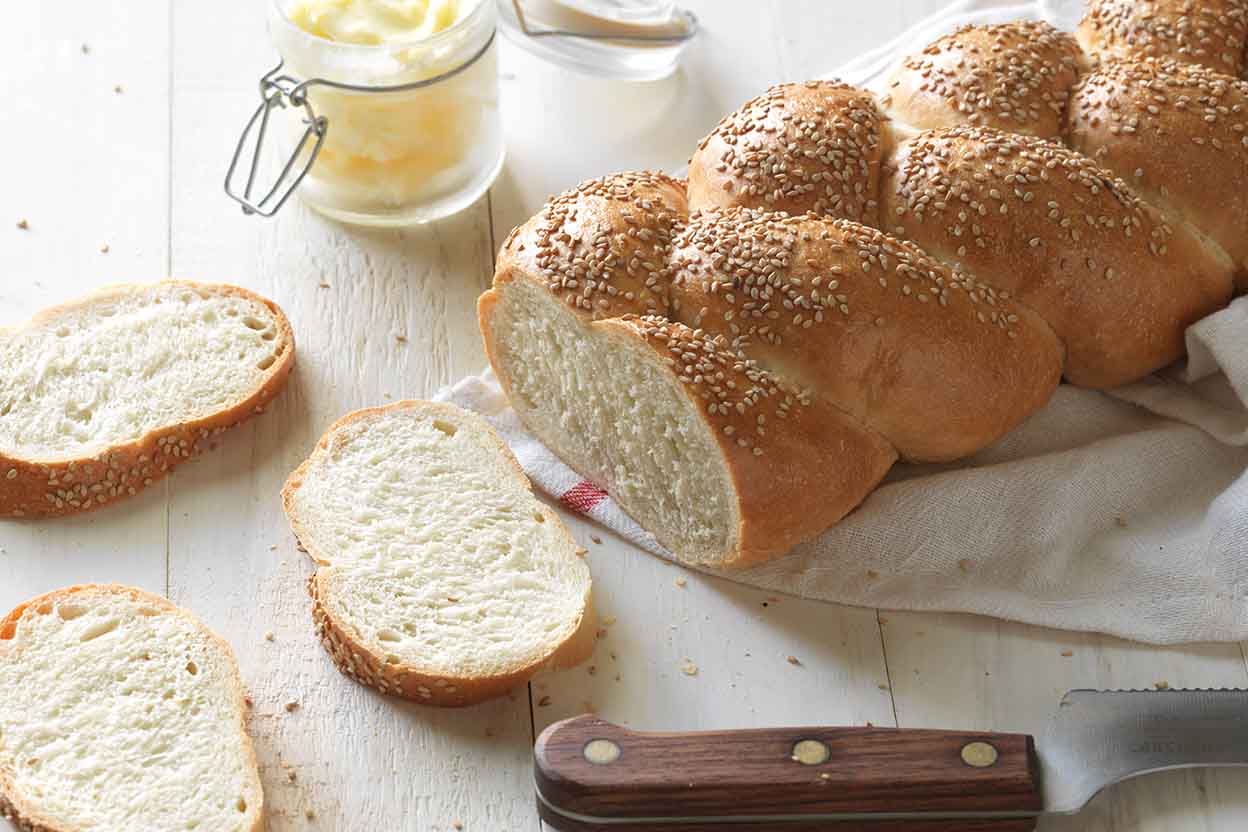
The secret to this exceptional bread lies in its core ingredients and thoughtful preparation. Utilizing durum wheat, or semolina, it achieves a distinct structure and a naturally nutty, slightly sweet base flavor. The addition of extra-virgin olive oil contributes to a wonderfully buttery mouthfeel, setting it apart from leaner breads. But the real showstopper? A dense coating of sesame seeds on the exterior, which, once baked, develops an irresistible, almost peanut butter-like nuttiness that perfectly complements the rich interior.
When you slice into this Pane Siciliano, expect a rustic yet refined bread with a beautiful golden crust. The crumb will be tender, with a subtle sweetness and a profound nutty essence from both the semolina and the toasted sesame seeds. It's a bread that showcases the deep, complex flavors that only a natural leavening process can achieve, a testament to the time and care invested.
Customization & Variations
While the classic sesame seed coating is a hallmark of Pane Siciliano, feel free to explore other seed varieties for a different aromatic note. You could try poppy seeds, nigella seeds, or even a mix of seeds for a multi-layered crunch. For the olive oil, using a robust, fruity extra-virgin olive oil will enhance the bread's buttery quality, though any good quality olive oil will suffice.
This Pane Siciliano is substantial enough to be considered a centerpiece. Serve it as a proud accompaniment to any main course, perfect for sopping up flavorful sauces, alongside a hearty stew, or simply with a high-quality olive oil and a sprinkle of sea salt. It also makes a wonderful foundation for open-faced sandwiches or a memorable addition to a cheese board.