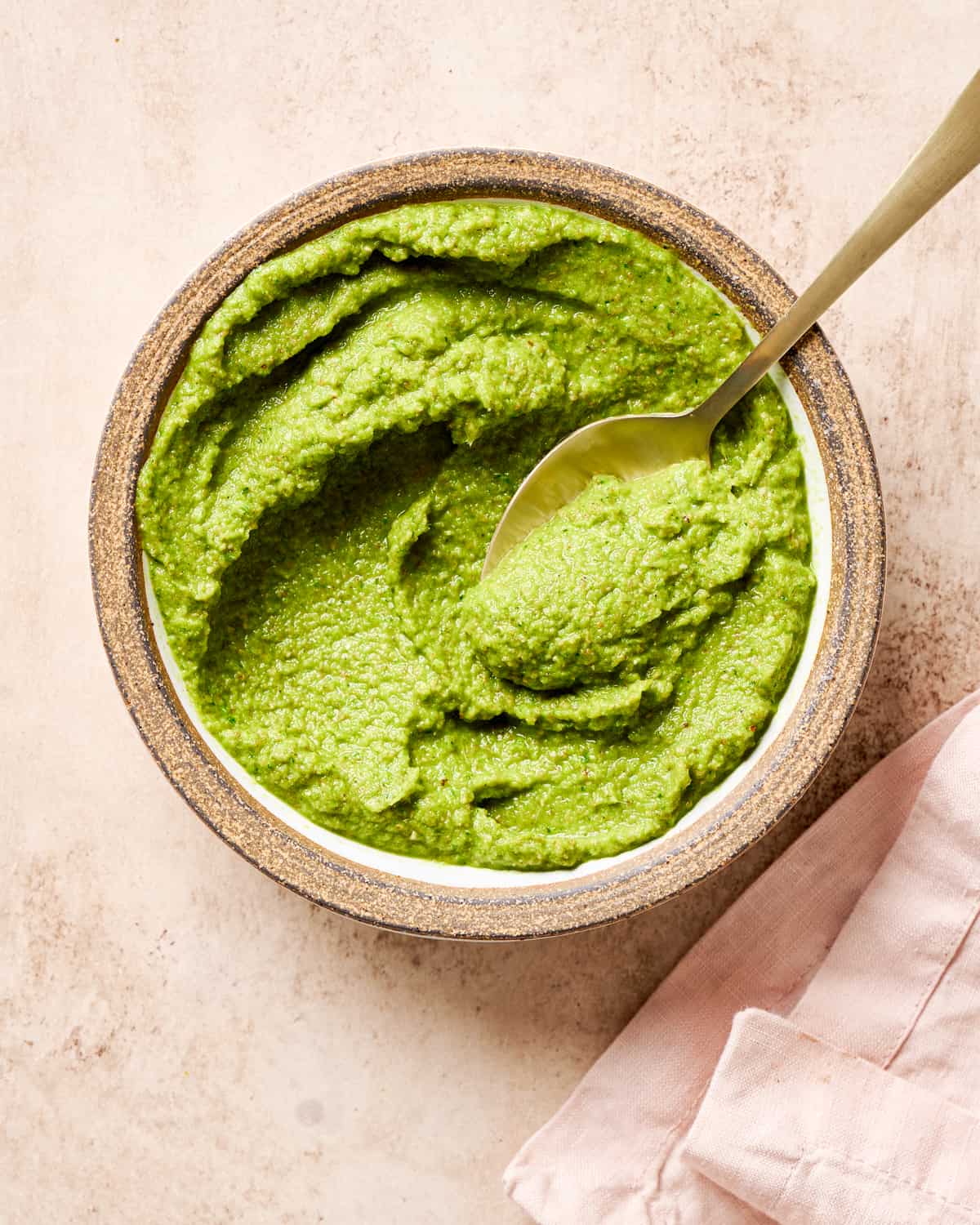
Homemade Thai Green Curry Paste
Make the best possible Thai green curry at home using this homemade Thai Green Curry Past recipe! It’s loaded with fragrant Thai herbs and aromatics and is brimming with bold, salty, savory, and spicy flavors. The fresh fragrant flavor is incomparable!
Ingredients
- 1 tablespoon coriander seeds (Note 1)
- ½ tablespoon cumin seeds
- 1 teaspoon white peppercorns (or ½ tsp ground white pepper)
- 4 to 12 bird's eye green chile peppers ((AKA Thai chile peppers), stems removed)
- 1 to 2 jalapeño peppers, (membranes removed and stems removed)
- 4 lemongrass stalks ((about 15g minced lemongrass (Note 3))
- 1 ½- inch (4 cm) piece galangal ((about 15g sliced) (Note 4))
- 2 medium shallots, (peeled)
- 8 garlic cloves, (peeled)
- 2 tablespoons chopped cilantro roots or stems ((Note 5))
- 4 fresh makrut lime leaves, (folded in half and middle rib removed (optional, Note 6))
- 20 Thai basil leaves ((optional))
- 1 ½ teaspoons kosher salt ((or 3/4 to 1 tsp sea salt), more to taste)
- 1 teaspoon white miso paste ((AKA shiro miso) )
- 1 dried shiitake mushroom, (grated with a microplane (for extra umami; omit if needed))
- 2 tablespoons neutral-flavored oil of choice ((Note 7))
Directions
- 1
Toast the spices. Heat a small or medium frying pan over medium heat. Once warm, add the coriander seeds, cumin seeds, and white peppercorns (if using) and toast until darker in color and fragrant. Transfer to a bowl to stop cooking and cool. While the spices cool, prep your chiles, aromatics, and herbs.
- 2
For the smoothest texture: grind the cooled whole spices using an electric spice grinder or mortar and pestle.NOTE: If you can't grind the spices before blending, the flavor is still great but the finished curry will have a less uniformly smooth texture.
- 3
For lemongrass, slice off the top green stalks, the tough bottom nub, and peel away several layers of papery peel until you reach the tender inner white core (it should be soft and bendy). If you have a rolling pin or mallet, use it to smash down on the lemongrass to release more aroma.For the stand blender option: chop lemongrass (no need to chop finely).For the immersion blender option or mortar & pestle, mince the lemongrass or grate it using a grater or microplane.
- 4
For galangal, use a sharp knife and cut off any hard knobs. Angle your knife as needed so you don’t cut through the root. No need to peel. For the stand blender option, slice or chop the galangal.For the immersion blender option or mortar & pestle, slice galangal very thinly.
- 5
Blend the curry paste using either method below.If using a mortar & pestle, visit the instructions in the blog post "which tool is best for making curry paste?" If you want to taste the curry paste when it's done blending, taste just a tiny amount because it will be spicy! Add a bit more salt, as needed (it should taste salty).
- 6
NOTE: You must have a high-powered blender with a small capacity blender (32 ounce / 1L or smaller). If your container is 48 ounces, you need to double the ingredients; if it’s 64 ounces (2L) or larger, triple the quantity.
- 7
Prep lemongrass and galangal using the instructions above. Grate the dried shiitake mushroom. Finely chop the chile peppers, galangal, shallots, garlic, cilantro roots or stems, and lime leaves. Tear the Thai basil leaves.