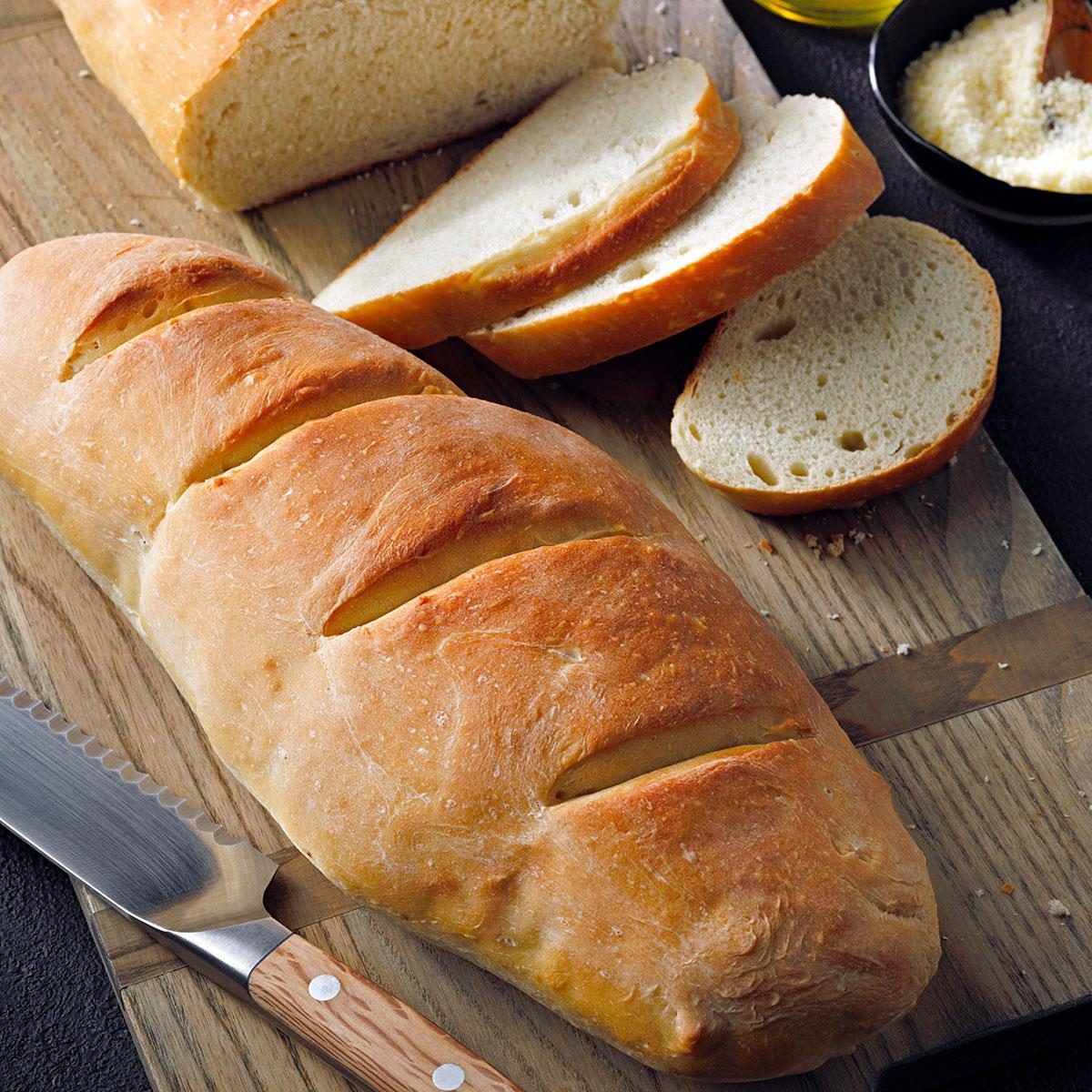
Italian Bread
Ingredients
- 1 package (1/4 ounce) active dry yeast
- 2 cups warm water (110° to 115°)
- 1 teaspoon sugar
- 2 teaspoons salt
- 5-1/2 cups all-purpose flour
Directions
- 1
In a large bowl, dissolve the yeast in warm water. Add the sugar, salt and 3 cups of all-purpose flour. Beat the ingredients on medium speed for three minutes. Stir in the remaining flour to form a soft dough. Editor’s Tip: Test the yeast before adding the flour to see if your yeast is still active. If the mixture becomes nice and foamy, you’re good to go. If it doesn’t, toss the mixture and double-check the yeast package’s expiration date. You may need to buy fresh yeast.
- 2
Turn the dough out onto a floured surface and knead it until it’s smooth and elastic, six to eight minutes. Place the dough in a bowl that’s been greased with olive oil, turning once to grease the top. Cover the bowl with storage wrap or a clean, damp tea towel and let the dough rise in a warm place until it has doubled in size, about one hour. Editor's Tip: You’ll know your dough is kneaded enough when you’re able to stretch a piece between your fingers until it's very thin, making a sort of windowpane. If it tears, the dough needs to be worked more.
- 3
After the dough has doubled in size, punch it down, pressing some of the air out of it with your knuckles. Turn the dough out onto a lightly floured worktop and divide it in half. Shape each portion into a loaf. Place each loaf seam side-down onto a greased baking sheet. Cover the loaves with storage wrap or a clean, damp tea towel and let them rise until they have doubled in size, about 30 minutes.
- 4
Meanwhile, preheat the oven to 400°F. With a sharp knife, score the bread by making four shallow slashes across the top of each loaf. Bake the loaves until they’re golden brown, 20 to 25 minutes. Remove the loaves from the pans and place them on wire racks to cool them completely to room temperature.