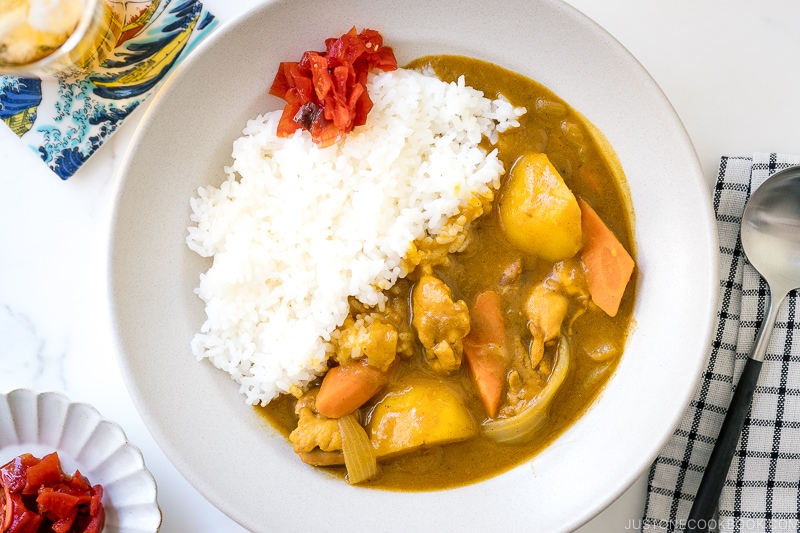
Japanese Chicken Curry
Ingredients
- 2onions)
(large; 1.5 lb, 670 g
- 2carrots)
(6.7 oz, 190 g
- 3yukon gold potatoes)
(15 oz, 432 g
- 1 tspginger)
(grated
- 2 clovesgarlic
- ½apple)
(6 oz, 170 g
- 1 ½ lbboneless
skinless chicken thighs), (see notes for substitutions
- freshly ground black pepper
- 1 ½ tbspneutral oil)
(for cooking
- 4 cchicken stock/broth)
(for lower sodium, use water only or half stock and half water
- 1 tbsphoney
- 1 tbspsoy sauce
- 1 tbspketchup
- 1 packagejapanese curry roux
- 8servings cooked japanese short-grain rice
- fukujinzuke
japanese red pickled vegetables
Directions
- 1
Gather all the ingredients. Please read my blog post on the “secret ingredient” we add to the curry. For this recipe, I add ginger, garlic, apple, honey, soy sauce, and ketchup.
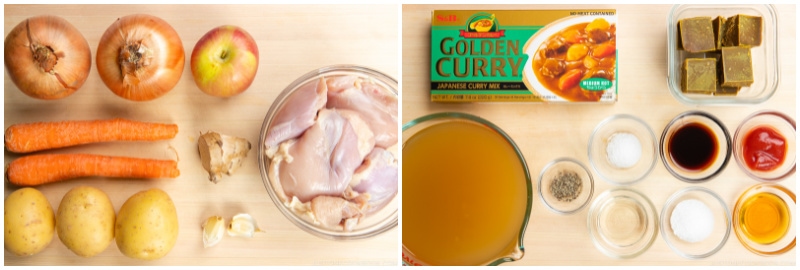
To prepare the ingredients
- 1
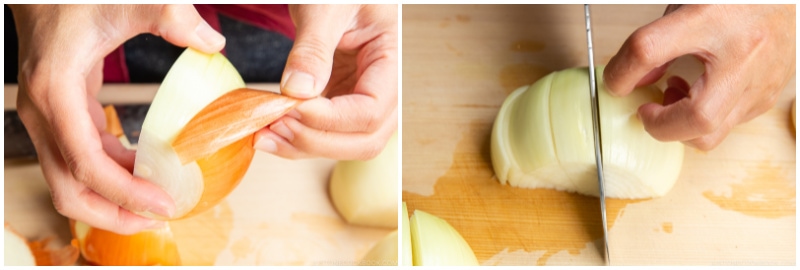
Cut 2 onions into wedges. I like to have the texture of the onions in my curry, so I cut them into thick wedges. If you prefer, you can mince or thinly slice the onions so they disintegrate into the sauce.
- 2
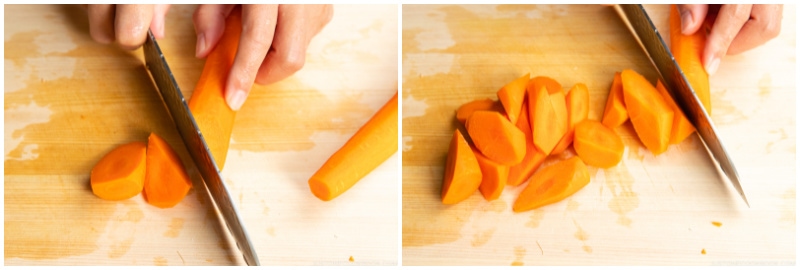
Peel 2 carrots and cut them into rolling wedges (it‘s called rangiri in Japanese). This type of cut creates more surface area, which helps the carrots absorb more flavor and cook faster.
- 3
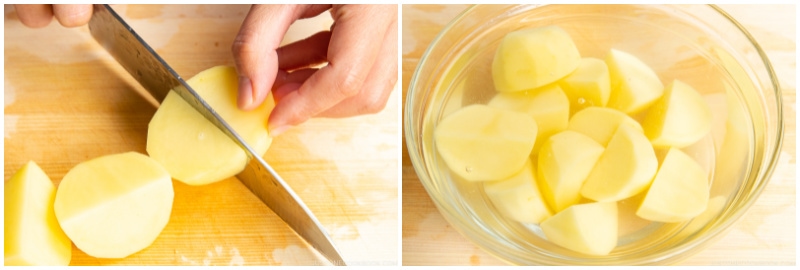
Peel 3 Yukon gold potatoes and cut them into quarters. Soak them in water for 15 minutes to remove excess starch. Tip: Yukon gold potatoes hold their shape well. You can use russet potatoes, but they tend to disintegrate into the broth during cooking, so cut them into 6 pieces each and add to the pot toward the end of cooking.
- 4
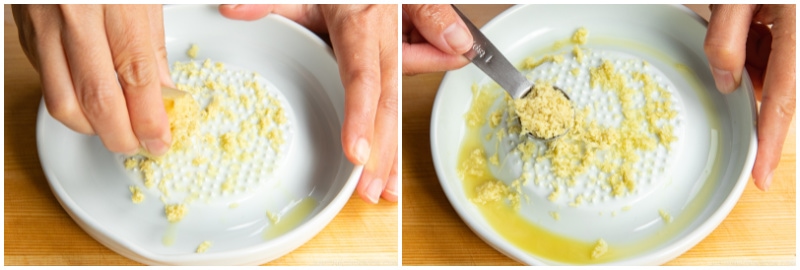
Grate the ginger (I use a ceramic grater) and measure 1 tsp ginger with the juice. Set aside. Mince 2 cloves garlic and set aside (I use a garlic press later when adding to the pot).
- 5
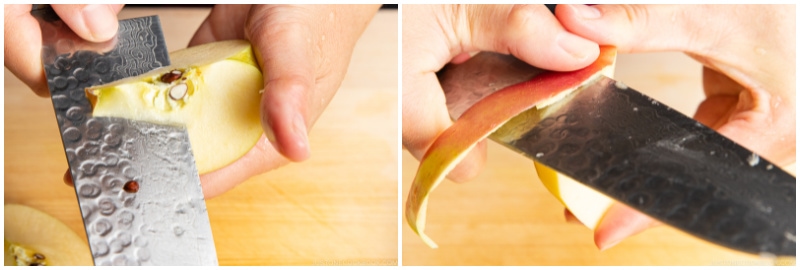
Cut ½ apple into quarters, remove the core, and peel the skin.
- 6
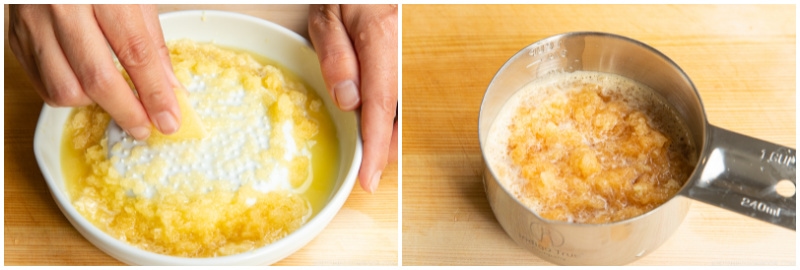
Grate the apple and set aside. Note: You also could use 1 small lunchbox apple for 8 servings.
- 7
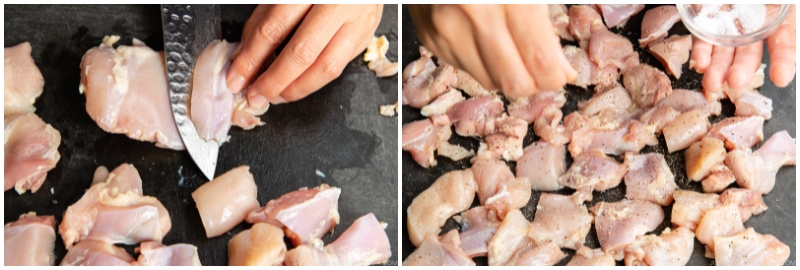
Cut off the extra fat from 1½ lb boneless, skinless chicken thighs and discard it. Then, cut the chicken into bite-sized pieces. I recommend cutting it diagonally (it‘s called sogigiri in Japanese) to create more surface area and flatten each piece so it cooks faster. Season with freshly ground black pepper. Tip: If you will use homemade curry roux, you can lightly season the chicken with kosher salt as well.
To cook the curry
- 1
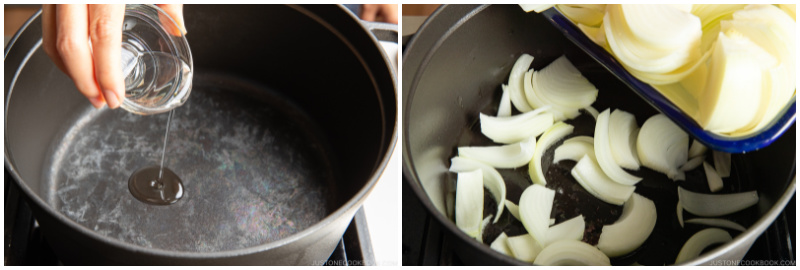
Heat 1½ Tbsp neutral oil in a large pot over medium heat and add the onion.
- 2
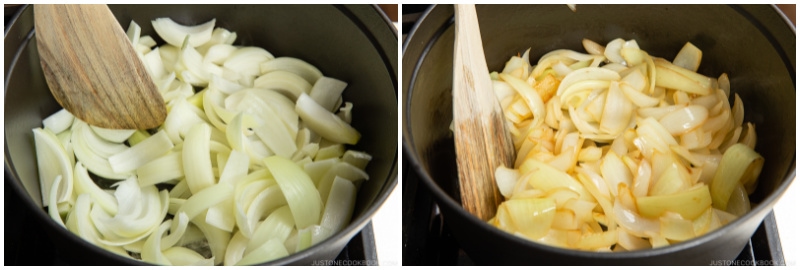
Sauté the onions, stirring occasionally, until they become translucent and tender, about 5 minutes. Don‘t stir them too often because they won’t develop a golden color. Cooked onions add amazing flavor, so don't skip this step. If you have extra time, definitely sauté the onions an additional 5 minutes to add more color and flavor.
- 3
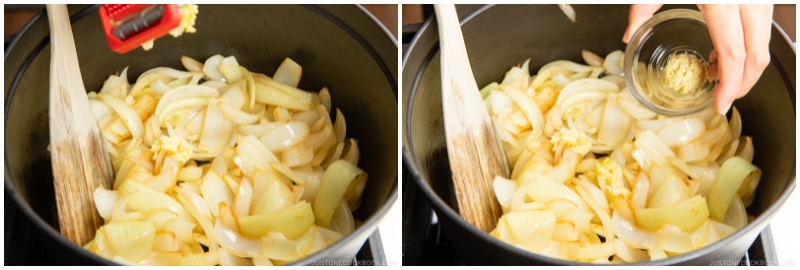
Add the minced garlic (I pass it through a garlic press for a finer texture) and grated ginger and mix well together.
- 4
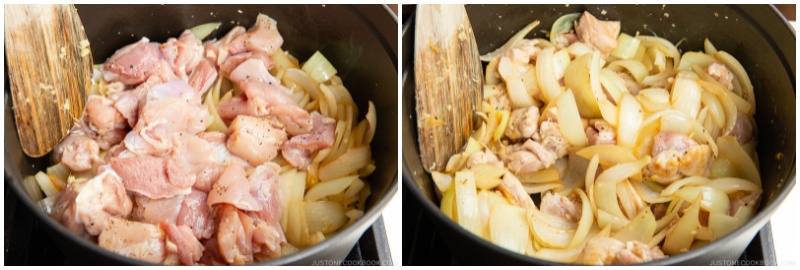
Add the chicken and cook, stirring frequently, until it‘s no longer pink on the outside. If the onions are getting too brown, reduce the heat to medium low temporarily.
- 5
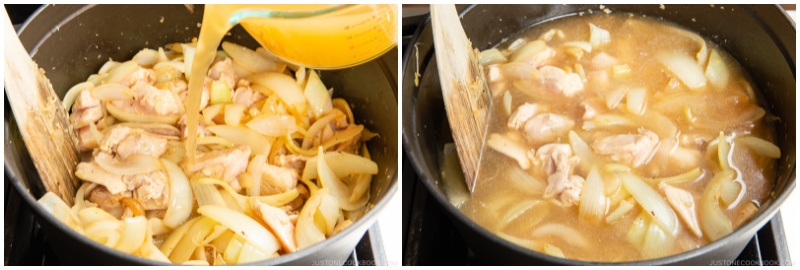
Add 4 cups chicken stock/broth. To reduce the sodium, you can substitute with water only or use half stock and half water, if you prefer. Tip: If you‘re using my homemade curry roux, you don‘t need to worry as it does not contain salt.
- 6
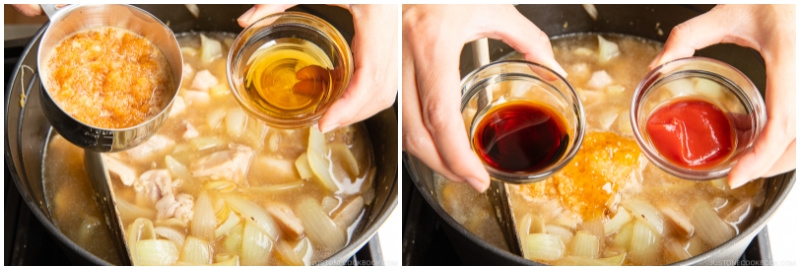
Add the grated apple, 1 Tbsp honey, 1 Tbsp soy sauce, and 1 Tbsp ketchup (or any condiment you choose to add). Please read my blog post for details.
- 7
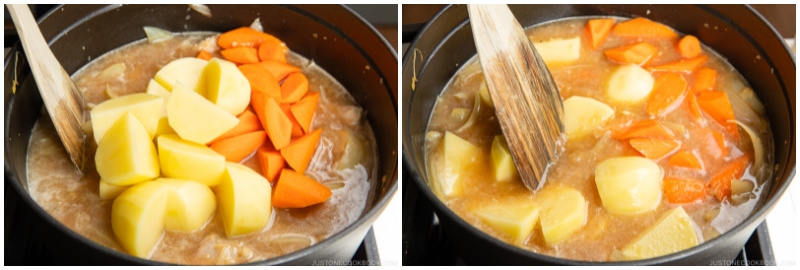
Add the carrots and Yukon gold potatoes (if you‘re using russet potatoes, add them later in the last 15–20 minutes of cooking). The broth should barely cover the ingredients. Don‘t worry; we don‘t want too much liquid here, and additional liquid will be released from the meat and vegetables.
- 8
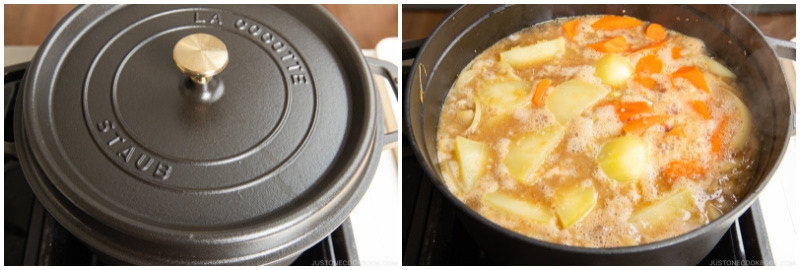
Simmer, covered*, on medium-low heat for 15 minutes, stirring occasionally. *Simmer uncovered if the ingredients are completely submerged in the broth.
- 9
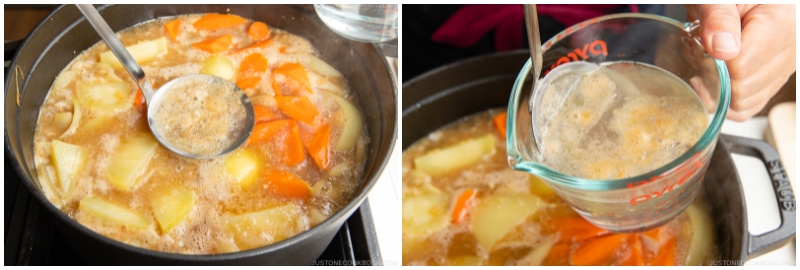
Once boiling, use a fine-mesh strainer to skim the scum and foam from the surface of the broth.
- 10
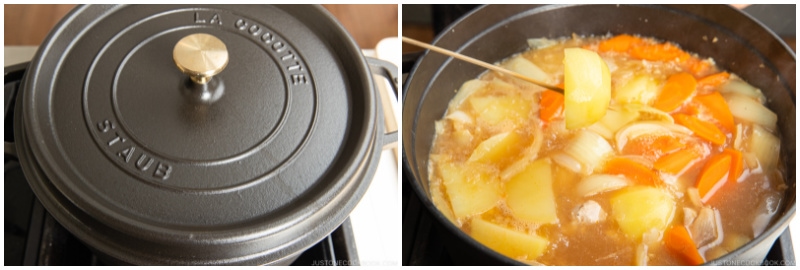
Continue to cook covered until a wooden skewer goes through the carrots and potatoes.
To add the curry roux
- 1
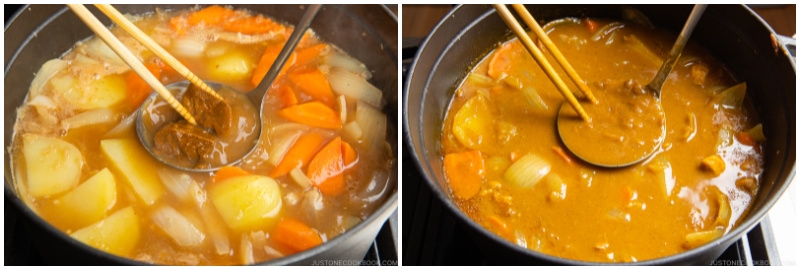
Turn off the heat. From 1 package Japanese curry roux, put 1–2 cubes in a ladleful of cooking liquid. Slowly let it dissolve with a spoon or chopsticks and stir into the pot to incorporate. Repeat with the rest of the blocks, 2 cubes at a time. Tip: I use 1 full-sized box of store-bought curry roux, which is typically for 8–12 servings (be careful, as some brands offer a smaller box, which is 4 servings). With my homemade curry roux, I typically use 6–7 cubes for 8 servings (about 80% of the curry roux mixture if it hasn‘t solidified yet).
- 2
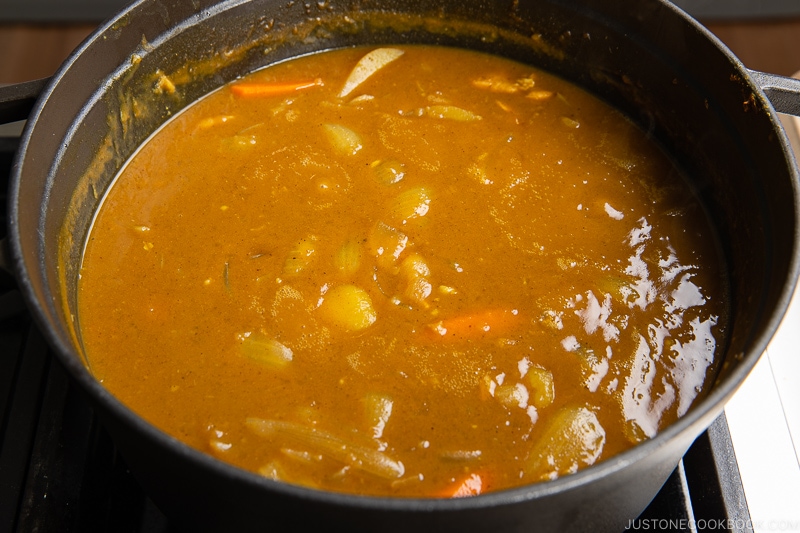
Simmer, uncovered, on medium-low heat, stirring frequently, until the curry becomes thick, about 5–10 minutes. If your curry is too thick, you can add water to thin the sauce. When you stir, make sure that no roux or food is stuck to the bottom of the pot; otherwise, it may burn.
- 3
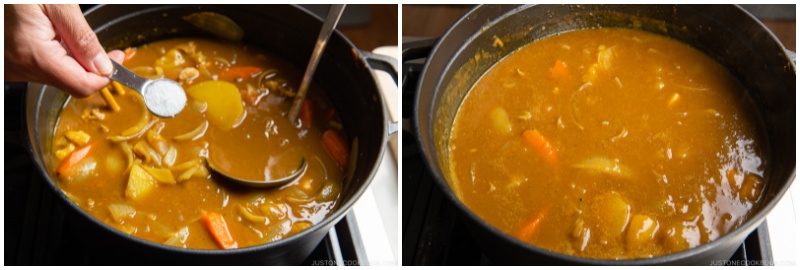
If you use my unsalted homemade curry roux, taste the curry now and add salt to your liking. Tip: I recommend adding 2–4 tsp Diamond Crystal kosher salt, but this will vary based on the brand of the chicken broth and condiments you added.
To serve
- 1
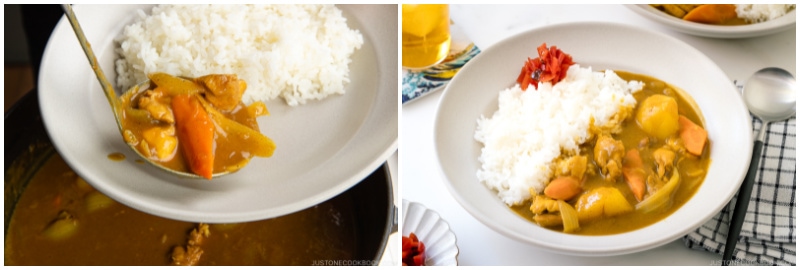
Serve the curry with steamed Japanese short-grain rice on the side. If you like, garnish with fukujinzuke (Japanese red pickled vegetables).
To store
- 1
You can keep the leftovers in a glass airtight container (so no stains!) and store it in the refrigerator for up to 3 days and in the freezer for a month. The texture of the potatoes will change in the freezer, so you should take them out before freezing. Defrost the frozen curry in the refrigerator for 24 hours before you want to reheat it.
To reheat
- 1
Leftover curry sauce will thicken into a paste as it cools, so it tends to burn while reheating. To avoid this, stir ½ cup (120 ml) water or more into the leftover sauce until loosened. Then, gently reheat it on low heat. If the sauce seems thin, continue heating with the lid off to reduce the sauce.
Japanese Chicken Curry
Ratings & Reviews
Be the First to Rate
Your rating helps others discover amazing recipes. Share your experience and let others know what you think!
About this Recipe
Craving a comforting, flavorful meal that's perfect for a family weeknight? This Japanese Chicken Curry recipe delivers tender chicken and vegetables in a rich, savory sauce that's sure to become a household favorite. It's a delicious choice for a satisfying dinner. What makes this Japanese Chicken Curry truly special is the perfect balance of savory notes from the curry roux with a subtle sweetness from ingredients like apple and honey. It's a deeply satisfying dish that offers robust flavors, making it an ideal choice for busy evenings when you want something flavorful without extensive effort. Prepare for a hearty and incredibly flavorful experience. You'll enjoy succulent pieces of boneless, skinless chicken thighs nestled among soft, savory carrots and creamy Yukon Gold potatoes, all enveloped in that signature rich and thick Japanese curry sauce. The combination of warmth and mild spice makes this a comforting main course, offering a delightful blend of familiar and exotic tastes for dinner. For the chicken, the recipe notes suggest substitutions are possible if you prefer other proteins, like pork, beef, or even a firm tofu for a vegetarian option. If you're managing sodium intake, consider using water or a mix of half stock and half water instead of full-strength chicken broth. Don't have Yukon Gold potatoes? Russets or red potatoes would also work well, though they might alter the texture slightly. This Japanese Chicken Curry is designed as a filling main course, perfect for a cozy family dinner or when you need a comforting meal. Serve it generously alongside fluffy cooked Japanese short-grain rice and a side of fukujinzuke (Japanese red pickled vegetables) for an authentic and complete meal.