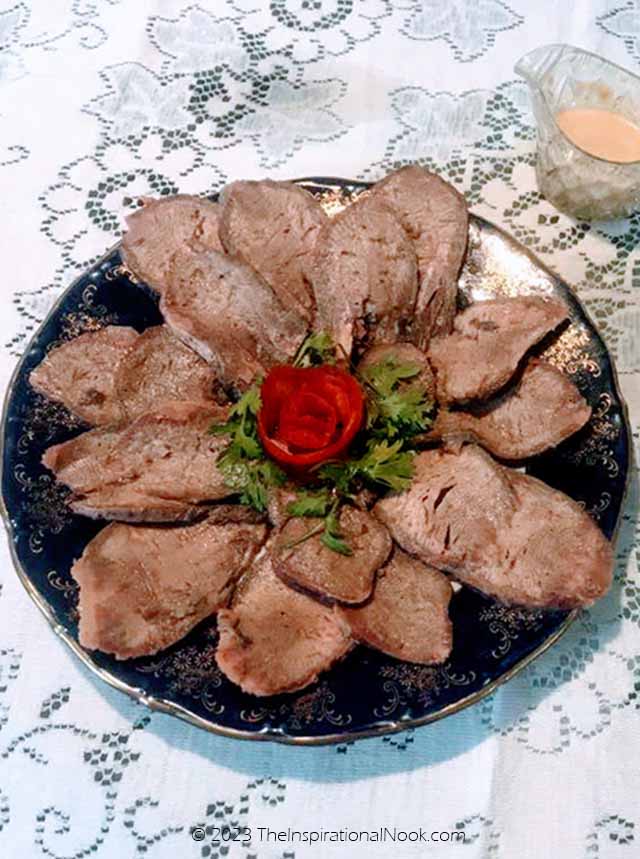
Salted Tongue | Goan or Anglo Indian Style
Ingredients
- 1beef tongue/ ox tongue
- 1 handfulkosher salt
- ½ tspPrague Powder #1/ pink salt/ curing salt
- ½ canCoca-Cola
- ¼ tspcinnamon powder
- ¼ tspclove powder
- ½ tsppepper powder
- Worcestershire sauce
a dash
- Water
sufficient to cover tongue when cooking
Directions
- 1
Soak tongue in cold water for 1-2 hours. Remove the salivary glands. Then, wash it well.
- 2
Using a serving fork/ long fork, prink the tongue completely on both sides, through and through.
- 3
Cut 2 limes in half. Dip the limes in a mixture of salt, Prague powder, cinnamon powder, clove powder, and pepper powder and rub it into the tongue. Place the tongue in a bowl along with the cut limes. Cover with a plate slightly smaller than the bowl, so that the plate sits on the top of the tongue. Place a heavy weight on top of the plate to push the tongue down. A bag of unopened rice is a good option to weight the tongue. Place in refrigerator.
- 4
Turn the tongue over twice a day, prick the tongue some more and then use the cut limes to rub the salt juice that come out of the tongue back into the tongue. Cover, weight and refrigerate. Do this for 4-5 days.
- 5
Remove the tongue from the refrigerator. Discard the juices. Run the tongue quickly under a tap of running water to remove a little bit of the salt. Put tongue in a pressure cooker. Add 1/2 a can of Coca-Cola. Add water to cover the tongue. Add a dash of Worcestershire sauce. After 1 whistle, turn heat down to low. Cook for 55 minutes. The tongue is cooked when a fork inserted into tongue goes half way through easily.
- 6
Once the cooked tongue has cooled sufficiently, while the tongue is still warm, remove the skin off the tongue starting from the tip and peeling upwards. The skin should peel off like peeling a potato. Remove the skin from both the top and underside of the tongue.
- 7
Store the tongue in the fridge in the cooking liquid. Slice the tongue when cold and serve.
Salted Tongue | Goan or Anglo Indian Style
Ratings & Reviews
Be the First to Rate
Your rating helps others discover amazing recipes. Share your experience and let others know what you think!
About this Recipe
Discover the rich, flavorful tradition of Salted Tongue | Goan or Anglo Indian Style, a cherished family recipe passed down through generations. This isn't just any beef tongue roast; it's a testament to the unique culinary fusion that defines Anglo-Indian cuisine, bringing together bold flavors and simple techniques for an unforgettable dish.Our Goan beef tongue recipe stands out by utilizing Prague Powder #1 for a proper cure, transforming a humble ox tongue into a succulent, perfectly seasoned centerpiece. This careful curing process is essential, giving the salted beef tongue its characteristic flavor and appealing pink hue, reminiscent of classic corned tongue.The beauty of this Anglo Indian salted tongue lies in its simplicity and deep flavor. Cooked to tender perfection in a pressure cooker, it minimizes cooking time while maximizing tenderness, making it approachable for home cooks. The aromatic blend of cinnamon, clove, and pepper, balanced with a unique touch of Coca-Cola and a dash of Worcestershire sauce, infuses the meat with an incredible, subtle sweetness and complexity that truly elevates this salted tongue Goan style.Whether you call it corned beef tongue, salted ox tongue, or simply a delicious tongue roast, this recipe is incredibly versatile. It's often enjoyed thinly sliced as an appetizer, piled high in sandwiches, or as a star component of a cold cut platter. Pair this Goan Tongue Roast with a sharp mustard or a tangy chutney for an authentic experience. It’s a nostalgic dish that promises to impress with its tender texture and unforgettable taste.