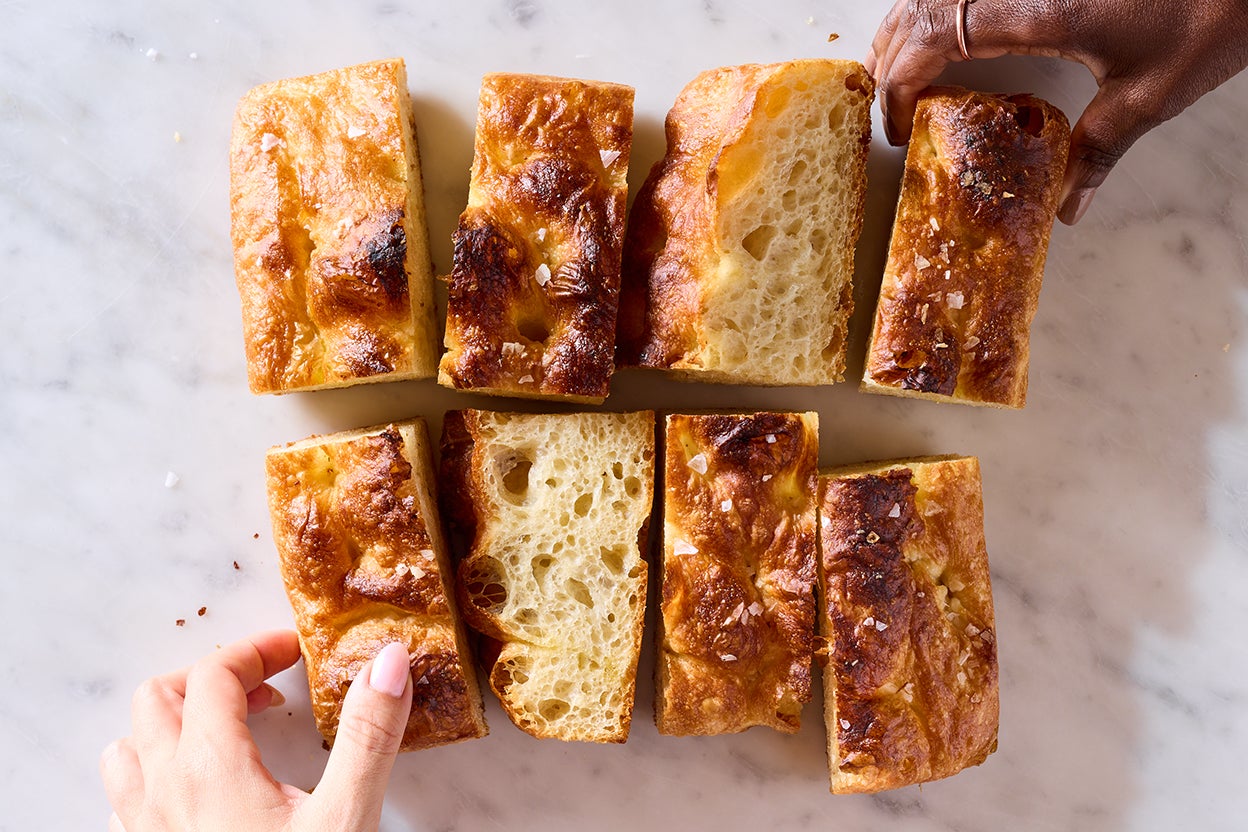
Big and Bubbly Focaccia
Ingredients
- 3 cking arthur unbleached all-purpose flour
- 1 ½ tsptable salt
- 1 tspgranulated sugar
- 1 tspinstant yeast
- 1 ¼ cwater
warm, 90°f to 110°f
- 1 ½ tbspextra-virgin olive oil
- 2 tbspextra-virgin olive oil
divided
- flaky sea salt
for topping
Directions
- 1
To make the dough: Weigh your flour; or measure it by gently spooning it into a cup, then sweeping off any excess. In a large bowl (a 3-quart bowl with a lid works great), whisk together the flour, salt, sugar, and yeast.
- 2
Add the water and olive oil and stir — with a spatula, bowl scraper, dough whisk, or your hands — until the mixture is thoroughly combined and homogeneous; there should be no dry patches or lumps. Cover the bowl and set it aside for 15 minutes.
- 3
Perform the first bowl fold: Use a wet hand to grab a section of dough from one side of the bowl, then lift it up and press it into the center. Repeat this motion, grabbing a new section of dough each time, until you've made a full circle around the bowl, about 8 to 12 times. Once you’ve circled the bowl, flip the dough over in the bowl so that the smooth side is up; the first bowl fold is now complete. Cover the bowl and let the dough rest for 15 minutes. Note: You’ll be doing this three more times over the next 45 minutes, each time further developing the dough’s strength.
- 4
Repeat the bowl fold for a second time. (Remember to use a wet hand to prevent the dough from sticking!) At this point, the dough should feel smoother and tighter. Cover the bowl and let the dough rest for 15 minutes.
- 5
Repeat the bowl fold for a third time. Cover the bowl and let the dough rest for 15 minutes.
- 6
Repeat the bowl fold for a fourth and final time; the dough should feel relatively strong.
- 7
Cover the bowl and let the dough rise at a warm room temperature (70°F to 75°F) for 1 hour; see this post, Where to put dough to rise, for tips. After 1 hour, the dough should have nearly doubled in size and will be very puffy; it may even have a few bubbles on the surface.
- 8
To prepare the pan: Once the dough has risen, spray the bottom and sides of a 9" square Fabulous Focaccia Pan with nonstick spray. (See “tips,” below for details about this pan as well as alternate pan options.) Cut a 3"-wide strip of parchment that's about 16" long. Lay the strip across the center of the pan, leaving a few inches of overhang on two sides; press it firmly into the pan and crease the parchment where it meets the sides of the pan to help it stay in place. (The parchment tabs will help you remove the focaccia from the pan later.)
- 9
Spray the parchment with nonstick spray, then add 1 tablespoon (13g) of the olive oil and tilt the pan to spread the oil evenly across the bottom.
- 10
Use a bowl scraper or flexible spatula to gently transfer the risen dough to the center of the pan. Using your hand as paddles (and a bowl scraper for assistance, if you need it) swiftly but gently flip the dough over so that it’s coated in oil; try to handle the dough minimally to keep it from deflating.
- 11
Cover the pan and let the dough rise at a warm room temperature for 1 to 1 1/2 hours, until it’s marshmallowy and jiggly; the dough should nearly fill the corners of the pan and be very close to the top edge.
- 12
Toward the end of the rise, preheat the oven to 475°F with racks in the upper and lower thirds.
- 13
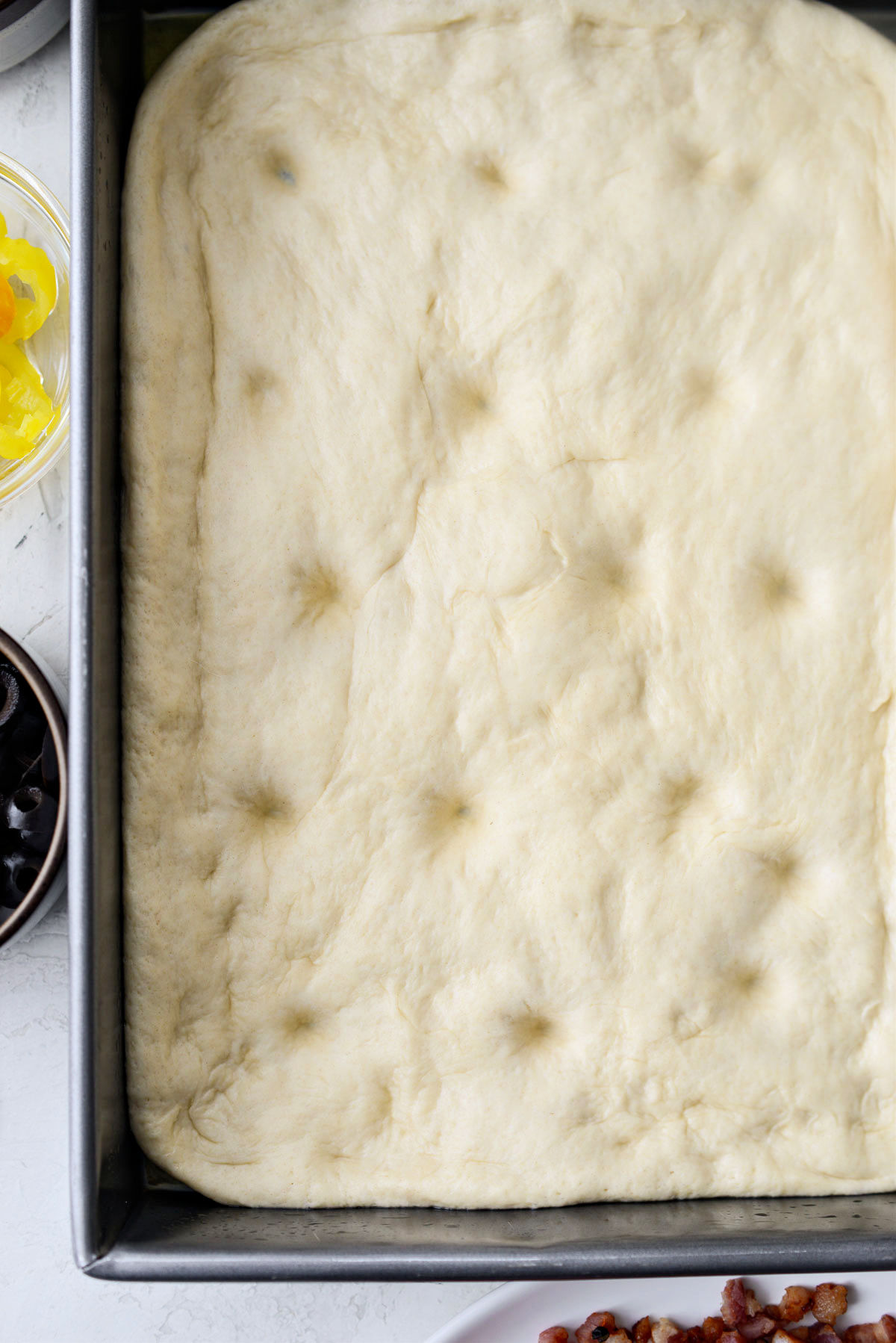
Once the dough has risen, lightly coat your fingers in oil. Starting at one edge, press your fingertips into the dough until they reach the bottom of the pan, creating dimples. Repeat this process, working your way from one edge to the other, spacing the dimples about 1 1/2" apart. The goal is to thoroughly dimple the dough without deflating it — aim for decisive yet gentle motions. If there are any large untouched areas of the dough, add additional dimples using one finger.
- 14
To top the dough: Drizzle the remaining 1 tablespoon (13g) olive oil all over the surface of the dough; it’s OK if it pools in some dimples. Sprinkle evenly with flaky salt (use 1 generously rounded teaspoon Cyprus Flake Salt or 1/2 teaspoon Maldon).
- 15
Bake the focaccia on the lower rack for 15 to 18 minutes, until brown in the highest spots and golden in the crevices. If necessary, move the pan to the top rack and broil briefly for the final 1 to 2 minutes, watching carefully, to achieve the desired color.
- 16
Remove the focaccia from the oven. Using the parchment tabs as handles, lift the focaccia out of the pan and transfer it to a wire rack or cutting board; remove the parchment strip. Turn off the oven and slide the focaccia back into the oven, directly on the lower rack, for 5 to 7 minutes, until the sides are golden brown and crisp. Remove the focaccia from the oven once again and transfer it to a wire rack to cool completely.
- 17
Storage information: Focaccia is best enjoyed the day it's made. If storing leftovers, wrap the focaccia loosely in foil, keep it at room temperature, and reheat before serving.
Big and Bubbly Focaccia
Similar Recipes


Ratings & Reviews
Based on 511 ratings
Rating Breakdown
About this Recipe
Imagine pulling a golden, airy focaccia straight from your oven, its aroma filling the kitchen and promising pure delight. Our Big and Bubbly Focaccia, named the 2025 Recipe of the Year, delivers just that—a showstopping loaf that’s surprisingly easy to achieve.
This recipe truly shines by combining a largely hands-off folding method with readily available all-purpose flour, creating a dough that’s both strong enough to rise dramatically and exquisitely tender inside. A clever technique of briefly returning the baked bread to the oven after removing it from the pan ensures every surface achieves a perfect golden crispness, truly setting it apart from other flatbreads.
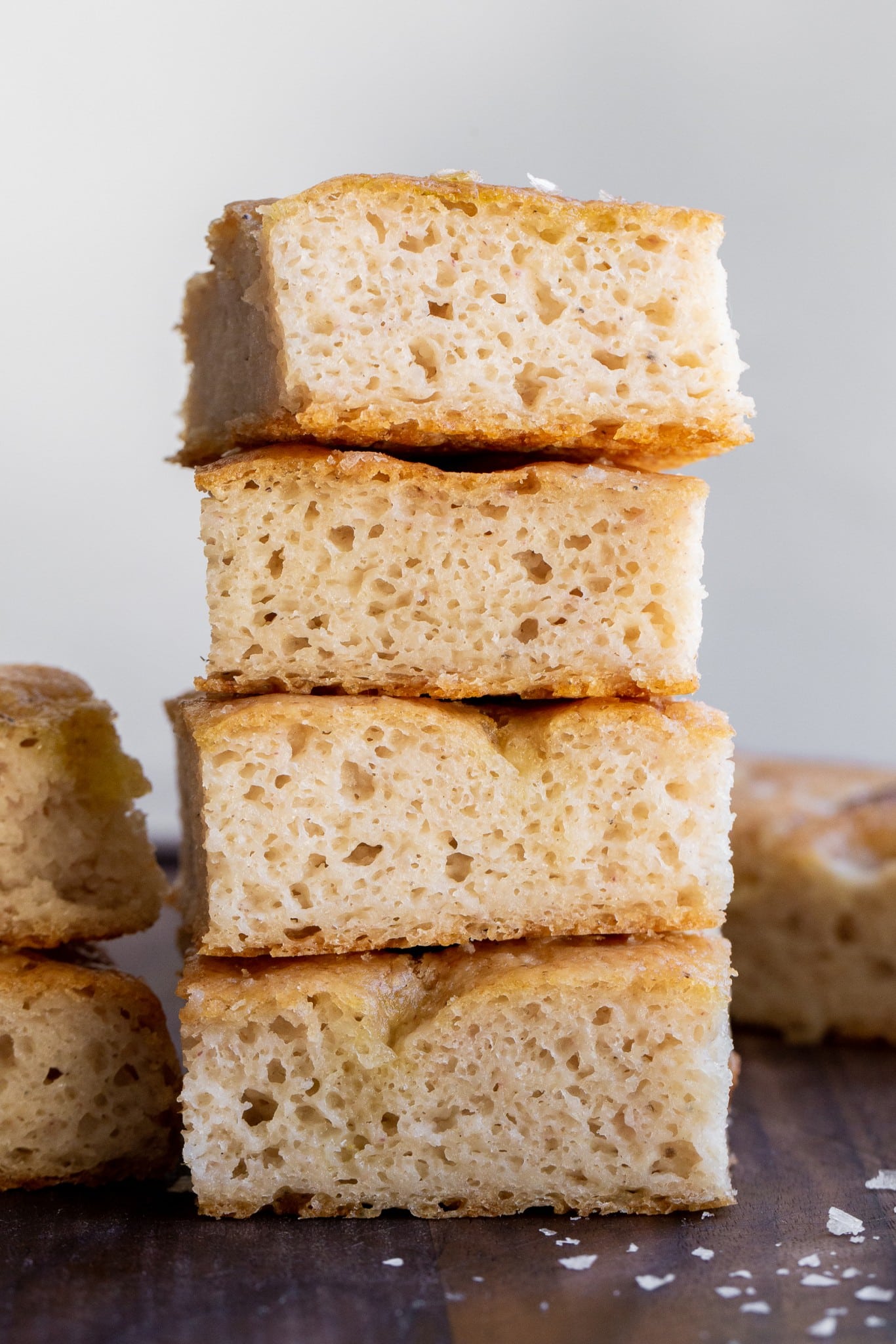
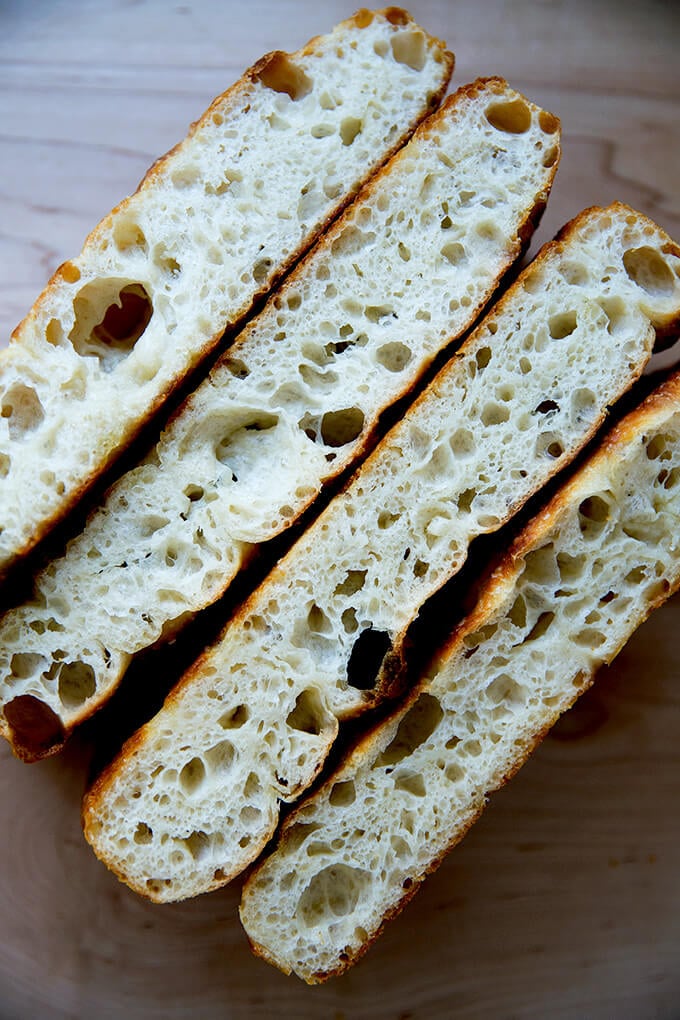
Prepare for a focaccia experience unlike any other. You'll bite into a bread with a beautifully bubbly, bronzed top and distinctively crisp edges, giving way to a lofty yet incredibly light and airy interior. Each piece offers a tender chew, highlighted by the rich flavor of extra-virgin olive oil and a delicate sprinkle of flaky sea salt. This bread is strikingly tall and perfectly sized for sharing, making it an ideal centerpiece for any meal, providing 110 calories per serving.
Customization & Serving
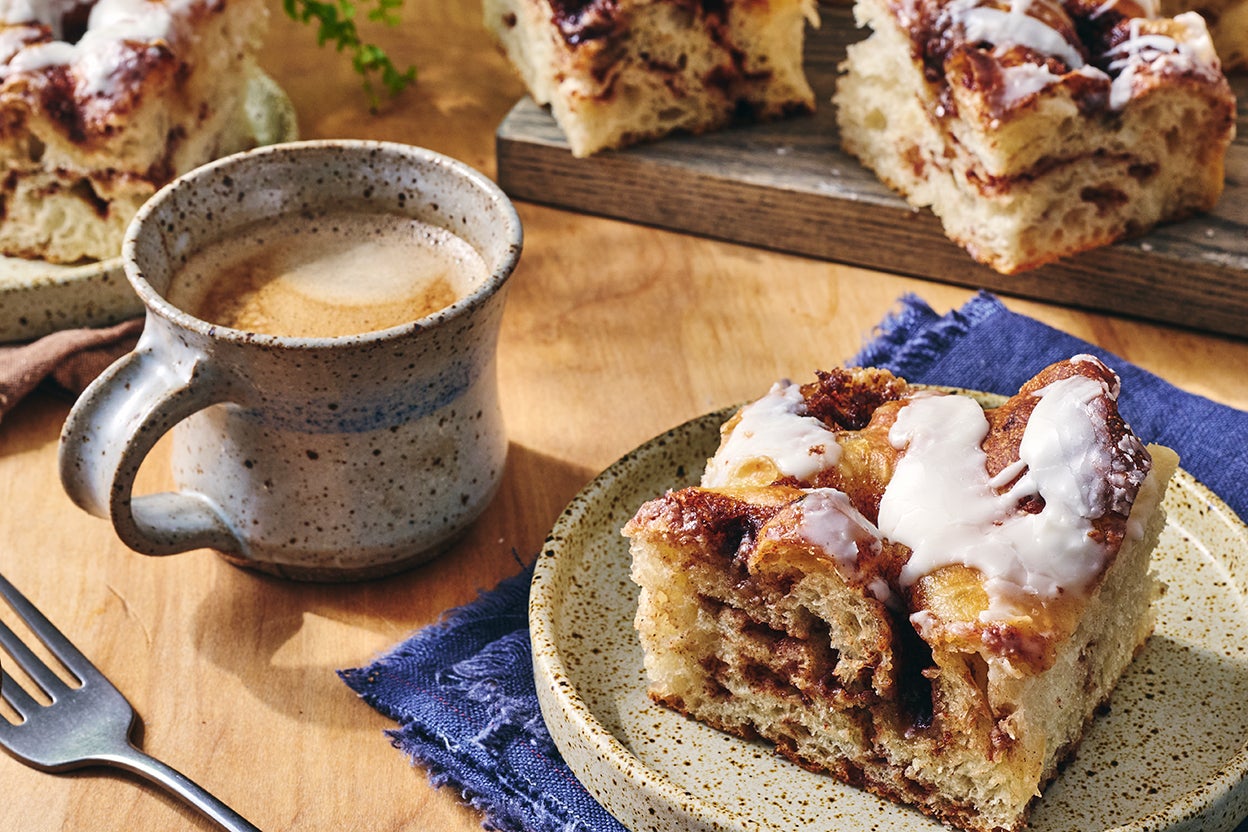
Once you've mastered this classic version, explore its versatility. This recipe is naturally dairy-free and vegan, making it accessible for many diets. While not explicitly listed, you could explore adding fresh herbs like rosemary or garlic for a savory twist, or even making a sweet version. The description notes that you can also try a sourdough edition or even a cinnamon roll focaccia if you're feeling adventurous with the base dough.
This Big and Bubbly Focaccia is perfect for sharing at the dinner table, whether as an impressive appetizer, alongside a hearty pasta, or simply dipped in your favorite olive oil and balsamic vinegar. It's a comforting yet elegant addition to any gathering.