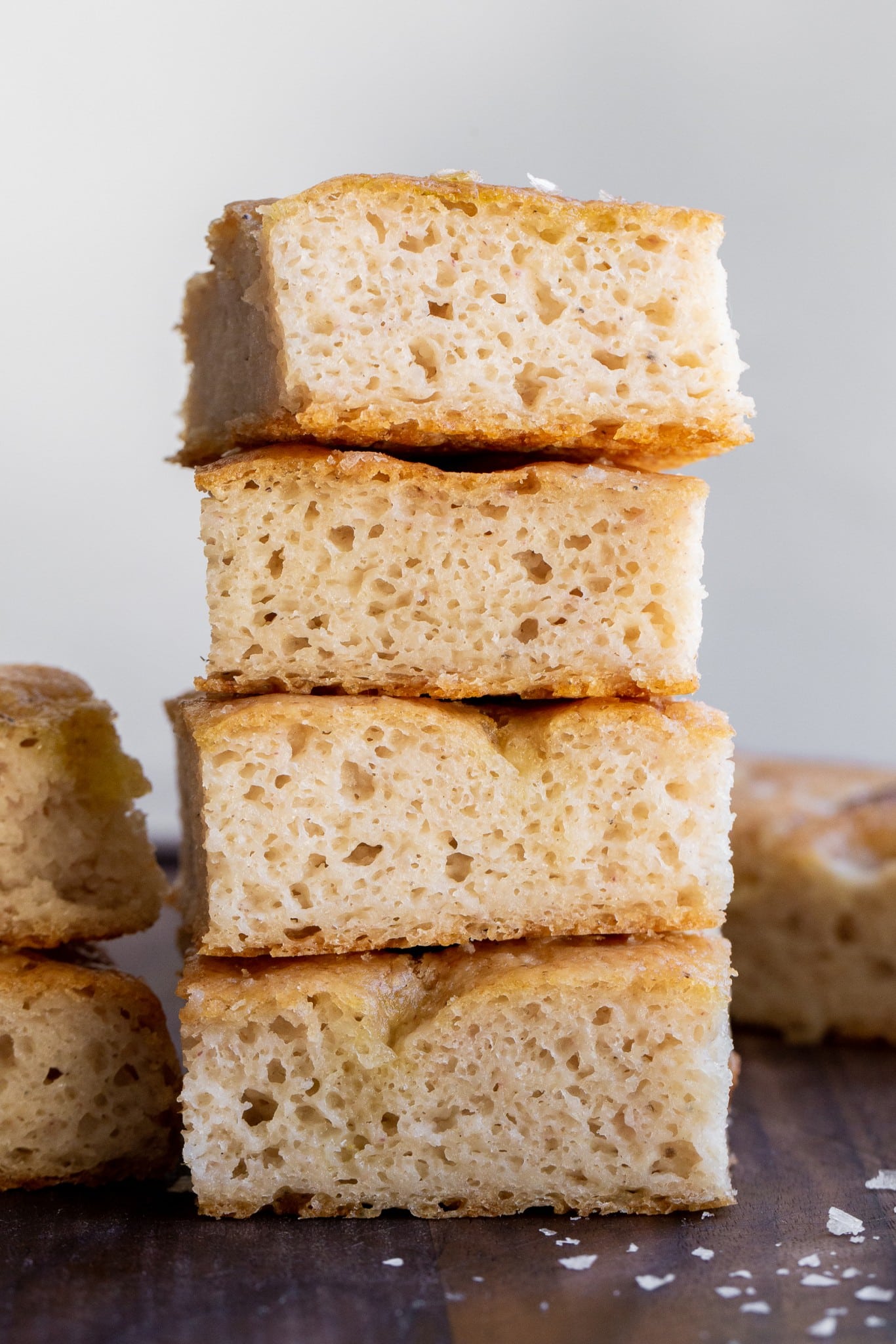
Easy Gluten-Free Focaccia Bread
Ingredients
- 7g active dry yeast
2.5 tsp
- 100g warm filtered water
- 20g maple syrup
honey or cane sugar
- 12g whole psyllium husk
- 275g filtered water
room temperature
- 80g starch of your choice
such as potato starch, tapioca starch, or arrowroot starch
- 220g gluten-free whole grain flours of your choice
such as a combination of sorghum flour, brown rice flour, quinoa flour, buckwheat flour, millet flour, etc.
- 10g sea salt
- Olive oil
Directions
- 1
Grease a 9×9″ square baking pan with a generous amount of olive oil; set aside.
- 2
In a small bowl, combine the yeast with the sweetener of your choice and warm water, between 100-110℉. It should feel very warm, but not too hot, to the touch. Let it sit to activate for about 10 to 15 minutes. You should notice it start to to bubble, and then it will get nice and foamy on top.
- 3
Combine the psyllium husk and the water in a bowl or liquid measuring cup. Let it thicken and gel up for about 5 minutes.
- 4
In a large bowl or the bowl of a stand mixer, combine the starch, flour, and salt. Add in the activated yeast mixture and thickened psyllium gel mixture. Mix until a smooth dough forms, making sure to scrape down the sides and the bottom to make sure all of the flour is hydrated. If the dough seems sticky, let it rest for a few more minutes to let the psyllium and flours absorb.
- 5
Press into your prepared baking dish, or press it into a similarly sized shape on a baking sheet.
- 6
Let rise for 1 hour at warm room temperature. While the dough rises, preheat the oven to 425ºF. The dough will feel lighter and puffy when it’s ready.
- 7
When it’s fully risen, drizzle the dough with a healthy glug of olive oil and use your fingers to press dimples into the dough.
- 8
Add toppings if desired, or just sprinkle with flaky sea salt.
- 9
Bake for 35 to 40 minutes, or until golden brown and baked through.
- 10
Let cool for 30 minutes and then remove from the pan and allow to cool completely on a wire baking rack (this keeps the bottom from getting soggy). You can also serve this one while it’s still warm – it’s so delicious that way!
- 11
Store at room temperature for two to three days, in the fridge for up to a week, or slice and freeze in an airtight container for up to six months.
Easy Gluten-Free Focaccia Bread
Similar Recipes

Ratings & Reviews
Be the First to Rate
Your rating helps others discover amazing recipes. Share your experience and let others know what you think!
About this Recipe
Craving homemade bread but dealing with dietary restrictions? This Easy Gluten-Free Focaccia Bread recipe makes achieving that dream a reality, proving that delicious, fluffy focaccia is well within your reach, even without gluten.
Why This Recipe Works
What sets this focaccia apart is its brilliant simplicity and thoughtfully chosen ingredients. With just eight key components, the dough comes together quickly, allowing you to enjoy freshly baked bread in under two hours. The inclusion of whole psyllium husk is crucial here, creating a wonderfully fluffy texture that often feels elusive in gluten-free baking.
What to Expect
Prepare for a truly delightful experience. This recipe delivers a focaccia that is wonderfully fluffy and tender on the inside with a satisfying chew. It’s not just gluten-free; it's also vegan and top-8 allergen-free, making it a fantastic option for nearly everyone at your table. For the best, most consistent results, you'll want to use a reliable kitchen scale, ensuring precise measurements of your gluten-free flours and liquids.
Customization & Variations
This versatile focaccia is a perfect canvas for your culinary imagination. You can choose your favorite starch from options like potato starch, tapioca starch, or arrowroot starch. For the whole grain flours, feel free to experiment with a combination of sorghum flour, brown rice flour, quinoa flour, buckwheat flour, or millet flour. Don't forget the sweetener; use maple syrup, honey, or cane sugar depending on your preference. Plus, the recipe invites a wide variety of toppings, from classic herbs to sun-dried tomatoes or olives.
Serving & Context
This Easy Gluten-Free Focaccia Bread is perfect for any meal, whether alongside a hearty soup, as a base for sandwiches, or simply dipped in good olive oil. Its light, airy texture and savory flavor make it an excellent accompaniment to a casual weeknight dinner or a special gathering.