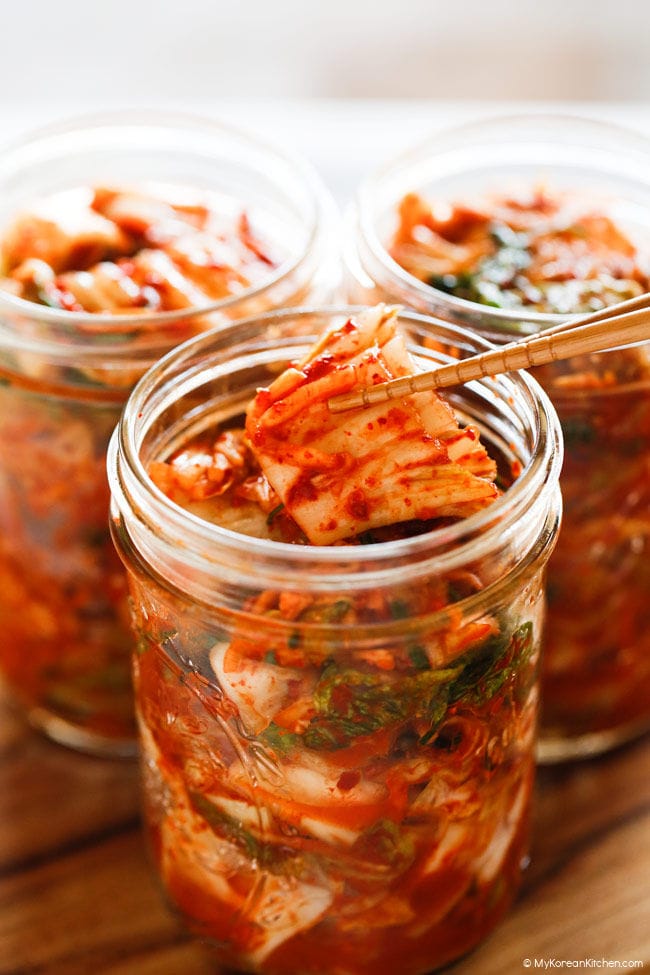
Kimchi Recipe
Ingredients
- 4 kg napa cabbage
remove thick outer cabbage leaves), (8.8 pounds
- 16 cups water)
(3840 ml
- 1.5 cups Korean coarse sea salt
), or natural rock salt (for salt water
- 1/2 cup cooking salt
), , medium sized crystals (for sprinkle
- 2 Tbsp glutinous rice flour)
(sweet rice flour
- 1.5 cups water)
(360 ml
- 1.5 cups gochugaru
), (Korean chili flakes
- 540 g Korean radish
julienned), or daikon radish (19 ounces
- 1 Tbsp fine sea salt
- 3.5 Tbsp Korean fish sauce
- 2 Tbsp salted fermented shrimp
, minced
- 90 g Korean chives
cut in 5 cm / 2 inch length), (3.2 ounces
- 140 g carrots
julienned), (4.9 ounces
- 1/4 cup minced garlic)
(42g / 1.48 ounces
- 1/2 Tbsp minced ginger
- 2 Tbsp raw sugar
- 75 g onion
blended or finely grated), (2.6 ounces
Directions
- 1
Cut the napa cabbage into quarters and rinse it in running water. Make sure the stem is intact.
- 2
Dissolve the coarse salt in the water (16 cups) in a large bowl. Dip the napa cabbage in the saltwater one at a time and transfer it onto a tray for further salting.Pinch some cooking salt (1/2 cup total for all pickled cabbages) and rub over the thick white part of the cabbage. Open each leaf gently and sprinkle the salt over the thick white part. Repeat this for the rest of the cabbage. Reserve the saltwater from when you soaked the cabbage for later use.
- 3
Put the salted cabbage in a large food grade plastic bag or large bucket (wedge side of the cabbage to be facing up) and pour in the reserved saltwater from step 2. Close the plastic bag. If using a bucket, get something heavy on top of the cabbage to press down (e.g heavy pot with water).Set the cabbage aside for 6 hours to pickle. Rotate the cabbage upside down every 2 hours. Using a large food grade plastic bag will make the turning process much easier than using a large bucket.
- 4
Once the soaking process is finished, rinse the cabbages in running water, especially the thick white part of the cabbage, to get rid of the salt. Place them in a colander and allow to drain for 1 hour.
- 5
While waiting, prepare the glutinous rice paste. Mix glutinous rice flour with the water (1.5 cup) in a saucepan and boil it over medium heat for 5-8 minutes, until it thickens. Once ready, transfer the rice paste to the medium-size bowl and let it cool. Add Korean chili flakes once it has cooled. Then, combine them well.
- 6
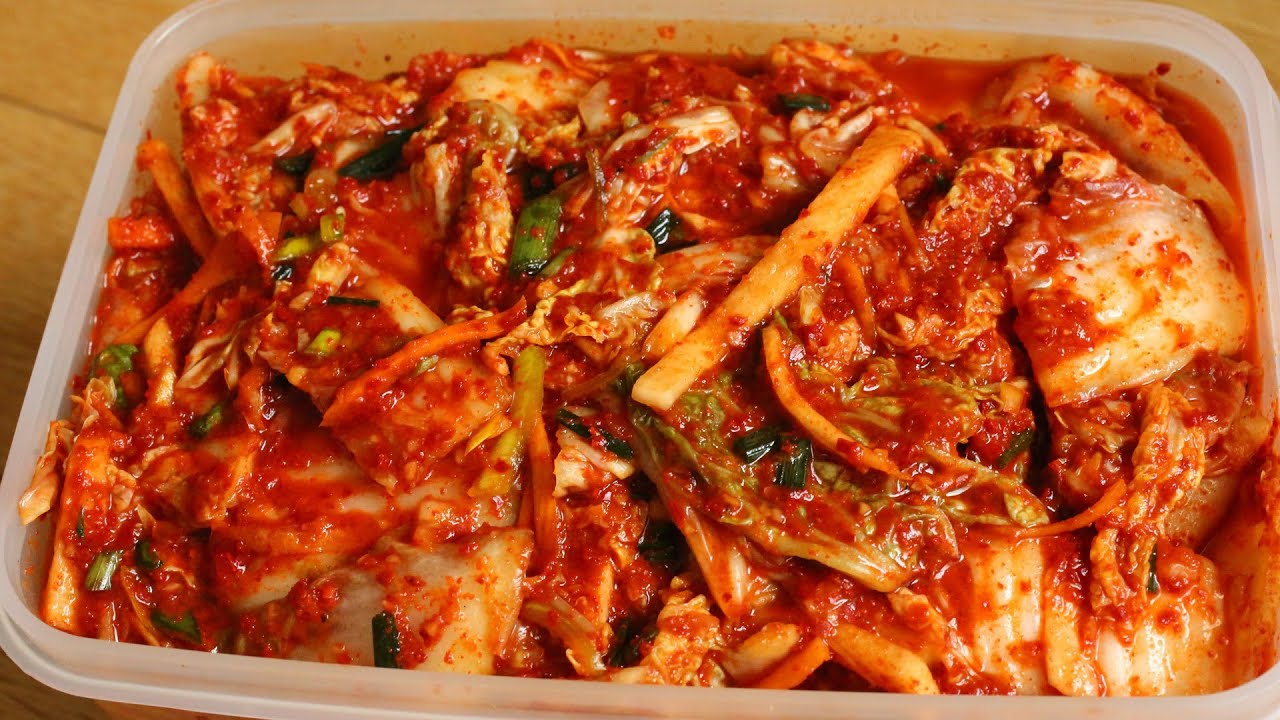
Prepare a large mixing bowl and add radish, fine sea salt, Korean fish sauce, and salted shrimp. Leave it for 10 minutes for the radish to salt down. Add Korean chives, carrots, minced garlic, minced ginger, sugar, blended onion, and the Korean chili flakes mixture from step 5. Mix them well. Now the kimchi seasoning / kimchi paste is made, ready for use.
- 7
Place a quarter of a cabbage on a tray. Spread the seasonings over each leaf. (You only need to season one side of the leaf.) 1 to 2 small fistfuls of seasoning is enough per quarter of cabbage. Repeat this step for the rest of the cabbage. Don’t pull the cabbage leaves off the stem, leave them attached so it holds together better.
- 8
Transfer the kimchi into a kimchi container or an airtight container (and put the lid on). Leave it out at room temperature for 24 hours, then move it to the refrigerator. While you can start eating it once it’s chilled, you may want to wait 3-4 more days for it to develop more flavor.
Kimchi Recipe
Similar Recipes


Ratings & Reviews
Be the First to Rate
Your rating helps others discover amazing recipes. Share your experience and let others know what you think!
About this Recipe
Dreaming of vibrant, probiotic-rich kimchi that brightens any meal? This classic napa cabbage kimchi recipe guides you through creating that deeply satisfying, spicy, and savory Korean staple right in your own kitchen. It's a culinary journey that rewards you with authentic flavors and a true taste of Korean tradition.
What makes this kimchi recipe special is its commitment to traditional ingredients and a patient fermentation process. By carefully brining the napa cabbage and then coating it in a rich, complex paste made from gochugaru, Korean radish, Korean chives, and essential flavor enhancers like Korean fish sauce and salted fermented shrimp, you're building layers of umami and spice that deepen with time. The inclusion of glutinous rice flour also plays a critical role in developing the signature texture and aiding the fermentation process.
Prepare for a truly authentic kimchi experience. You'll find the napa cabbage remains wonderfully crisp, offering a refreshing counterpoint to the vibrant, spicy, and tangy seasoning. The julienned Korean radish adds a delightful crunch and peppery notes, while the Korean chives infuse a fresh, aromatic finish. The flavor profile starts bold and pungent, evolving into a complex tapestry of sweet, savory, and spicy as it ferments. This recipe yields a significant batch, ensuring you'll have plenty to enjoy and share.
For those looking to adapt, you can easily swap Korean radish for daikon radish if needed. While the recipe calls for Korean coarse sea salt or natural rock salt, these are key for the brining process. Feel free to adjust the amount of gochugaru to suit your preferred spice level, adding less for a milder kimchi or more for an extra kick.
Serve this versatile kimchi as a foundational side dish alongside any Korean meal, use it to elevate rice bowls, or incorporate its unique flavor into stews and stir-fries. It’s a perfect accompaniment to grilled meats and a vibrant addition to banchan (Korean side dishes).