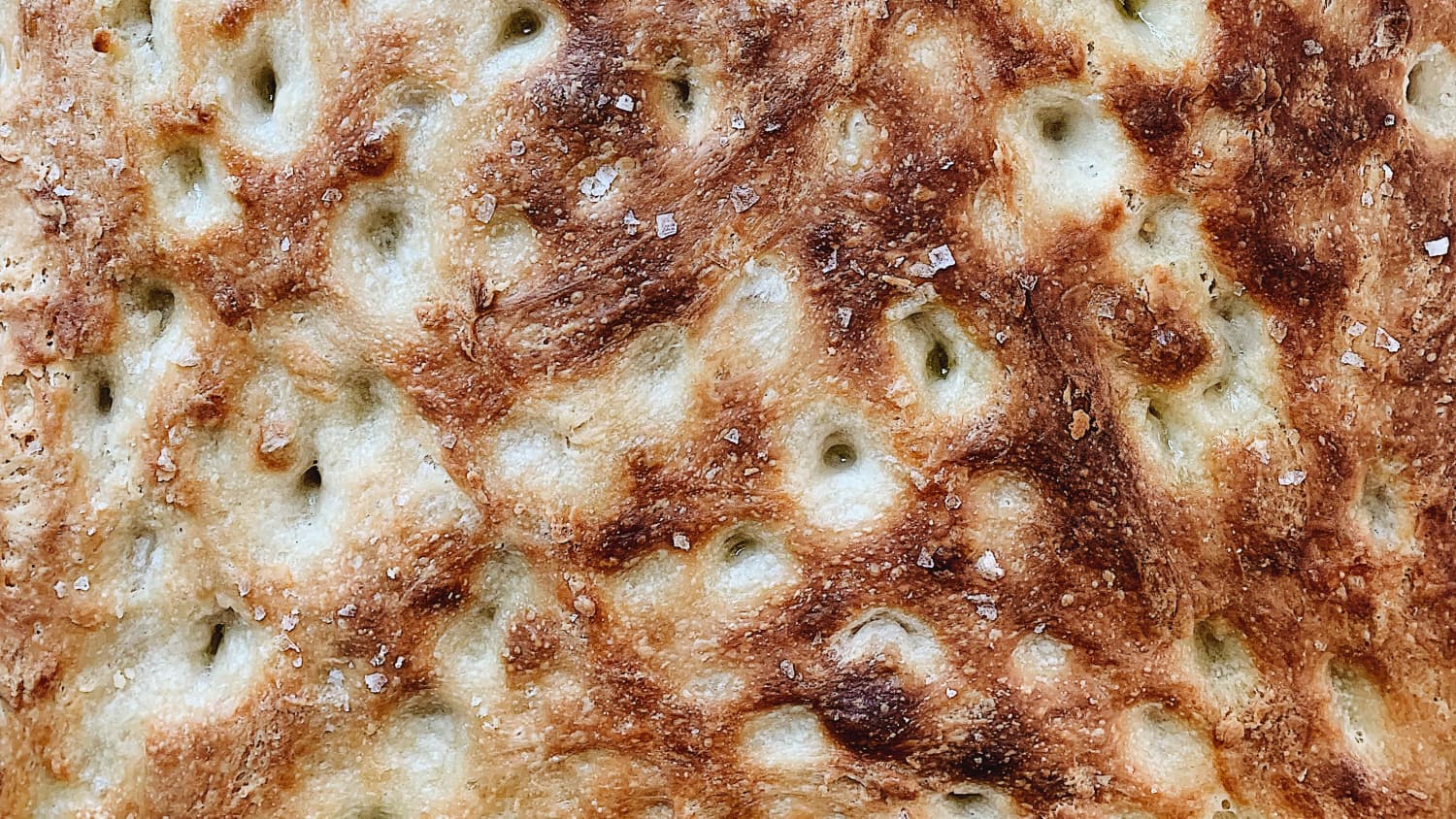
Samin Nosrat’s Ligurian Focaccia
Ingredients
- 2 ½ clukewarm water
- ½ tspactive dry yeast
- 2 ½ tsphoney
- 5 ⅓ call-purpose flour
- 2 tbspdiamond crystal kosher salt
or 1 tablespoon fine sea salt
- ¼ cextra-virgin olive oil
plus more for the pan and finishing
- flaky salt
for finishing
- 1 ½ tspdiamond crystal kosher salt
- ⅓ clukewarm water
Directions
- 1
In a medium bowl, stir together water, yeast, and honey to dissolve. In a very large bowl, whisk flour and salt together to combine and then add yeast mixture and olive oil. Stir with a rubber spatula until just incorporated, then scrape the sides of the bowl clean and cover with plastic wrap. Leave out at room temperature to ferment for 12 to 14 hours until at least doubled in volume.
- 2
Spread 2 to 3 tablespoons oil evenly onto a 18-by-13 inch rimmed baking sheet. When dough is ready, use a spatula or your hand to release it from the sides of the bowl and fold it onto itself gently, then pour out onto pan. Pour an additional 2 tablespoons of olive oil over dough and gently spread across. Gently stretch the dough to the edge of the sheet by placing your hands underneath and pulling outward. The dough will shrink a bit, so repeat stretching once or twice over the course of 30 minutes to ensure dough remains stretched.
- 3
Dimple the dough by pressing the pads of your first three fingers in at an angle. Make the brine by stirring together salt and water until salt is dissolved. Pour the brine over the dough to fill dimples. Set the focaccia aside to rise for 45 minutes until the dough is light and bubbly.
- 4
Thirty minutes into this final proof, adjust rack to center position and a second rack to the upper position. Preheat oven to 450°F. If you have a baking stone, place it on the center rack. Otherwise, invert another sturdy baking sheet and place on that rack. Allow to preheat with the oven until very hot, before proceeding with baking.
- 5
Sprinkle focaccia with flaky salt. Bake for 25 to 30 minutes directly on top of stone or inverted baking sheet until bottom crust is crisp and golden brown when checked with a metal spatula. To finish browning top crust, move focaccia to upper rack and bake for 5 to 7 minutes more.
- 6
Remove from oven and brush or douse with 2 to 3 tablespoons oil over the whole surface (don’t worry if the olive pools in pockets, it will absorb as it sits). Let cool for 5 minutes, then release focaccia from pan with metal spatula and transfer to a cooling rack. Serve warm or at room temperature.
Recipe notes
- 1
Storage: To store, wrap in parchment and then keep in an airtight bag or container to preserve texture. Gently toast or reheat any leftover focaccia before serving. Alternatively, wrap tightly to freeze, then defrost and reheat before serving.Reprinted reprinted with permission courtesy of Netflix's Salt, Fat, Acid, Heat. Adapted from Diego Bedin with the help of Josey Baker.
Samin Nosrat’s Ligurian Focaccia
Similar Recipes


:max_bytes(150000):strip_icc()/garlic-and-rosemary-focaccia-0324FEAT_38677-realsimple-af127dc60d2d4e5082d883b92db6b5f9.jpg)
Ratings & Reviews
Be the First to Rate
Your rating helps others discover amazing recipes. Share your experience and let others know what you think!
About this Recipe
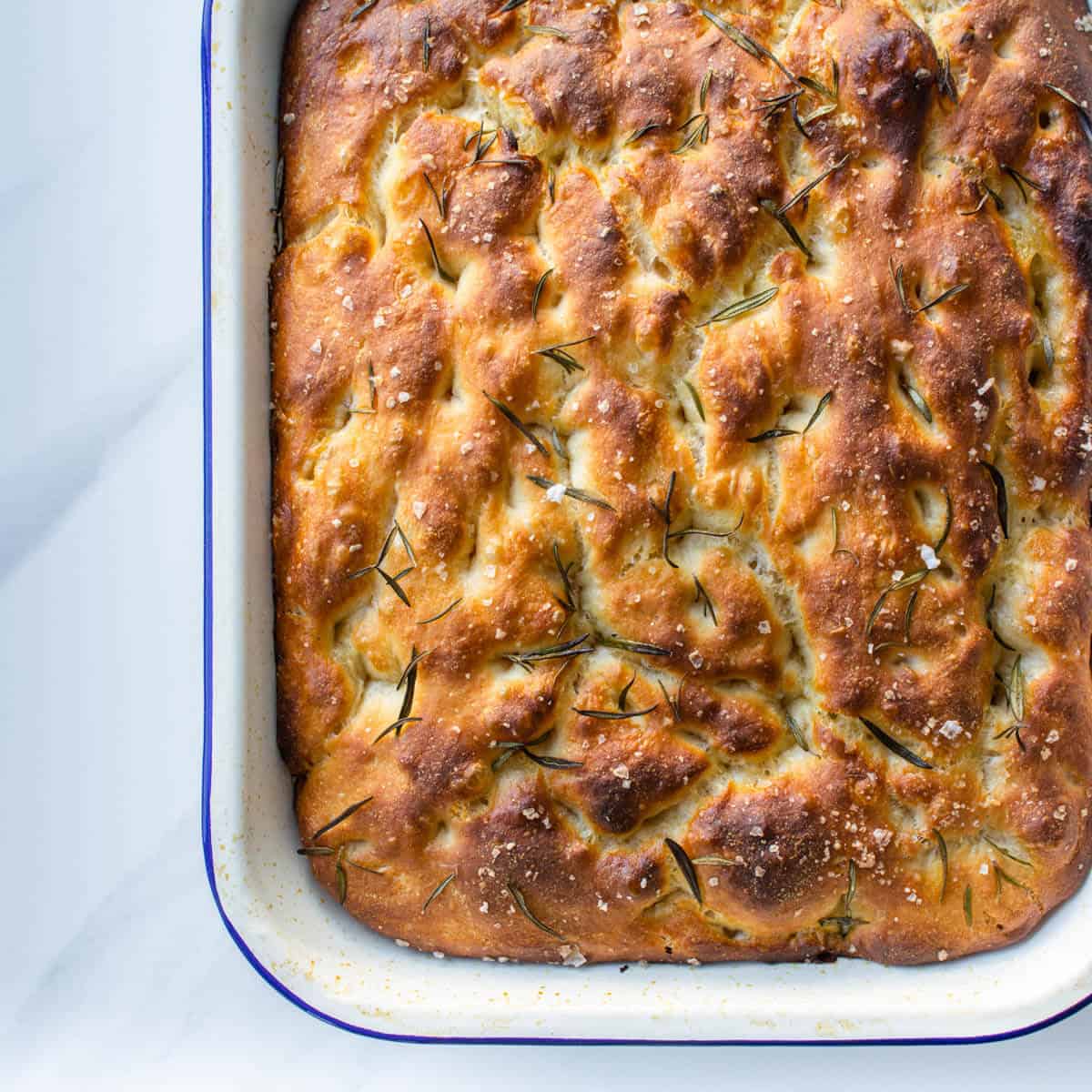
Craving the authentic taste of rustic Italian bread, perfectly crisp on the outside and wonderfully airy within? Samin Nosrat’s Ligurian Focaccia offers that quintessential experience, bringing the savory delights of Italy straight to your kitchen table.
What makes this focaccia truly shine is its dedication to simplicity and quality ingredients, hallmarks of traditional Ligurian baking. The generous use of extra-virgin olive oil is key, infusing the dough with a rich, fruity aroma, while the careful application of various salts creates layers of texture and savory depth that elevate each bite.
When you bake this focaccia, you can expect a golden-brown crust that yields to a remarkably tender, open-crumbed interior. The finishing touch of flaky salt provides a delightful crunch, contrasting beautifully with the soft, olive oil-infused dough. This bread is a testament to how humble ingredients, when treated with respect and understanding, can create something truly extraordinary.
While exceptional on its own, this Ligurian focaccia is also a versatile canvas for flavor. Consider pressing fresh rosemary sprigs, pitted Kalamata olives, or halved cherry tomatoes into the dough before baking to add an extra dimension of taste. For a subtle twist, a sprinkle of dried oregano or red pepper flakes can introduce a hint of warmth and spice.
Serve this beautiful focaccia as a standalone appetizer with a balsamic glaze, alongside a robust pasta dish, or as an elegant addition to a cheese and charcuterie board. It’s also perfect for sopping up savory sauces or simply enjoyed with a drizzle of your best olive oil.