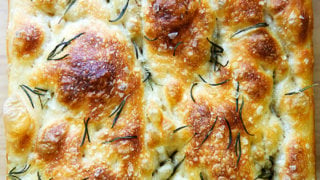
The Best, Easiest Focaccia Bread Recipe
Adapted from the focaccia recipe in Bread Toast Crumbs.
A few notes:
Plan ahead: While you certainly could make this more quickly, it turns out especially well if you mix the dough the day before you plan on baking it. The second rise, too, takes 2 to 4 hours.
If you are short on time and need to make the focaccia tonight: Let the mixed dough rise at room temperature until doubled, about 1.5 to 2 hours. Then proceed with the recipe, knowing the second rise will only take about 30 minutes.
You can use various pans to make this focaccia such as: two 9-inch Pyrex pie plates. (Use butter + oil to prevent sticking.) One 9x13-inch pan, such as this USA pan — do not split the dough in half, if you use this option, which will create a thicker focaccia . A 13x18-inch rimmed sheet pan — this creates a thinner focaccia, which is great for slab sandwiches.
As always, for best results, use a digital scale to measure the flour and water.
Salt: The rule of thumb with bread dough is that the weight of the salt should be 2 to 3% the weight of the flour. For this recipe, that is 10 to 15 grams. Do keep in mind that you sprinkle sea salt over the dough before baking, which adds to the saltiness. If you are sensitive to salt use 1o grams. If you are not, use 12 to 15 grams salt. I use Diamond Crystal kosher salt.
I love SAF instant yeast. I buy it in bulk, transfer it to a quart storage container, and store it in my fridge for months. You can store it in the freezer also.
If you are using active-dry yeast, simply sprinkle the yeast over the lukewarm water and let it stand for 15 minutes or until it gets foamy; then proceed with the recipe.
Flour: You can use all-purpose or bread flour here with great results. If you live in a humid environment, I would suggest using bread flour. If you are in Canada or the UK, also consider using bread flour or consider holding back some of the water. Reference the video for how the texture of the bread should look; then add water back as needed.
Ingredients
- 4 call-purpose flour or bread flour
see notes above
- 2 tspkosher salt
see notes above
- 2 tspinstant yeast
see notes above if using active dry
- 2 clukewarm water
made by combining 1/2 cup boiling water with 1 1/2 cups cold water
- butter for greasing
- 4 tbspolive oil
divided
- flaky sea salt
such as Maldon
- 1 tspwhole rosemary leaves
optional
Directions
- 1
In a large bowl, whisk together the flour, salt, and instant yeast. Add the water. Using a rubber spatula, mix until the liquid is absorbed and the ingredients form a sticky dough ball. Cover the bowl, and let rest for 30 minutes, then stretch and fold the dough — this is an optional new step (9/17/2025), but if time permits, do it: I find it makes for an especially bubby focaccia. Fill a small bowl with water. Using a wet hand, grab an edge of the dough and pull it up and towards the center. Repeat this stretching and folding process, 8 to 10 times, moving your hand around the edge of the dough with every set of stretches and folds. As you stretch and fold, you should feel the dough transform from being sticky and shaggy to smooth and cohesive. Find video guidance here.
- 2
Rub the surface of the dough lightly with olive oil. Cover the bowl with a lid (ideally) or plastic wrap and place in the refrigerator immediately for at least 12 hours or for as long as three days. (See notes above if you need to skip the overnight rise for time purposes.) NOTE: It is important the dough really be slicked with olive oil, especially if you are not using a hard lid. If you do not slick the dough with enough oil, you risk the dough drying out and forming a crust over the top layer.
- 3
Line two 8- or 9-inch pie plates or a 9×13-inch pan (see notes above) with parchment paper or grease with butter or coat with nonstick cooking spray. (Note: This greasing step may seem excessive, but with some pans, it is imperative to do so to prevent sticking. With my USA pans, I can get away with olive oil alone; with my glass baking dishes, butter is a must.)
- 4
Pour a tablespoon of oil into the center of each pan or 2 tablespoons of oil if using the 9×13-inch pan. Using two forks, deflate the dough by releasing it from the sides of the bowl and pulling it toward the center. Rotate the bowl in quarter turns as you deflate, turning the mass into a rough ball. Use the forks to split the dough into two equal pieces (or do not split if using the 9×13-inch pan). Place one piece into one of the prepared pans. Roll the dough ball in the oil to coat it all over, forming a rough ball. Repeat with the remaining piece. Let the dough balls rest for 3 to 4 hours depending on the temperature of your kitchen (Note: no need to cover for this room temperature rise).
- 5
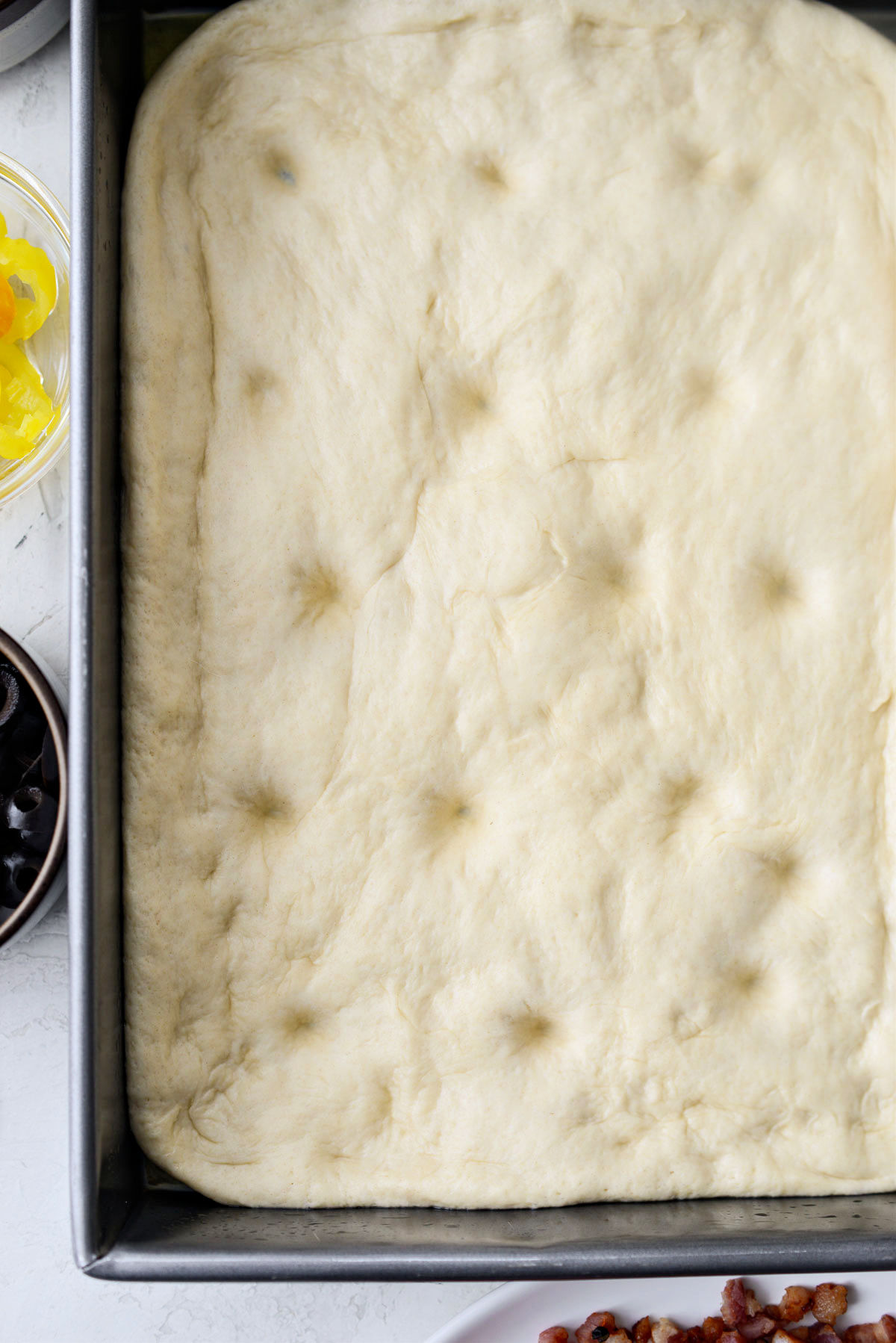
Set a rack in the middle of the oven and preheat it to 425°F. If using the rosemary, sprinkle it over the dough. Pour a tablespoon of oil over each round of dough (or two tablespoons if using a 9×13-inch pan). Rub your hands lightly in the oil to coat, then, using all of your fingers, press straight down to create deep dimples. If necessary, gently stretch the dough as you dimple to allow the dough to fill the pan. Sprinkle with flaky sea salt all over.
- 6
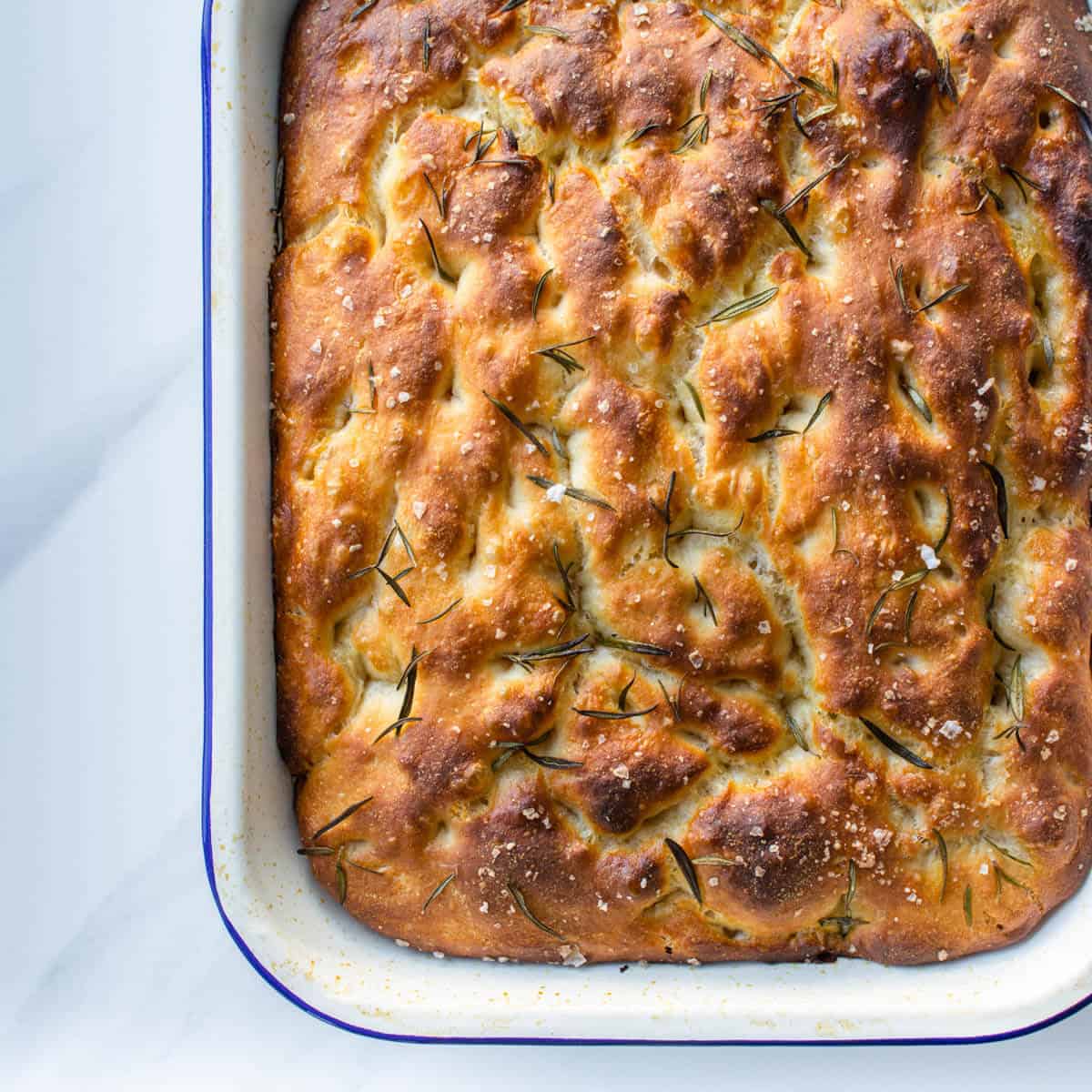
Transfer the pans or pan to the oven and bake for 25 to 30 minutes, until the underside is golden and crisp. Remove the pans or pan from the oven and transfer the focaccia to a cooling rack. Let it cool for 10 minutes before cutting and serving; let it cool completely if you are halving it with the intention of making a sandwich.
- 7
When it has completely cooled, transfer it to an airtight bag or vessel and store it at room temperature for up to 3 days. Otherwise, freeze it for up to 3 months. Always reheat it on subsequent days to revive its crust: 350ºF for 15 minutes.
The Best, Easiest Focaccia Bread Recipe
Similar Recipes


Ratings & Reviews
Be the First to Rate
Your rating helps others discover amazing recipes. Share your experience and let others know what you think!
About this Recipe
Unlock the Secret to The Best, Easiest Focaccia Bread
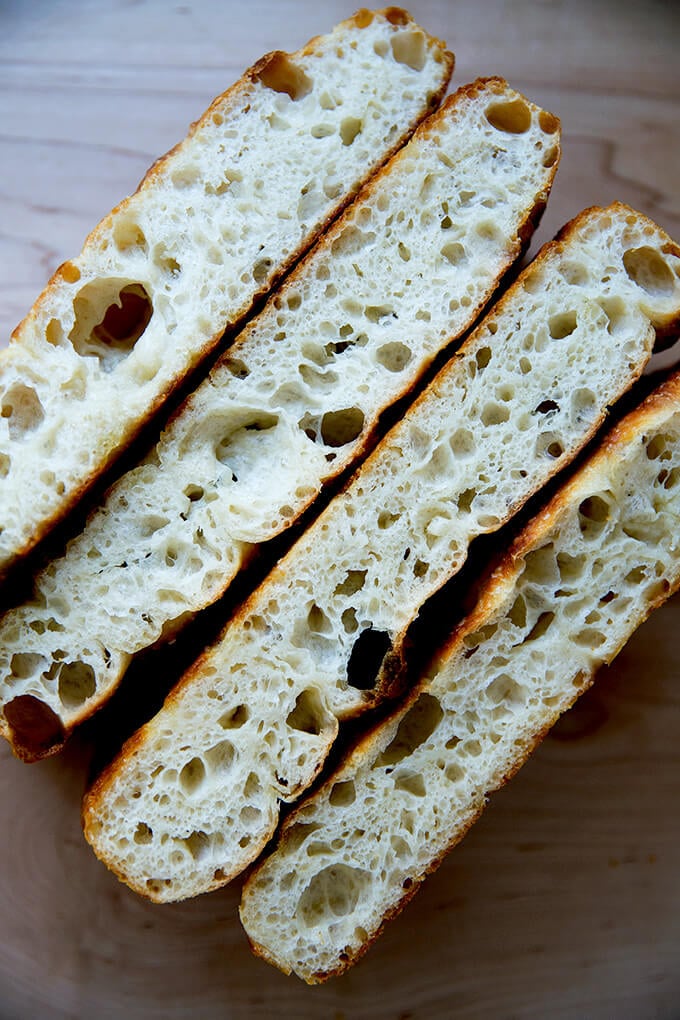
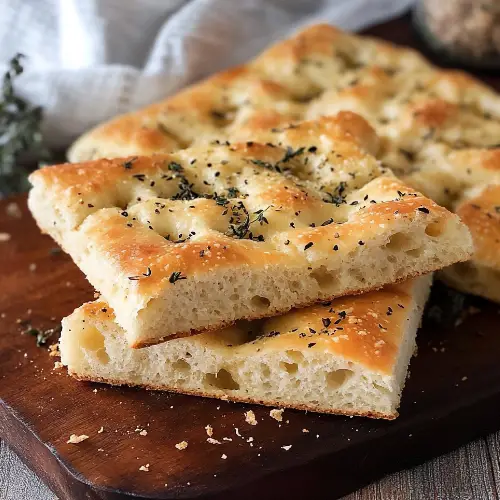
Imagine sinking your teeth into a slice of homemade focaccia that's unbelievably light, airy, and bursting with flavor, all with just 5 minutes of hands-on effort. This isn't a dream! Our easiest focaccia bread recipe unveils the secret to truly exceptional results: cold, refrigerated dough. This simple technique allows the dough to slowly ferment, developing incredible depth of flavor and that signature extra-pillowy texture that makes this focaccia stand out.
What makes this focaccia recipe so special? It's a minimalist marvel, requiring only four essential ingredients: flour, water, yeast, and salt. The extended cold fermentation, ideally 18 to 24 hours (or up to 3 days), is your key to achieving the perfect, airy crumb. Don't worry if you're short on time – we've included a quick method to get warm focaccia on your table in about 3 hours.
Tips for Perfect Homemade Focaccia
- Precision is Key: For the most consistent results with your focaccia dough, always use a digital scale to measure your flour and water. This ensures the correct hydration for an ideal texture.
- Pan Perfection: The beauty of focaccia is its adaptability. Use two 9-inch pie plates for round loaves, a 9x13-inch pan for a thicker focaccia perfect for sandwiches, or a 13x18-inch rimmed sheet pan for a thinner, crispier slab.
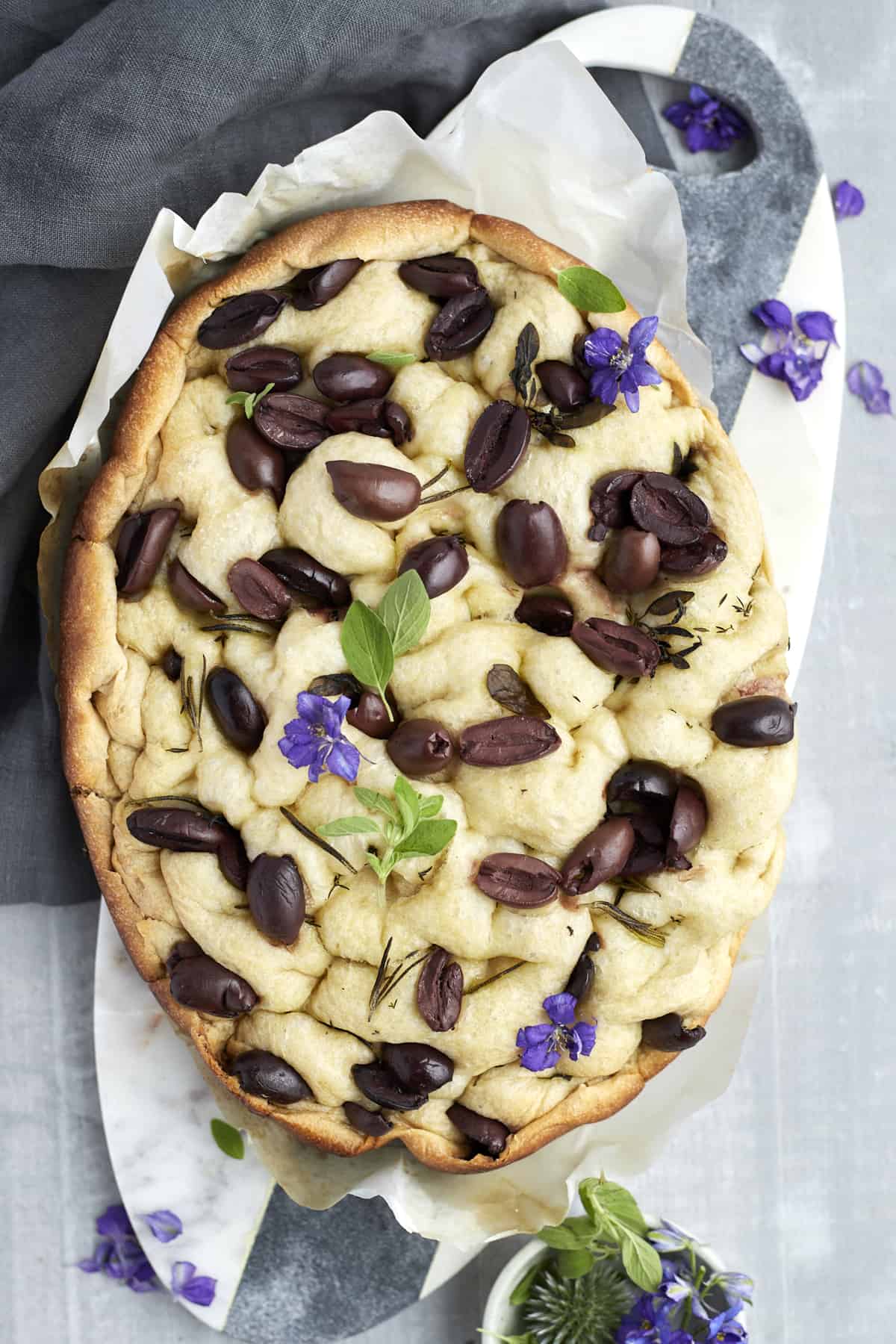
- Flavor Boosts: After dimpling your dough generously, drizzle with good quality olive oil and sprinkle with flaky sea salt. For an aromatic touch, fresh rosemary leaves are a classic and delicious addition. You can also experiment with other toppings like cherry tomatoes, olives, or caramelized onions.
- Yeast Know-How: This recipe uses instant yeast for convenience. If you have active dry yeast, simply proof it in lukewarm water for 15 minutes before mixing.
Serve your warm, golden-brown focaccia bread alongside a hearty pasta dish, with a fresh salad, or simply enjoy it dipped in more olive oil and balsamic vinegar. It's also fantastic for creating gourmet slab sandwiches!