:max_bytes(150000):strip_icc()/Simply-Recipes-Pie-Crust-LEAD-01-a484a691e3f04d3e956e9a875f80c09e.jpg)
All Butter Pie Crust for Pies and Tarts (Pâte Brisée)
Ingredients
- 1 1/4 cups all-purpose flour
plus extra for rolling, 160 g
- 1/2 teaspoon salt
- 1/2 teaspoon sugar
increase to 1 1/2 teaspoons if for a sweet recipe
- 8 Tbsp chilled unsalted butter
cut into 1/2 inch cubes, 1 stick, 112 g
- 3 to 4 Tbsp ice water
very cold
Directions
- 1
Combine the flour, salt, and sugar: Place the flour, salt, and sugar into a food processor and pulse until well combined.
- 2
Add the butter, half at a time: Add half of the butter cubes and pulse 8 times. Then add the other half of the butter cubes and pulse 6 more times. You should have a mixture that resembles a coarse meal, with many butter pieces the size of peas.
- 3
Slowly add ice water: Add two tablespoons of ice cold water (without the ice!) to the food processor bowl and pulse several times. Then add more ice water, slowly, a teaspoon at a time, pulsing several times after each addition, until the mixture just barely begins to clump together. If you pinch some of the crumbly dough and it holds together, it's ready, if not, add a little more water and pulse again. Try to keep the water to a minimum. Too much water will make your crust tough.
- 4
(Optional) Press the dough a few times to flatten some of the butter for a more flaky crust: Remove the crumbly mixture from the food processor and place on a very clean, smooth surface. If you want an extra flaky crust, you can press the heel of your palm into the crumbly mixture, pressing down and shmooshing the mixture into the table top. This is a French technique, called "fraisage". Do this a few times, maybe 4 to 6 times, and it will help your crust be extra flaky.
- 5
Form dough into a disk, wrap, and chill: Then, use your hands to press the crumbly dough together and shape into a disk. Work the dough only enough to just bring the dough together. Do not over-knead or your crust will end up tough. You should be able to see little bits of butter, speckling the dough. When these bits of butter melt as the crust cooks, the butter will help separate the dough into flaky layers. So, visible pieces of butter are a good thing, what you are aiming for, in the dough. Sprinkle the disc with a little flour on all sides. Wrap the disc in plastic wrap and refrigerate at least 1 hour.
- 6
Remove from refrigerator and let sit for a few minutes: When you are ready to roll out the dough, remove the disk from the refrigerator and let it sit for 10 to 15 minutes to take enough of a chill off of it so that it becomes easier to roll out. While the dough disk is still wrapped in plastic, warm the edges with your hands. If there are any cracks in the dough, massage them to close them.
- 7
Roll out the dough: Place the dough disk on a lightly floured, clean flat surface. Sprinkle some flour on top of the disk. If the dough is a bit stiff, use your rolling pin to press down on the center a few times. No need to be gentle at this point. You're trying to shock the chilled butter in the dough to loosen up a bit. Roll out the dough to a 12-inch circle, to a thickness of about 1/8-inch thick. As you roll out the dough, check if the dough is sticking to the surface below. Add a few sprinkles of flour if necessary to keep the dough from sticking.
- 8
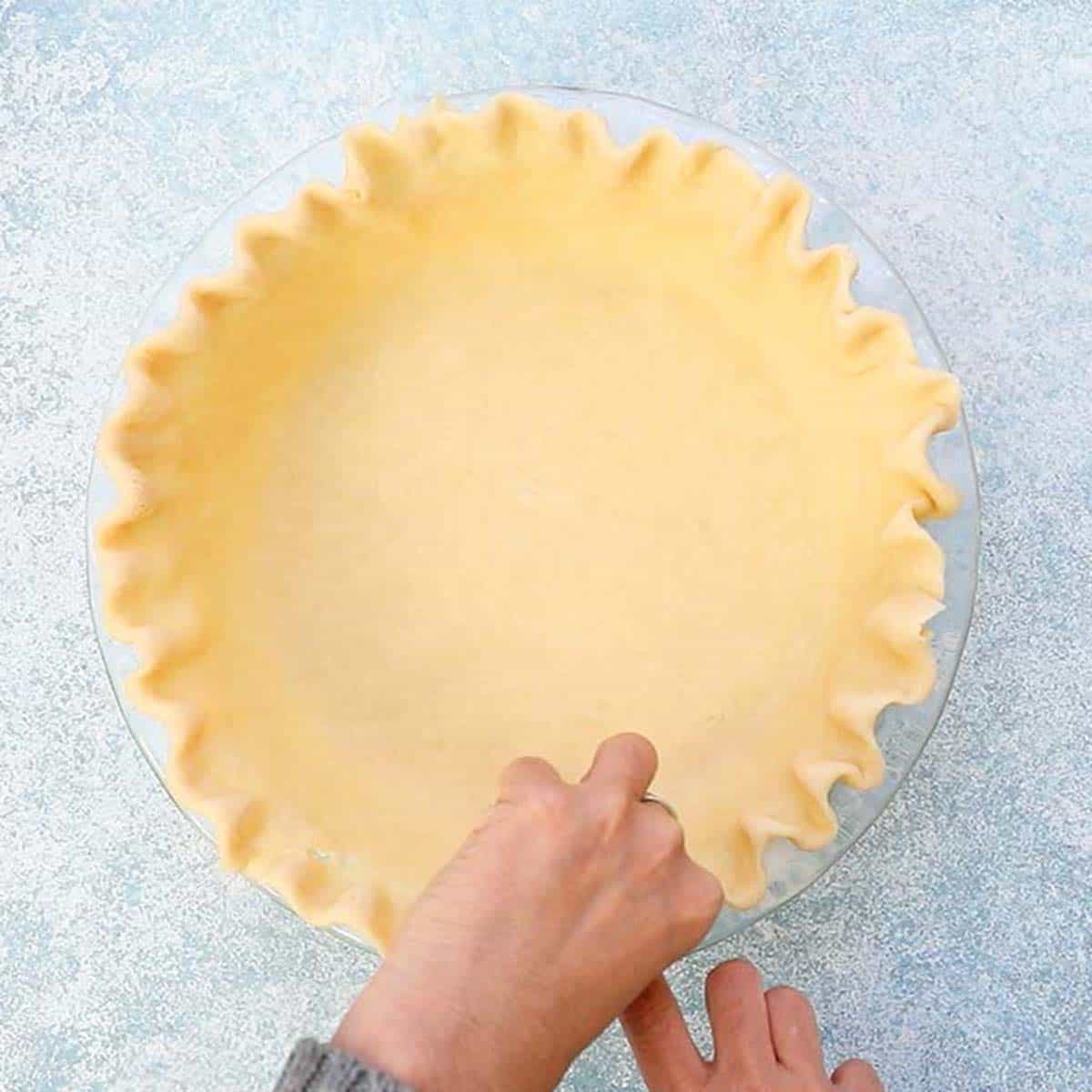
Line a pie or tart pan: Carefully fold the dough in half, then transfer it to a 9-inch pie plate or tart pan, lining up the fold with the center of the pan. Gently unfold and press down to line the pie dish with the dough. With a pair of kitchen scissors or a knife, trim the overhanging dough to about 1/2 inch. Fold the overhang under along the edge of the pie dish. Crimp the edge of the pie crust, using your fingers in a pinching motion, or the tines of a fork. Freeze until ready to bake. To cook the pie crust, follow the directions for the pie you are making. If you would like to pre-bake the crust, see our directions on how to blind-bake a pie crust . Did you love the recipe? Give us some stars and leave a comment below!
All Butter Pie Crust for Pies and Tarts (Pâte Brisée)
Similar Recipes
:max_bytes(150000):strip_icc()/Simply-Recipes-Perfect-Pie-Crust-LEAD-14-51d8f1c8f13246cf8a5bae8f2d5afbbe.jpg)


Ratings & Reviews
Be the First to Rate
Your rating helps others discover amazing recipes. Share your experience and let others know what you think!
About this Recipe
Dreaming of a perfectly flaky, golden pie crust that tastes as incredible as it looks? This easy-to-make all-butter pie crust recipe, also known as pâte brisée, is your secret weapon for both sweet and savory baking. It's the foundational building block for countless delicious pies and tarts.
Why This All-Butter Pie Crust Works
The magic behind this recipe lies in using chilled unsalted butter and ice water, which are crucial for creating those beautiful, delicate layers that shatter with every bite. The goal is to keep the butter cold and intact within the flour mixture, preventing gluten overdevelopment and ensuring a tender yet robust crust. This careful attention to temperature sets it apart from other recipes, promising a crust that is consistently light and flaky, never tough or crumbly.
What you'll experience is a rich, buttery flavor that complements any filling, whether you're crafting a rustic apple pie, a creamy chocolate tart, or a savory quiche. The texture is wonderfully flaky and tender, providing the ideal contrast to almost any sweet or savory creation. While making pie crust from scratch might sound intimidating, this pâte brisée is designed to help home bakers achieve professional-level results. Its simplicity and reliability make it an instant favorite for anyone looking to elevate their baking.
Customization & Variations
Tailor this versatile crust to your specific pie. For sweet applications, you can slightly increase the sugar to 1 1/2 teaspoons, enhancing the dessert's profile without making it overly sweet. For savory dishes like quiches or pot pies, stick with the 1/2 teaspoon of sugar to keep the flavor perfectly neutral. While all-purpose flour provides the most consistent and reliable result, you can explore adding a small percentage of whole wheat flour for a nuttier flavor in certain savory preparations.
This foundational all-butter pie crust is perfect for holiday baking, special family dinners, or simply elevating an everyday dessert. It forms the perfect canvas for your culinary creations, from classic fruit pies to decadent chocolate tarts, promising a delicious experience every time.