
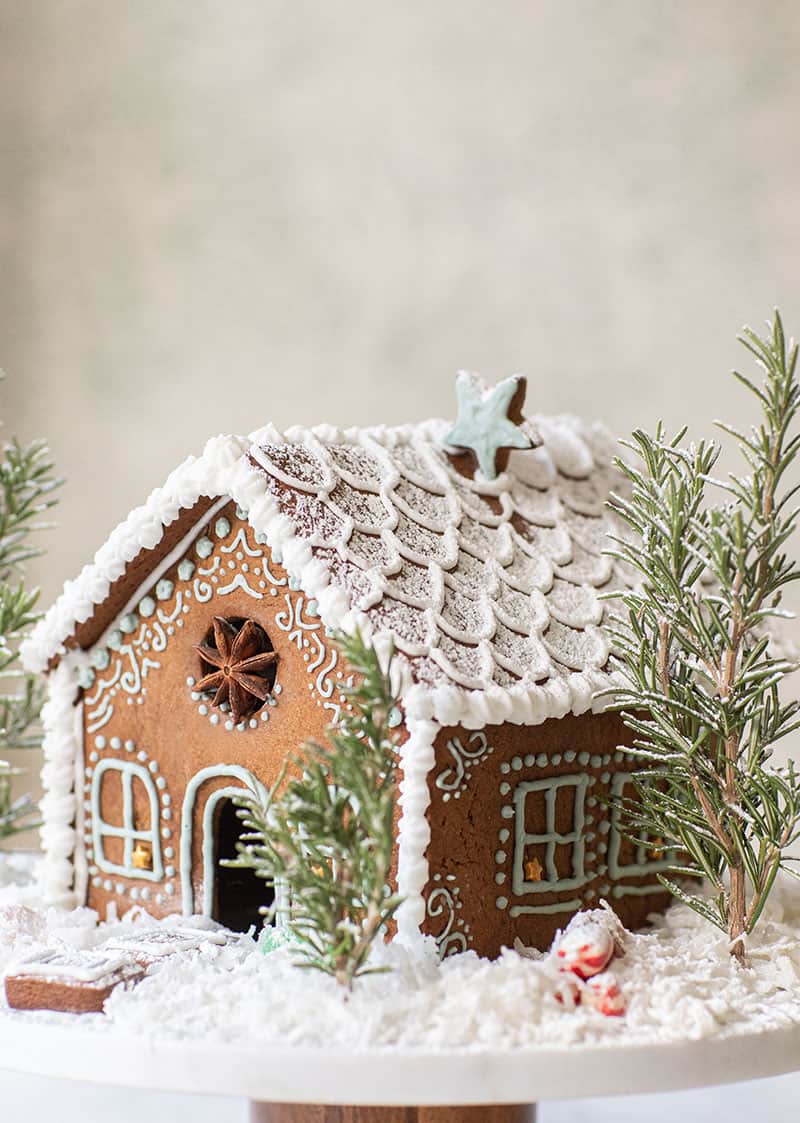
Gingerbread House
Ingredients
- 1 pound/454 grams unsalted butter
at cool room temperature, 4 sticks
- 2 1/2 cups plus 3 tablespoons/595 grams dark brown sugar
- 12 3/4 cups plus 2 tablespoons/1
648 grams all-purpose flour, plus more for dusting
- 2 heaping tablespoons/15 grams ground ginger
- 2 heaping tablespoons/15 grams ground cinnamon
- 1 1/2 teaspoons baking soda
- 1/2 teaspoon baking powder
- 1/2 teaspoon salt
- 4 eggs
at room temperature
- 2 cups molasses
- Zest of 2 lemons
optional
- Zest of 2 oranges
optional
Directions
- 1
Make half of the batch: In a mixer fitted with the paddle attachment, cream together half the butter and half the sugar for 5 minutes, until fluffy. Scrape down sides.
- 2
Meanwhile, sift together the dry ingredients — the flour, ginger, cinnamon, baking soda, baking powder and salt — and set aside half.
- 3
With mixer running at low speed, add two eggs, one at a time. Mix in 1 cup molasses. Scrape down bowl.
- 4
In 3 batches, add half the dry ingredients, mixing just to combine. To prevent any flour from flying out, make sure the mixer is off when adding each batch, and drape a towel over it when mixing. Mix in zest of 1 lemon and 1 orange.
- 5
Pull dough out of mixer, and wrap in plastic wrap, or transfer to a resealable plastic bag. Repeat Steps 1 to 5 to make the remaining dough. Refrigerate overnight.
- 6
When ready to bake, heat the oven to 350 degrees.
- 7
Roll out dough: For each square, weigh out about 20 ounces of dough. The goal is to end up with five 9-inch squares, so you’ll roll them out a bit larger, bake them and trim off the edges.
- 8
Lightly dust a large piece of parchment paper with flour. Place the chilled dough on top. Roll side to side and up and down to make a rough square shape. While you roll, make frequent quarter-turns so that the dough remains even.
- 9
Roll until dough is about 10 by 10 inches and a generous 1/4-inch thick. Transfer to a baking sheet. Repeat with remaining dough. (Any dough left after the squares have been prepared can be rolled out 1/4-inch thick and used for cookies.) In the oven, the slab will rise to about 3/8- or 1/2-inch thickness, which will make the house extra sturdy.
- 10
Bake for 25 to 30 minutes, until even and firmly set. Place pans on racks to cool. To prevent bending and cracking, carefully transfer to racks by lifting parchment paper. When completely cool, stack the slabs, still on parchment, and set aside to dry out at room temperature for 3 to 7 days. (When ready to assemble, see <a href="https://cooking.nytimes.com/guides/47-how-to-make-a-gingerbread-house">How to Make a Gingerbread House guide</a> for full instructions.)
Gingerbread House
Similar Recipes



:max_bytes(150000):strip_icc()/3610076-bed5fa17e1ed48798986ee58380887cf.jpg)

Ratings & Reviews
Be the First to Rate
Your rating helps others discover amazing recipes. Share your experience and let others know what you think!
About this Recipe
Dreaming of a gingerbread house that's as delicious to eat as it is beautiful to behold? This special recipe, straight from former White House pastry chef Bill Yosses, ensures your edible creation is truly tasty, even weeks after baking.What sets this gingerbread apart is the thoughtful inclusion of orange and lemon zests, infusing a bright, aromatic depth that elevates the classic holiday flavor. While optional, these citrus notes truly make a difference if you plan to enjoy every bite. For best results in your construction, the recipe strongly recommends using a kitchen scale for accurate ingredient measurement and even dough division, ensuring your building blocks are perfect.Prepare for a robust, fragrant gingerbread that forms sturdy slabs, ideal for constructing your dream house. The dough itself is substantial, designed to create enough building blocks for a significant project, but you'll manage it easily by preparing it in two batches—it's simply too large for a single run in an average stand mixer. The baked gingerbread will be firm, offering a satisfying crispness with a rich, spiced flavor, especially when enhanced by the optional citrus zests. You'll need to bake the gingerbread several days before assembly to allow the pieces to fully harden, ensuring a stable structure for your creative decorating.The most delightful customization in this recipe comes with the optional lemon and orange zests. Including them will infuse your gingerbread with a vibrant, fresh citrus aroma and flavor that beautifully complements the warming spices. If you prefer a more traditional, spice-focused gingerbread, you can certainly leave them out without issue.This gingerbread isn't just for building; it's designed to be enjoyed! Once assembled and decorated, your Gingerbread House becomes a festive centerpiece that can be admired and then happily consumed, providing a delicious treat for weeks.