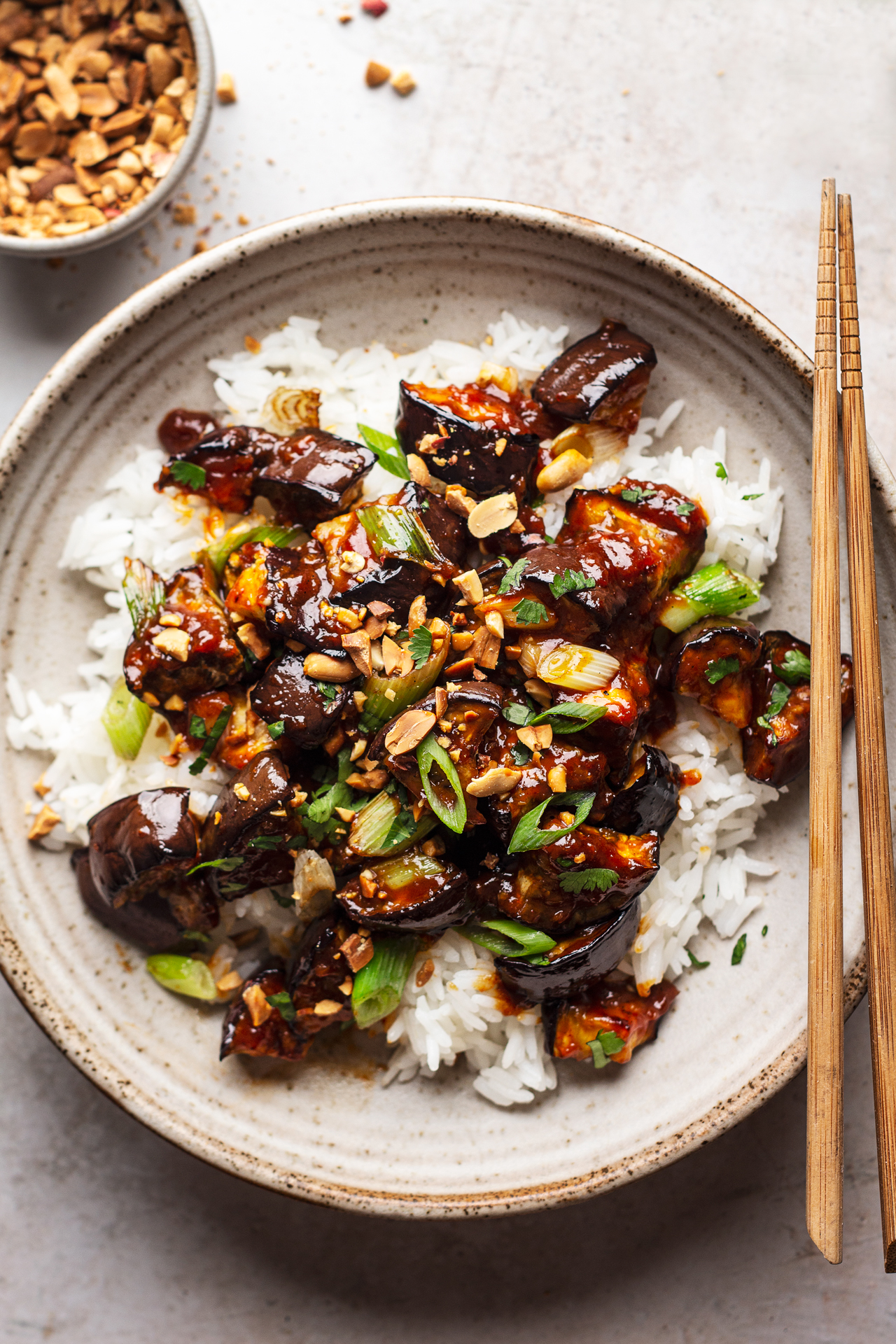
Gochujang eggplant
Ingredients
- 500 g / 1 lb eggplants / aubergines
2 small
- 1 cup raw rice
I used white jasmin
- 2 spring onions / scallions
- 5-10 ml / 1-2 tsp high smoke point oil
I use rice bran
- small bunch of fresh coriander
chopped
- chopped toasted peanuts
to decorate
- 2 tsp cornstarch / cornflour
- 2 tbsp soy sauce or tamari
for GF version
- 4 tsp rice wine vinegar
- 1 tbsp maple syrup or sugar
- 1 tsp finely grated ginger
- 1 small garlic clove
finely grated
- 2 tsp toasted sesame oil
- adjust to taste, Korean chilli paste2-3 tsp Gochujang*
Directions
- 1
Heat up the oven to 200° C / 390° F and grab an old-fashioned (ideally steel not teflon coated) baking tray. See NOTES for the alternative.
- 2
Cut your aubergines / eggplants into 1.25 cm / ½" rounds and arrange them on the baking tray. There is no need to grease them although you can use a small amount of oil if you wish. Bake for about 25-30 minutes, flipping the slices to the other side halfway through. They are done when soft all the way though and lightly browned on both sides.
- 3
Meanwhile, cook the rice (I use the absorption method, 1 cup rice : 1¼ cups water and no salt) and chop spring onions. Cut them on the diagonal and separate white and light green parts from the dark green ends, which we will use as garnish. Set aside.
- 4
Dissolve cornstarch in 2 tsp of water in a medium bowl to create cornstarch slurry, then add the remaining sauce ingredients and 2 tbsp of water. Mix well and adjust the level of spiciness (gochujang) to your taste.
- 5
Once out of the oven, cut aubergine slices into smaller, bite-sized chunks. I cut each slice into 6-8 wedges, depending on the size.
- 6
Heat up a wok on a medium heat. Once it starts to smoke slightly, add a small amount of oil, white and light green spring onion slices to the wok. Stir fry them for a few seconds - until softened and lightly charred.
- 7
Give the sauce a good stir before adding it to the hot wok. Allow it to bubble for a few seconds to thicken. Stir in aubergine / eggplant chunks, give them a few seconds to heat up. Take off the heat.
- 8
Divide the rice between two bowls, top with saucy aubergine / eggplant. Garnish with green parts of spring onions, fresh coriander and chopped toasted peanuts.
Gochujang eggplant
Similar Recipes

Ratings & Reviews
Be the First to Rate
Your rating helps others discover amazing recipes. Share your experience and let others know what you think!
About this Recipe
Craving a flavorful, easy, and healthy mid-week meal that's naturally vegan and gluten-free? This Gochujang eggplant recipe delivers on all fronts, transforming humble eggplant into a vibrant, satisfying dish perfect for any night of the week.
Why This Recipe Works
This Gochujang eggplant stands out because of its incredibly balanced sauce, which brings together the sweet, savory, tangy, and spicy elements that make gochujang so irresistible. It's designed to be quick and easy to prepare, relying on simple techniques and common ingredients to create a deeply flavored meal that’s also surprisingly low in oil.
What to Expect
You'll be greeted with tender, succulent eggplant pieces coated in a glossy, rich sauce that boasts a delightful kick from the gochujang, tempered by the sweetness of maple syrup and the tang of rice wine vinegar. The finely grated ginger and garlic add an aromatic depth that elevates the entire dish. Served alongside fluffy jasmine rice, and garnished with fresh coriander and crunchy toasted peanuts, each bite offers a wonderful combination of textures and bold, umami-rich flavors. This dish proves that healthy eating can be incredibly exciting and satisfying.
Customization & Variations
Adjust the heat by varying the amount of Gochujang to your taste, from mildly spicy to fiery. For a completely gluten-free version, be sure to use tamari instead of regular soy sauce. While toasted peanuts add a lovely crunch, feel free to experiment with other nuts or toasted sesame seeds for garnish if you prefer.
Serving & Context
This Gochujang eggplant is an ideal candidate for a quick and flavorful weeknight dinner. Serve it immediately over a bed of steamy white jasmine rice, finished with a generous sprinkle of fresh chopped coriander and toasted peanuts for both color and texture.