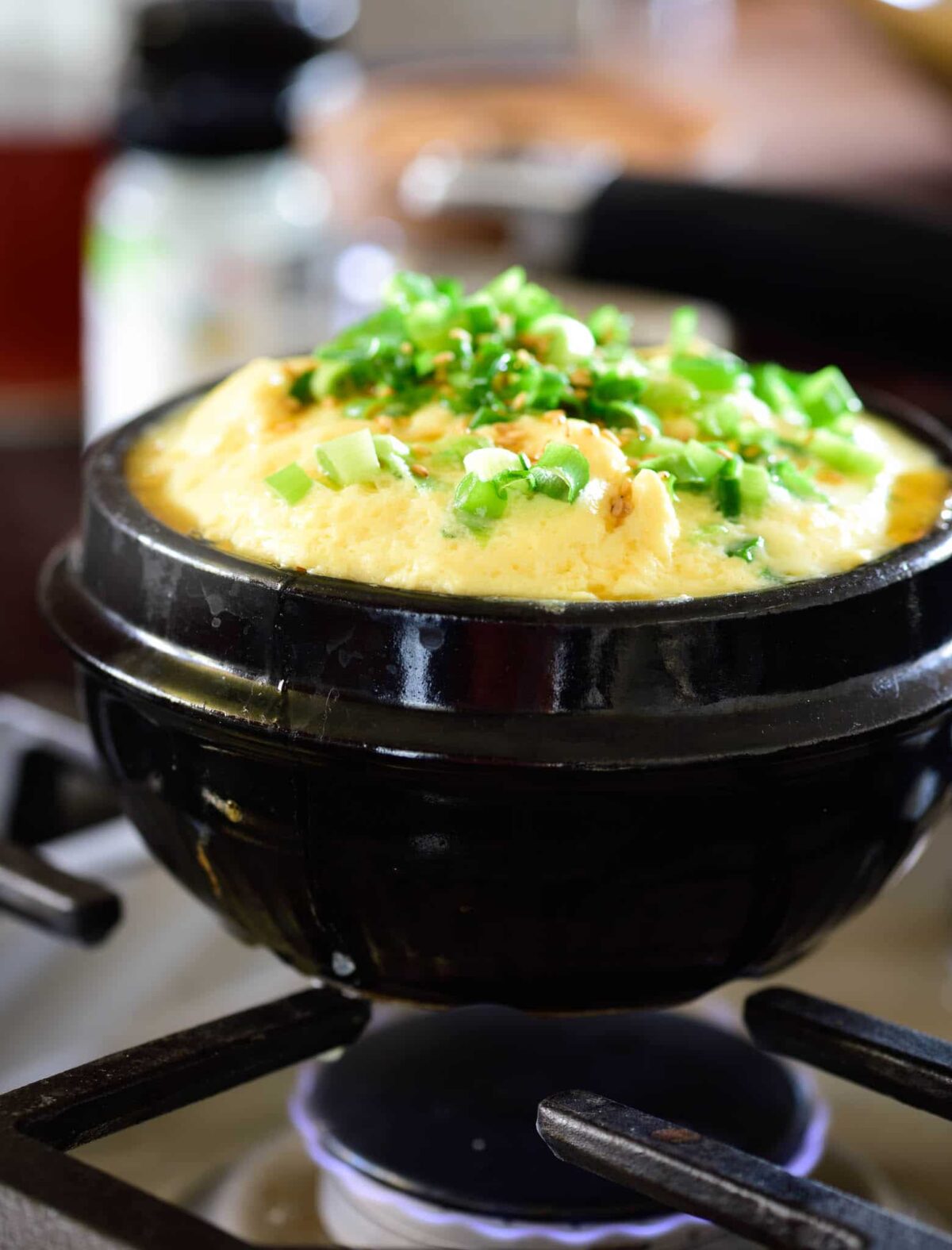
Gyeranjjim (Korean Steamed Eggs)
Ingredients
- 4 largeeggs
- 1 canchovy broth
or water or dashima broth
- 1 ½ tspsalted shrimp or 3/4 teaspoon salt)
saeujeot
- 2 tbspchopped scallion
- 1 tspsesame oil
divided - optional
- ½ tspsesame seeds - optional
Directions
- 1
Beat the eggs with a spoon.

- 2
Run the mixture through a sieve to break it down into a smooth liquid consistency. (If you skip this process, make sure to beat the eggs until very smooth.) Mix the beaten eggs well with the anchovy broth or water and salted shrimp (saeujeot), salt, or fish sauce.

- 3
Lightly oil your pot or bowl with 1/2 teaspoon sesame oil or cooking oil. If using an earthenware, start heating it while preparing the egg mixture.
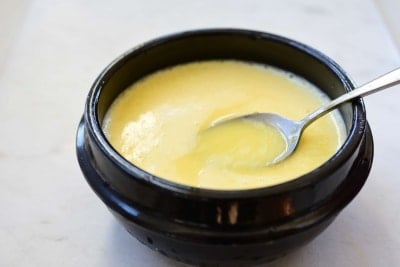
Earthenware/ceramic pot (stove-top proof):
- 1
Add the egg mixture to the pot. Cover, and simmer. When the eggs start to set at the bottom, stir, and reduce the heat to medium low or low (if your stove is high strength). Cover, and continue to simmer for about 5 to 7 minutes, stirring a couple of times, gently stirring the eggs in a circling motion with a spoon.
- 2
Check the eggs, and cook longer if needed. You can add the scallion with a couple of minutes left or after the egg is done. Drizzle the optional sesame oil (about 1/2 teaspoon) and/or sesame seeds.
Stock pot:
- 1
Bring water to a boil in a medium-sized pot. The water should come halfway up the sides of the ramekin/bowl. (Adding a folded paper towel at the bottom will prevent the ramekin/bowl from rattling while the water is boiling.)
- 2
Carefully place the ramekin/bowl in the pot. Cover the pot and steam for 8 minutes over medium low heat. Make sure the water boils gently.
- 3
Gently stir the eggs with a spoon. Add the scallions, cover, and steam for an additional 4 minutes or until the mixture is set.
Microwave
- 1
Place the bowl with the egg mixture in the microwave. Don't need to cover it. Cook for 2 minutes, and stir. Cook for another 2 minutes, and stir. Check to see if the egg is still runny in the middle, and cook for another minute or until the egg is set in the middle.
Gyeranjjim (Korean Steamed Eggs)
Similar Recipes




Ratings & Reviews
Based on 152 ratings
Rating Breakdown
About this Recipe
Craving that incredibly comforting, savory Korean steamed egg dish you love from restaurants? This easy Gyeranjjim recipe brings authentic flavors and a wonderfully tender texture right to your home kitchen, perfect as a beloved side dish for any Korean meal.
Why This Gyeranjjim Works
This Gyeranjjim stands out by layering simple ingredients to create a profoundly satisfying savory custard. The use of anchovy broth forms a deeply umami foundation, a hallmark of authentic Korean cooking, while salted shrimp (saeujeot) provides a unique, briny depth that elevates the eggs beyond mere saltiness. This careful balancing of traditional Korean flavors ensures a rich, full-bodied taste in every spoonful.
What to Expect
Prepare for a truly delightful culinary experience. You'll be treated to a soft, fluffy, and incredibly tender egg custard that practically melts in your mouth. Each bite delivers a comforting warmth, subtly savory with hints of umami, and brightened by fresh scallions. It’s a beautifully simple yet deeply satisfying dish that offers a gentle, almost pudding-like texture, making it a wonderful counterpoint to spicier Korean entrees.
Customization & Variations
This versatile Gyeranjjim recipe is easy to adapt to your pantry or preferences. If anchovy broth isn't readily available, you can easily substitute it with dashima broth for a vegetarian-friendly option or simply use water for a milder taste. For seasoning, if you don't have salted shrimp, plain salt or a splash of fish sauce will work wonderfully to achieve that essential savory profile. A drizzle of sesame oil and a sprinkle of sesame seeds at the end are optional but highly recommended for an aromatic finish.
Serving & Context
This savory egg custard is a quintessential Korean side dish, designed to complement any Korean meal. Serve it alongside grilled meats, rice, and other banchan for a complete and satisfying dining experience. Its light, tender texture offers a lovely balance to richer or spicier main courses, making it a perfect addition to family dinners or special gatherings.