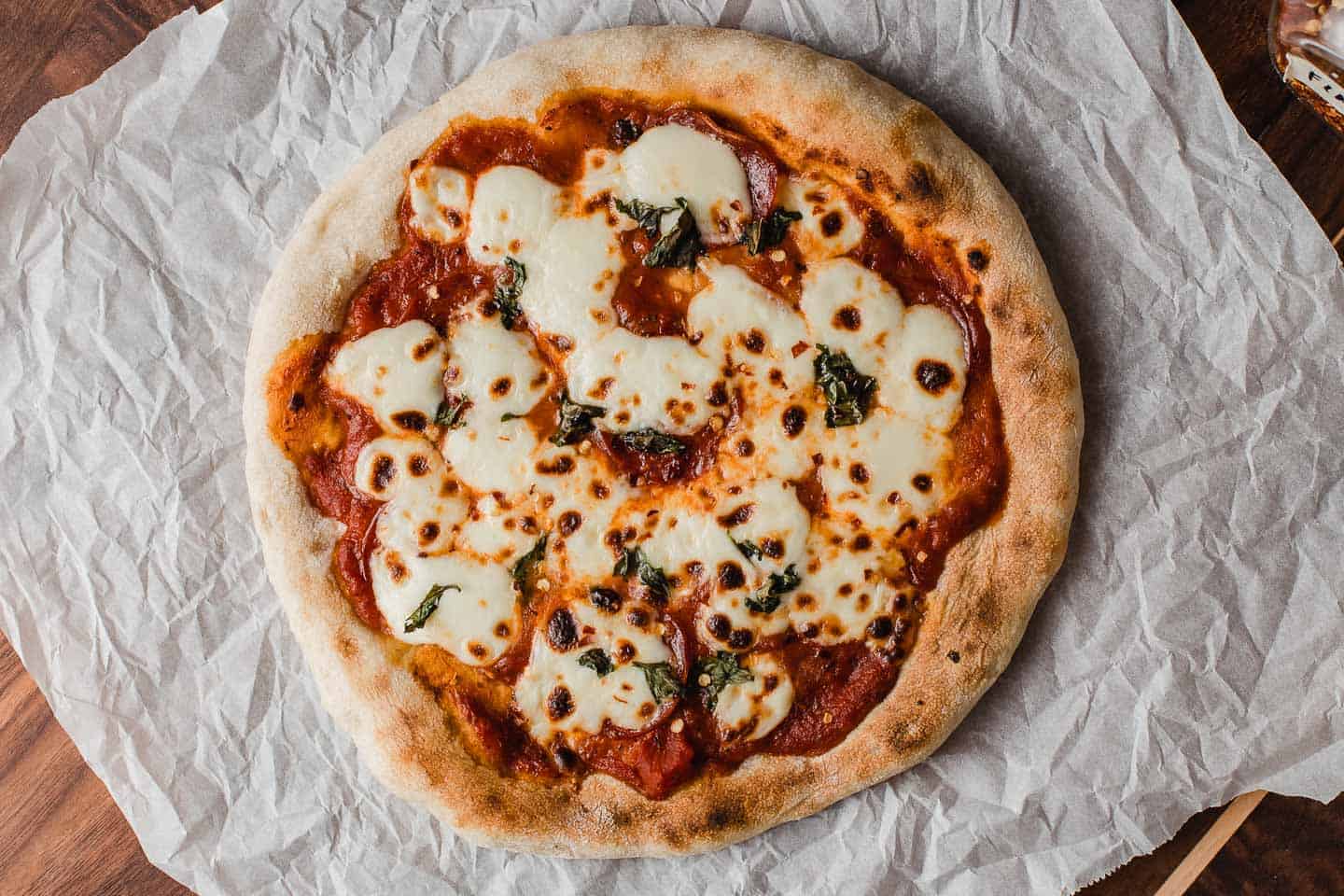
Sourdough Pizza Crust Recipe
Ingredients
- ⅓ csourdough starter discard
if you would like to use active starter reduce to 1/4 cup (50 g
- 2 tspfine sea salt
see notes if using a different type of salt
- 2 tbspolive oil
- ⅓ c+ 1 tablespoon whole wheat flour
- 3 ¾ call-purpose flour
bread flour or 00 flour can be used, see notes
- 1 ⅓ c+ 1 teaspoon water
see notes
- pizza sauce
- homemade pesto
- your choice of toppings
Directions
How to make sourdough pizza in a cast iron skillet
- 1
The night before you want to bake: Add 1/3 cup sourdough starter discard, 2 teaspoons fine sea salt, 2 tablespoons olive oil, 1/3 cup + 1 tablespoon whole wheat flour, 3 3/4 cups all-purpose flour, and 1 1/3 cups + 1 teaspoon water to a large mixing bowl and mix by hand until fully combined. Cover and let the dough ferment at room temperature overnight.
- 2
The next morning: Perform a set of stretch and folds to strengthen the dough. Wet your hand with water to prevent sticking. While keeping the dough in the bowl, gently pull one side up and fold it over itself. Rotate the bowl and repeat on all sides until you've completed a full circle. Cover the bowl and refrigerate for 8 to 36 hours. The dough can be used immediately to make your pizza, but the cold ferment is optional and will help develop more flavor.
- 3
When ready to cook: Remove the dough from the fridge and let it rest on the counter for 30 minutes at room temperature. Divide the dough into 4 equal pieces. Shape each portion into a ball on a generously floured work surface. Cover the dough with a tea towel and let them rest for 30 minutes.
- 4
Turn on your oven's broiler to HIGH. On a stovetop heat a cast iron skillet over medium to medium-high heat. If needed, lightly oil the cast iron skillet to prevent sticking.
- 5
While the skillet is preheating, press a dough ball into an 8" circle on a floured surface using your hands. Use more flour as needed to prevent sticking. (If the dough is difficult to shape, let it rest for 15 minutes on the counter to allow the gluten to relax.)
- 6
When the skillet is hot, lay the circle of dough in it. VERY carefully use your fingers to press the edges of the dough to cover the bottom of the skillet. Immediately add the sauce and toppings to the crust and cook for 5-6 minutes or until the bottom of the crust starts to char. TIP: If the dough is too thick, you will need to cook it longer on the stovetop at a lower temperature to ensure the crust cooks through properly. You can also try putting it under the broiler for a few minutes before adding the toppings to help it cook through and avoid the "gum line" in the center.
- 7
Once the bottom has turned brown and charred, transfer the cast iron skillet to the broiler to finish baking the top of the pizza for 2-4 minutes. Remove from the oven, slice, and serve hot. Make sure to keep an eye on it to prevent the toppings from burning, as broiler temperatures can vary. Every oven is different, so individual results may vary.
How to bake sourdough pizza on a pizza stone
- 1
Place the pizza stone in a cold oven and preheat it to 450°F (232°C) Press the dough into a crust and add your desired toppings. (The dough can be divided into 4 personal-sized pizzas or 2 larger pizzas.)
- 2
Once the oven and pizza stone are heated, carefully use a pizza peel to transfer the dough directly onto the pizza stone. Be sure to move quickly to avoid the dough from losing its shape. Alternatively, you can shape the pizza on a piece of parchment paper and then transfer it to the baking stone.
- 3
Bake the pizza for 15-20 minutes or until the toppings are done and the crust is cooked through.
Sourdough Pizza Crust Recipe
Similar Recipes




Ratings & Reviews
Based on 783 ratings
Rating Breakdown
About this Recipe
Dreaming of the perfect homemade pizza with a crust that truly stands out? This Sourdough Pizza Crust recipe delivers an irresistible crispy-chewy texture and incredible flavor, making every bite a delight.
What makes this recipe special is its easy overnight dough, which allows the sourdough starter to work its magic, developing deep, complex flavors. The result is a perfectly charred crust that's robust enough to hold all your favorite toppings without getting soggy.
You can expect a pizza crust that boasts a delightful tang from the sourdough, complemented by a subtle richness from olive oil. It bakes up golden brown with a bubbly, airy interior and a satisfyingly crisp exterior. While the dough takes an overnight rest, the active prep and cook times are minimal, making it a rewarding project for a weekend or even a weeknight if you plan ahead. This recipe yields a sturdy, flavorful base for any pizza creation.
Customize your pizza experience by using different flours; the recipe allows for bread flour or 00 flour in place of all-purpose flour for varied textures. You can also easily swap your sourdough starter discard for active starter as noted in the ingredients. Load up with classic pizza sauce, homemade pesto, and your choice of delicious toppings.
This Sourdough Pizza Crust is ideal for a memorable family dinner, a fun pizza night with friends, or any occasion where a truly special main course is called for. It’s the perfect canvas for culinary creativity.