
Bibimbap (Mixed rice with vegetables)
Ingredients
- 1 ounce dried bellflower roots
soaked in cold water for 18 to 24 hours., doraji
- 4 eggs
- kosher salt
- vegetable oil
- toasted sesame oil
- toasted sesame seeds
- garlic
- soy sauce
- honey
or sugar
- Korean hot pepper paste
gochujang
Directions
- 1
If you have presoaked or fresh fernbrake you can use it straight away, but if you have dried fernbrake you’ll need to get it ready to eat. It’s fast if you have a pressure cooker. Wash ½ ounce of dried gosari and boil it with 5 cups of water in a pressure cooker for 30 minutes. Drain and rinse in cold water a couple of times. Drain. It should make 4 ounces.
- 2
Put the soy bean sprouts in a pot and add 4 cups water and 2 or 3 teaspoons salt. Cover and cook for 20 minutes over medium high heat. Take out the sprouts with tongs and put them into a bowl, leaving about ½ cup of sprouts in the pot with the water you used to boil them. This is the soup to serve with bibimbap later. In a bowl, mix the sprouts by hand with ½ teaspoons salt, 1 teaspoon minced garlic, and 2 teaspoons toasted sesame oil. Put them on the large platter.
- 3
Heat up a pan over medium high heat. Squeeze out excess water from the carrot. Add a few drops of cooking oil to the pan and sauté the carrot for 1 minute. Put it on the platter next to the soy bean sprouts and spinach. Clean the pan with wet paper towel or wash it.
- 4
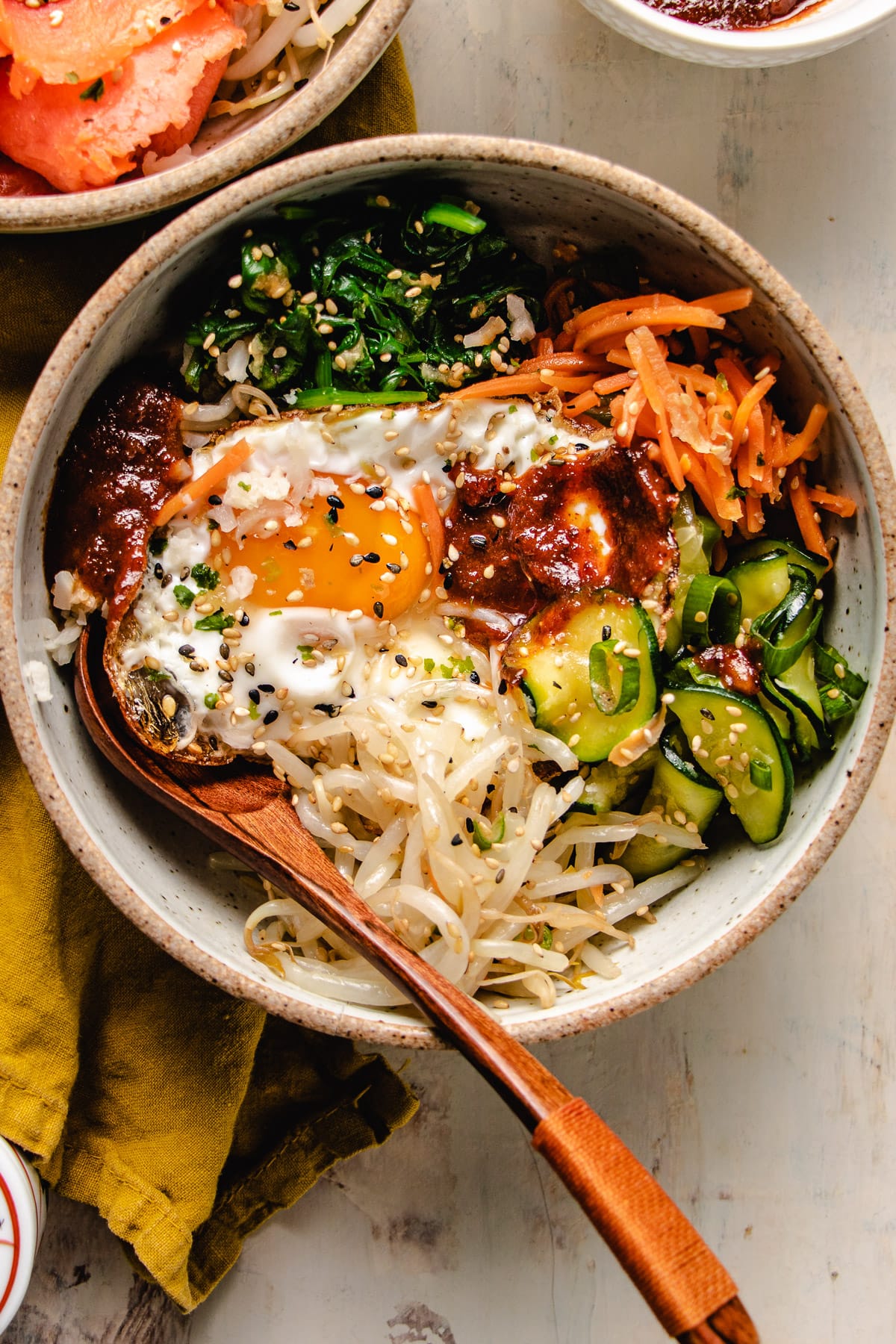
Reheat the soybean sprout soup. Divide the cooked rice into 4 portions. Each portion will be a little more than 1 cup of rice. Put the rice in each of 4 bowls and arrange the vegetables and beef on the rice. Top with the egg yolk and gochujang. If you prefer your eggs and beef cooked, make sunny side up eggs and slightly pan-fry the beef before putting them on the top of rice. Sprinkle the bibimbap with the sesame seeds and drizzle with sesame oil to taste. Ladle the soup to a small bowl and sprinkle some chopped green onion over top. Serve right away with more hot pepper paste on the side.
Bibimbap (Mixed rice with vegetables)
Similar Recipes
:strip_icc()/BP_M7009665_R308321_6378-1_preview1-2a40688e97544ce8a2e3045c84c2f242.jpg)


Ratings & Reviews
Be the First to Rate
Your rating helps others discover amazing recipes. Share your experience and let others know what you think!
About this Recipe
Craving a vibrant, flavorful, and incredibly satisfying meal that brings a taste of Korea to your kitchen? Bibimbap, meaning "mixed rice," is a super-popular Korean dish that delivers on all fronts, and you can create its authentic magic right at home.
Why This Recipe Works
This Bibimbap recipe celebrates the art of balance, combining a bowl of warm rice with an array of sautéed and seasoned vegetables (namul). The secret lies in the harmonious interplay of textures and tastes, elevated by the spicy kick of Korean hot pepper paste (gochujang) and the rich, savory notes of optional seasoned raw beef (yukhoe). Each component is prepared to perfection, creating a symphony of flavors in every bite.
What to Expect
Prepare for a truly interactive and delightful eating experience. You'll be presented with a colorful bowl of carefully arranged ingredients, from the earthy dried bellflower roots (doraji) to the perfectly cooked eggs. The joy comes in mixing everything together, allowing the gochujang to meld with the savory namul and rice. The result is a comforting yet exciting dish that's savory, subtly sweet, and wonderfully spicy, with a delightful mix of tender and crisp textures.
Customization & Variations
Bibimbap is incredibly versatile. If you prefer to omit the seasoned raw beef (yukhoe), you can easily make this dish vegetarian by focusing on a wider variety of sautéed vegetables. For those who enjoy a milder flavor, adjust the amount of Korean hot pepper paste (gochujang) to your liking. Feel free to experiment with different seasoned vegetables based on what you have on hand, keeping the spirit of namul alive.
Serving & Context
Serve your Bibimbap in a large bowl, encouraging everyone to mix their own to personal preference. It's a fantastic standalone meal for a weeknight dinner or a special gathering, offering a complete and satisfying culinary journey.