Deep Dish Cast Iron Skillet Pizza

Deep Dish Cast Iron Skillet Pizza

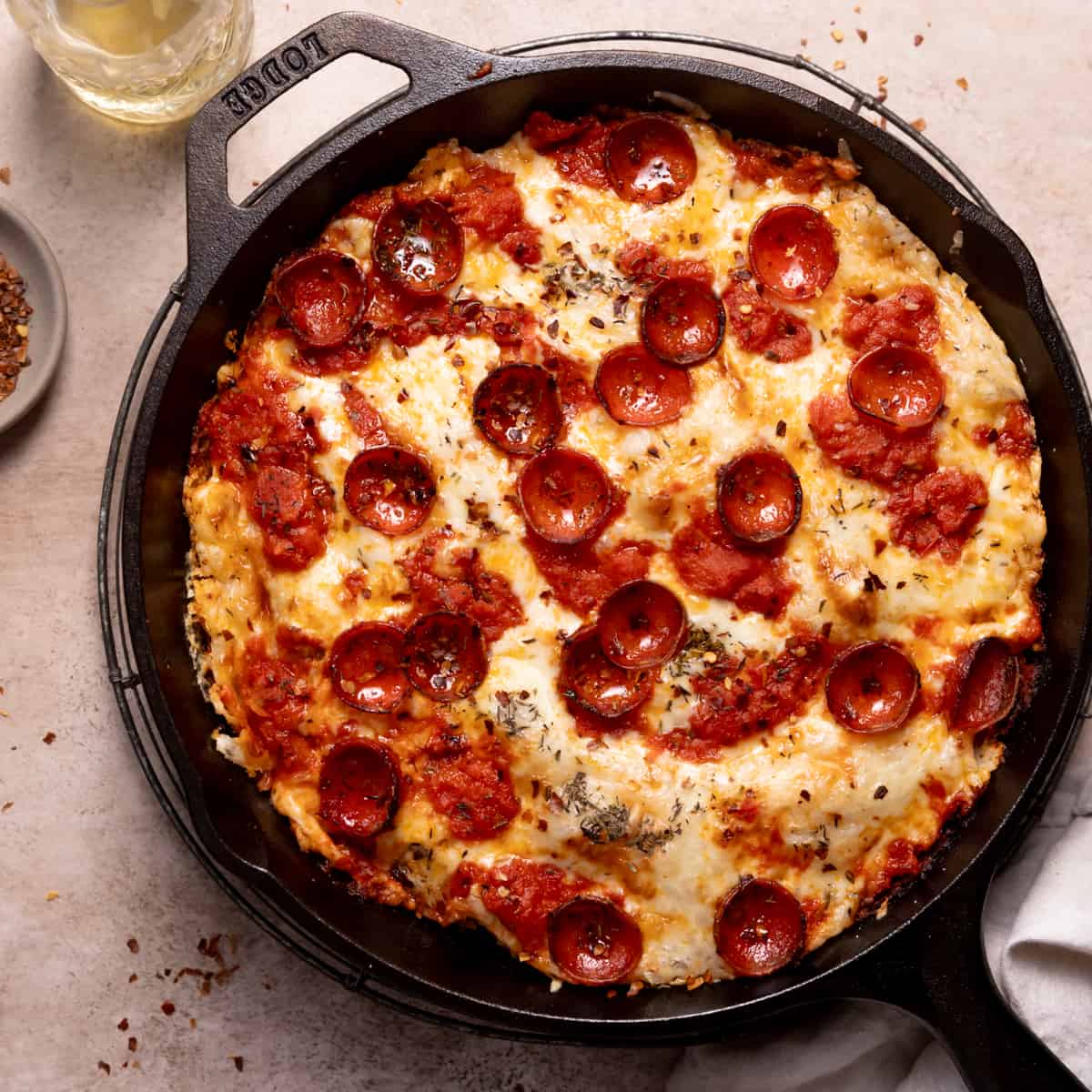
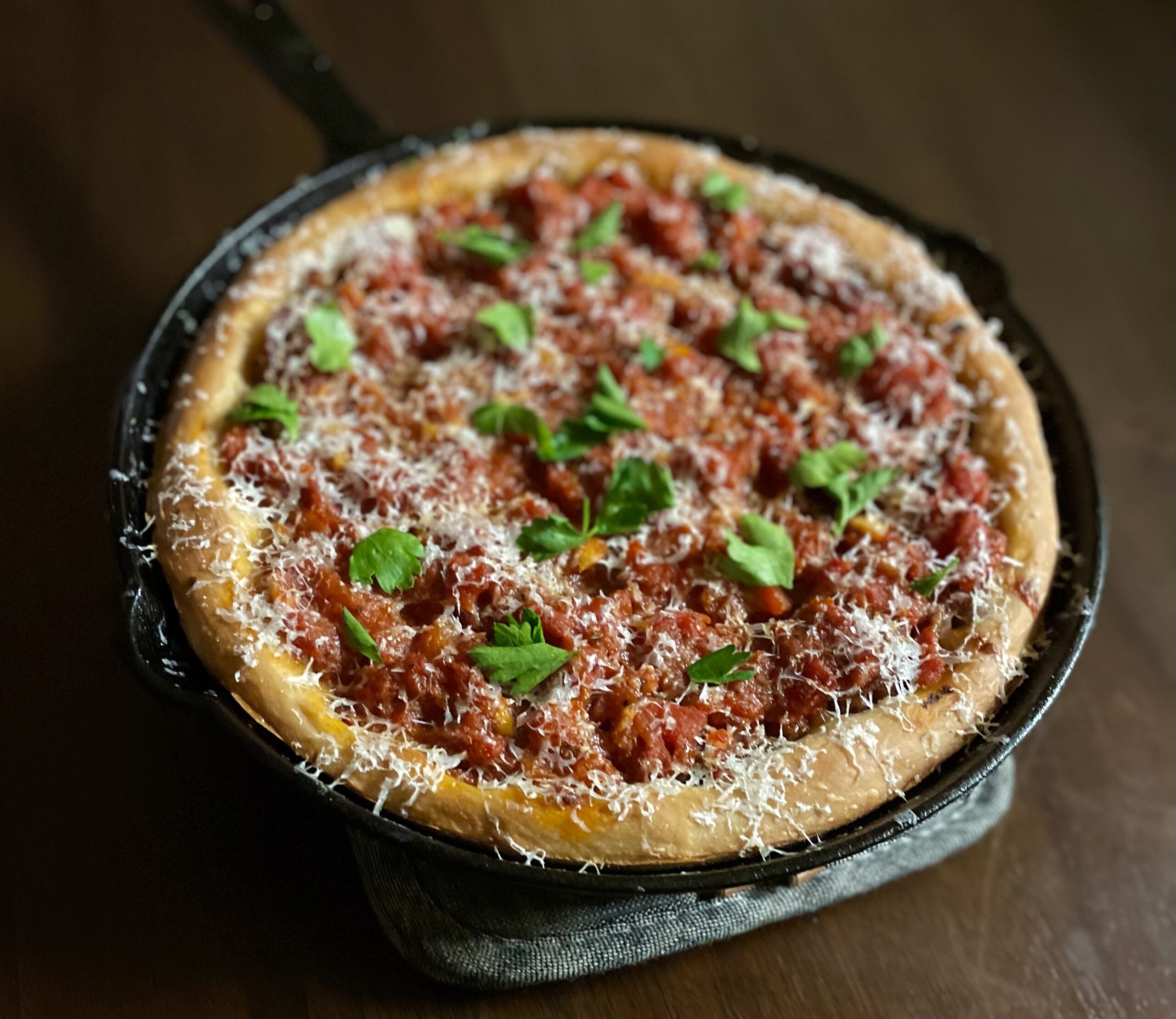
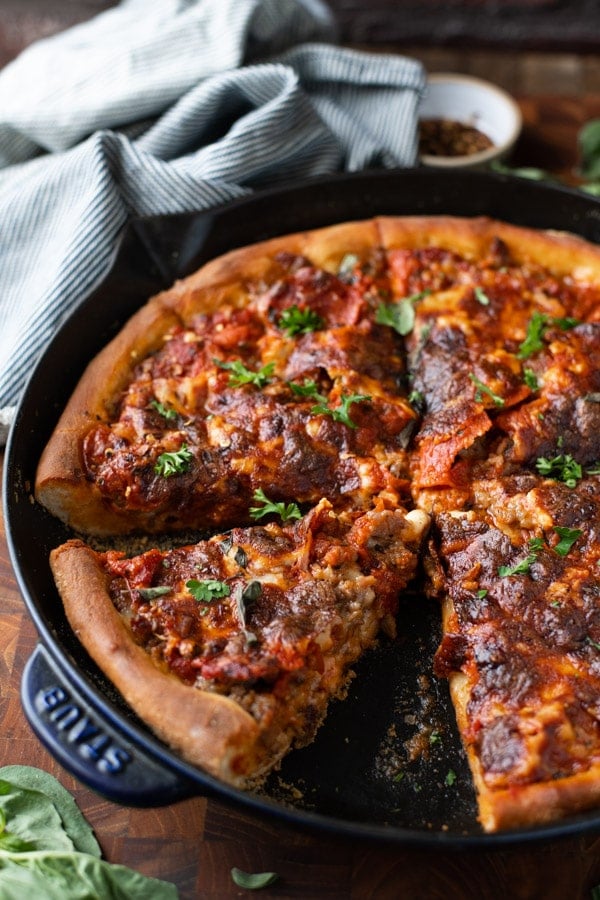
This cast iron deep dish pizza has a thick, crisp, and chewy crust that's piled high with your favorite toppings!

Ingredients

  • Pizza dough for 1 crust

    14-inch

  • 1 tablespoon olive oil
  • 1-2 tablespoons yellow cornmeal
  • 2 cups shredded mozzarella cheese

    divided

  • 1 lb. ground Italian sausage

    cooked and crumbled

  • ½ cup pepperoni slices
  • 1 ½ cups marinara sauce
  • ¼ cup grated Parmesan cheese
  • Chopped fresh oregano
    basil, or parsley, to taste
  • Crushed red pepper flakes
    to taste

Directions

  1. 1

    If the pizza dough was refrigerated, let it sit at room temperature for about 30 minutes - 1 hour before shaping.

  2. 2

    Preheat oven to 450°F. Coat a 12-inch cast iron skillet with oil. Sprinkle with cornmeal. Roll the pizza dough into a 14-inch circle. Place the dough in the prepared skillet, pressing the dough about 2 inches up the sides of the pan.

  3. 3

    Sprinkle with 1 ½ cups of the mozzarella. Add the sausage and pepperoni.

  4. 4

    Spread the marinara sauce over top. Sprinkle with Parmesan and the remaining ½ cup of mozzarella.

  5. 5

    Bake until the crust and cheese are golden brown, about 23-25 minutes. Let rest for 5-10 minutes before slicing. Garnish with oregano, basil and red pepper flakes, if desired.

Deep Dish Cast Iron Skillet Pizza

Deep Dish Cast Iron Skillet Pizza

5.0(5)

Similar Recipes

Simple Sourdough Pizza Crust

Simple Sourdough Pizza Crust

What you need to make this recipe...: ...a sourdough starter. Ideally, you want to use your starter 4 to 6 hours after you feed it, when it has doubled in volume and is very bubbly and active. Here are three sources: Breadtopia King Arthur Flour Cultures for Health ...time. Once your starter is ready to go, this recipe requires an initial 6 - 18 hour rise, followed by at least 6 hours in the fridge or up to 3 days.  Timing/Schedule: The more I make sourdough, the more I realize that the timing of each bake depends so much on the time of year and the temperature of my kitchen. In the summer, because it is warm and humid, the first rise (bulk fermentation) of all my sourdoughs takes between 6 - 8 hours; in the winter it will take longer, 10 to 12 hours. It is best to rely on visual cues. For the bulk fermentation, you want the dough to double or less than double: I now end my bulk fermentation when the dough has risen by 50% to 75% in volume. This is why I cannot recommend using a straight-sided vessel  (as opposed to a bowl) enough. It makes gauging the first rise easier. If at any point you are worried the dough will over-ferment — say, for example, the bulk fermentation is nearly complete but you are tired and want to go to bed — stick the vessel in the fridge and pick up the process in the morning. (Note: If your dough rises above double, don't despair ... my dough has tripled in volume during an overnight rise, and the resulting dough still had plenty of strength and spring.) Schedule: I like mixing this dough in the evening, performing 4 stretch and folds before I go to bed (if time permits), then letting the dough complete its bulk fermentation at room temperature (68ºF) overnight or in the refrigerator (especially in the summer, when my kitchen is much warmer). In the morning, it's typically ready to be portioned (if it rose at room temperature), transferred to quart containers, and stashed in the fridge. If I had let my dough spend time in the fridge for the bulk fermentation, I remove it in the morning, and let it complete its bulk fermentation at room temperature. Once complete, I portion the dough and stash it in the fridge. Sometimes I'll use the dough that same evening; sometimes I'll use it the following day or the next. I encourage using the dough within 3 days.  In short: If you want pizza for the weekend, mix your dough on either Wednesday or Thursday.  Troubleshooting: If you have issues with your dough being too sticky, please read this post: Why is my sourdough so sticky? The 4 common mistakes. Water: If you live in a humid environment or if you are making this on a particularly humid day, consider starting with less water, such as 335 grams of water, which will bring the hydration down to 70%. This amount of water will still produce a light airy crust but the dough will be more manageable.  Flour choice:  Due to supply issues, I've been making this recipe with all-purpose flour, and it works beautifully. You absolutely can use bread flour or tipo 00 flour if you can get your hands on either. If you can't, know that all-purpose (unbleached) flour works great here. If you use 00 flour, you'll likely need to reduce the amount of water. I would start with 350 g, and adjust moving forward based on your results.  Favorite Pizza-Making Tools: Baking Steel Pizza Peel Parchment Paper: I bake my pizzas on parchment paper on my Baking Steel. Parchment allows for easy transfer from peel to steel.  Cast Iron Skillet: If you do not have a Steel or stone, you can use a cast iron skillet. Rub a half teaspoon of oil over its surface, transfer a stretched dough round to the skillet. Top as desired. Bake at 450ºF for about 15 minutes.  Quart Containers for storing dough

25 hours4 servings

Ratings & Reviews

0.0/ 5
Exceptional

Based on 5 ratings

theseasonedmom.com
5.0(5 reviews)
View original recipe

Rating Breakdown

About this Recipe

Craving a truly satisfying pizza night right at home? This Deep Dish Cast Iron Skillet Pizza delivers a restaurant-worthy experience, bringing that iconic thick, crisp, and chewy crust piled high with your favorite flavors straight to your table.

This recipe works by harnessing the incredible heat retention of a cast iron skillet, which is key to achieving a perfectly golden, substantial crust. It creates a robust foundation that's ready to hold generous layers of rich marinara, savory Italian sausage, zesty pepperoni, and an abundance of melted mozzarella and Parmesan cheese.

Prepare for a hearty, flavorful pizza that’s anything but ordinary. You'll bite into a substantial slice where every forkful bursts with classic pizza taste, from the rich tomato sauce to the melty, gooey cheese and the seasoned meats. The crust offers a delightful textural contrast—crisp on the outside, yet wonderfully chewy inside, ensuring it stands up beautifully to all the toppings. This deep dish pizza is a true crowd-pleaser, perfect for a cozy family dinner or a lively gathering with friends.

Customization & Variations

  • Feel free to swap the ground Italian sausage for cooked ground beef or chicken. You can also make it vegetarian by omitting the meats and adding your favorite vegetables, such as sautéed mushrooms, bell peppers, or onions.
  • Enhance the flavor with different cheeses. A blend of provolone or fontina can add extra depth alongside the mozzarella and Parmesan.

This robust pizza is the ultimate comfort food, ideal for casual weekend dinners or when you want to impress with a homemade classic. Pair it with a simple green salad to balance the richness, and get ready for a truly indulgent meal.

Frequently Asked Questions