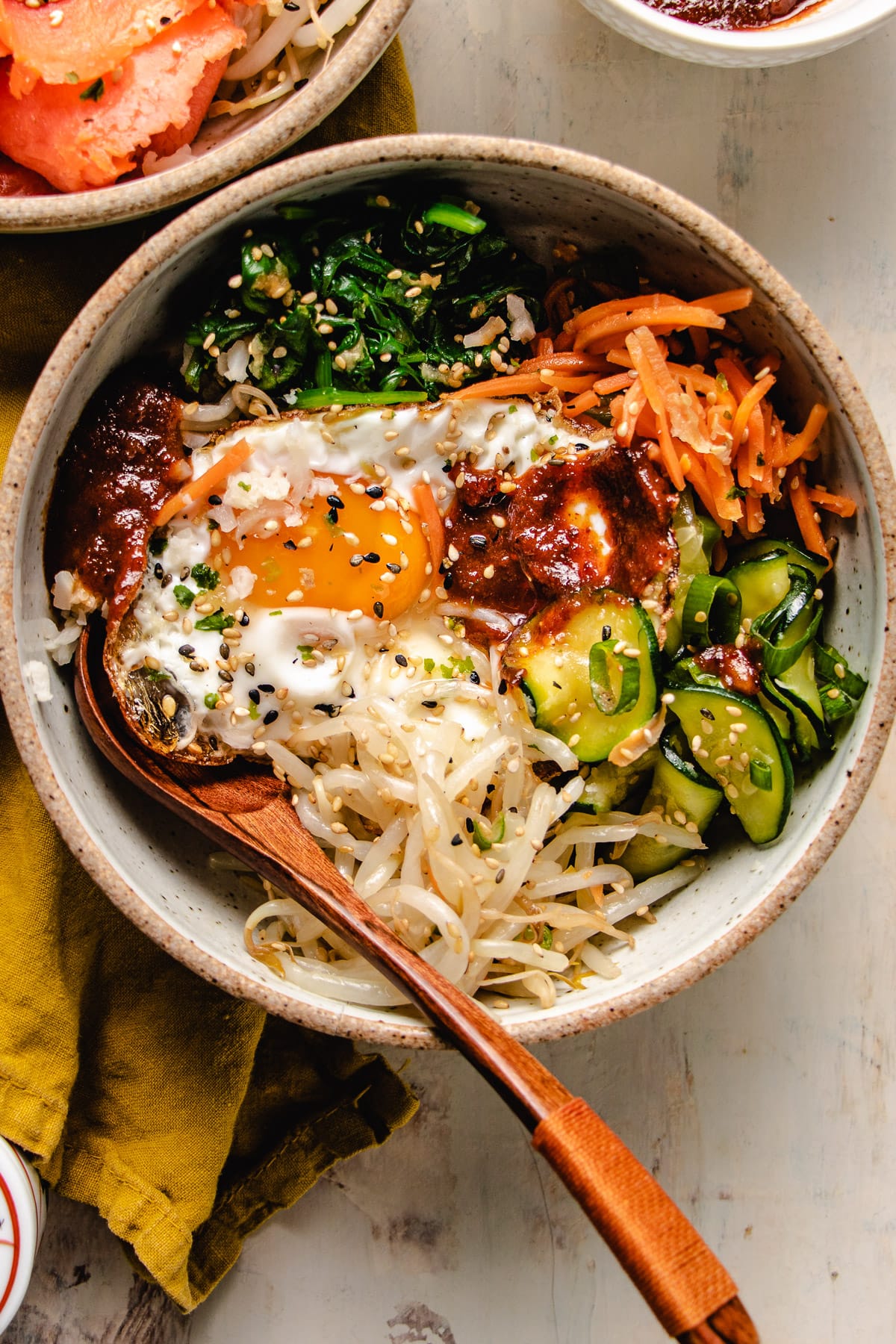
Vegetarian Bibimbap Recipe with bibimbap sauce
Sauce: https://www.tiktok.com/t/ZP8ST8TEA/
Vegetarian Bibimbap Recipe with bibimbap sauce, made gluten-free and soy-free. This Korean bibimbap rice bowl is filled with vegetables that you can pick-and-choose what you want to make. They taste even better the day after and are great for side dishes, too!
Ingredients
- 3 mediumzucchinis
- 3 mediumcarrots
- 10 oz.mung bean sprouts
- 10 oz.spinach
- ½ tspfine sea salt
- 1 ½ tspgrated garlic
- 2 tsptoasted sesame oil
- 3bulbs scallions
chopped, about 1 bulb for each vegetable item
- toasted white sesame seeds
sprinkle
- 1 tbspcoconut aminos
- 6whole medjool dates
torn apart with your hands
- 3 tbspwater
- 2 ½ tbspapple cider vinegar
- 2 tspgochugaru
or 1 tsp cayenne pepper
- 2 ½ tbsptomato paste
- 2 tbspcoconut aminos
- ½ tspgarlic powder
- ½ tsponion powder
- little salt to taste
- 1 tsptoasted sesame oil
- 1 tspapple cider vinegar
- 1 tbspavocado oil
to saute zucchini
- 4 largeeggs
pan fried sunny side up
- cauliflower fried rice
or steamed white rice
Directions
For the zucchini, if using:
- 1
Slice the zucchini to a little thinner than ¼-inch (0.6 cm) in thickness or use a mandolin slicer. Sprinkle 1.5 tsp fine sea salt and gently rub the salt into each slice. Let sit at room temperature for at least 20 minutes or up to 1 hour. Squeeze out the water then do a quick saute with avocado oil, garlic, and sesame oil. Sprinkle scallions and sesame seeds. Chill in the fridge.
For the carrots, mung bean sprouts, and spinach:
- 1
Julienne the carrots. These vegetables have the same cooking steps but please cook them separately. Bring a large pot of water to boil and season with some salt. Hot water blanches the carrots for 2 minutes, bean sprouts for 2 minutes, and spinach for 30 seconds. Soak in cold water and squeeze out the liquid. In a big mixing bowl, season each vegetable item with salt, garlic, sesame oil, scallions, and sesame seeds. Taste and adjust the salt quantity. Chill in the fridge. I like to add a tablespoon of coconut aminos for extra flavor but that’s totally optional.
For the bibimbap sauce:
- 1
In a small food processor, add the ingredients from the dates to salt. Blend a few times until you get a smooth paste. You might need to scrape the bowl a few times. Transfer the paste to a small bowl. Stir-in the sesame oil and vinegar. Adjust the vinegar quantity to taste.
To assemble:
- 1
Add the cooked rice (or cauliflower rice) to the bottom of serving bowls, place each vegetable item on top of the rice. I like to alternate the colors between the vegetables so they look colorful. Top with a sunny side up fried egg, a big spoonful of homemade bibimbap sauce, and a teaspoon sesame seeds. Mix it all up with a spoon and dig-in!
Vegetarian Bibimbap Recipe with bibimbap sauce
Similar Recipes

:strip_icc()/BP_M7009665_R308321_6378-1_preview1-2a40688e97544ce8a2e3045c84c2f242.jpg)


Ratings & Reviews
Based on 16 ratings
Rating Breakdown
About this Recipe
Craving a vibrant, flavorful meal that nourishes both body and soul? This Vegetarian Bibimbap Recipe brings the beloved Korean rice bowl experience right to your kitchen, without the fuss.
What makes this Korean Bibimbap truly special is its incredible versatility and commitment to wholesome ingredients. You get to pick-and-choose your favorite vegetables, ensuring every bite is exactly what you desire. Plus, the homemade bibimbap sauce is crafted to be naturally gluten-free and soy-free, delivering authentic flavors everyone can enjoy. This dish even improves the day after, making it perfect for meal prepping.
Prepare for a delightful explosion of textures and tastes in every spoonful of this Bibimbap Bowl. You'll layer perfectly cooked rice with an array of vibrant, seasoned vegetables like crisp carrots, tender zucchini, fresh spinach, and nutty mung bean sprouts. Each element is harmoniously tied together by a rich, sweet, and subtly spicy bibimbap sauce, made with wholesome ingredients like medjool dates and gochugaru. Topped with a sunny-side-up egg, this Korean rice bowl offers a satisfying balance of savory, sweet, and umami, all while being a fantastic gluten-free and soy-free meal option.
One of the joys of making your own Vegetarian Bibimbap is the freedom to customize. Feel free to swap out the vegetables based on what's in season or what you love—think mushrooms, bell peppers, or even blanched broccoli. If gochugaru isn't available, cayenne pepper works beautifully for a similar heat. For your base, choose between fluffy steamed white rice or a lighter cauliflower fried rice, depending on your preference.
This hearty Bibimbap Recipe is perfect as a satisfying main course for a weeknight dinner or as an impressive, vibrant centerpiece for a casual gathering. It’s also incredibly versatile as a side dish, and because it tastes even better the day after, it's a fantastic option for packed lunches.