
Quick & Easy Gluten Free Naan Bread (No Yeast)
Ingredients
- 20 gwhole psyllium husk)
rough husk form
- 360 gwarm water
- 235 gmillet flour
plus extra for flouring the surface
- 130 gtapioca starch
- 1 tbspcaster/superfine or granulated sugar
- 1 ½ tspbaking powder
- 1 tspsalt
- 75 gunsweetened plain or greek-style yoghurt
room temperature, ⅓ cup
- 25 golive oil)
(you can use other oils instead, such as sunflower or vegetable oil.
- 45 gghee or butter
melted
- parsley or cilantro
finely chopped
Directions
Making the naan dough:
- 1
You can make the dough by hand or using a stand mixer fitted with the dough hook attachment.
- 2
Make the psyllium gel: In a bowl, mix together the psyllium husk and warm water. After about 30-45 seconds, a gel will form.
- 3
In a separate large bowl (or the bowl of a stand mixer, if using), whisk together the millet flour, tapioca starch, sugar, baking powder and salt.
- 4
Add the yoghurt and olive oil to the psyllium gel, mix well, and then add them to the dry ingredients.
- 5
Mix with a wooden spoon or a rubber spatula until the dough starts coming together. Then, give it a thorough knead by hand. Squeeze the dough through your fingers and work your way around the bowl, scraping off the sides as necessary. Make sure that there are not patches or clumps of dry flour.
- 6
The final dough should come away from the sides of the bowl and be very springy and supple to the touch. It shouldn’t be too sticky. Don’t worry if doesn’t have a perfectly smooth surface – so long as it’s homogeneous with all the ingredients well combined and no clumps of flour or psyllium gel, you can proceed to the next step.
Dividing & pre-shaping the dough:
- 1
Turn out the dough onto a lightly floured surface and shape it into a ball.
- 2
Divide it into 8 equal portions. You can use a scale to make sure that they’re all of equal weight (each portion should weigh about 110g) or you can just eyeball it.
- 3
Shape the pieces of dough into balls. Don’t worry if the surfaces of the dough balls aren’t perfectly smooth – that’s due to the lack of gluten and it won’t matter in the end, as you’ll be rolling them out anyway. As you move onto the next step (rolling out the naan breads) keep the pieces of dough covered with a dish towel to prevent them from drying out.
Rolling out the naan breads:
- 1
Place a dough ball onto a lightly floured surface and dust its top with more flour.
- 2
Use a rolling pin to roll it out into a round or oval naan.The final rolled-out naan should measure about 7-8 inches (18-20cm) in diameter, with a thickness of about ⅛-¼ inch (4-6mm). Make sure to rotate it frequently to prevent it from sticking to the surface. As necessary, dust the surface and the top of the naan with more flour.Tip: I recommend rolling out all the naan breads first and then cooking them. To prevent them from sticking to each other and drying out, stack them with pieces of parchment/baking paper in between and cover them with a clean dish towel.
Cooking the gluten free naan:
- 1
Pre-heat a large pan or cast iron skillet over medium-high heat. The pan is ready when a droplet of water sizzles on its surface.
- 2
Place a naan into the hot pan or skillet and cook it for about 1-2 minutes, until bubbles form on the top surface and the underside is deep golden or slightly charred.Tip: If your naan breads aren't puffing up, see the troubleshooting section in the Notes below.
- 3
Flip and cook on the other side for about 1 minute or until you see deep golden-brown or charred spots on the underside.
- 4
Repeat this process with all the other naan breads. Keep an eye on how they’re cooking and adjust the heat as needed. If your naan breads are cooking/browning too quickly (before they can puff up and form bubbles), reduce the heat. If they're not puffing up and are taking too long to brown, increase the heat.
Brush with melted butter or ghee:
- 1
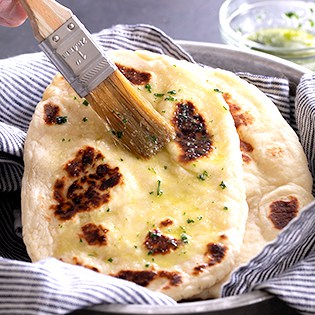
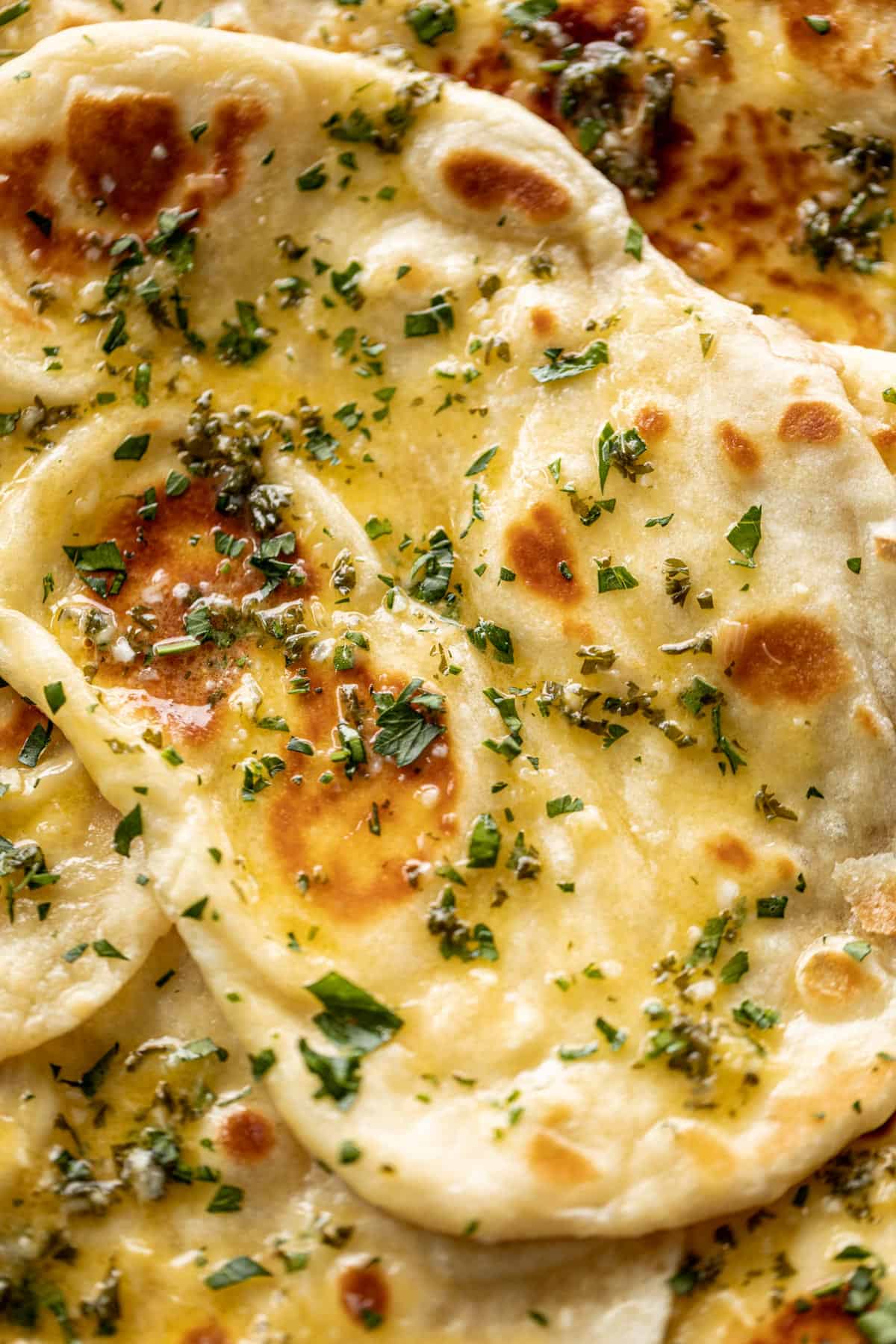
Immediately after cooking, brush the naan with melted butter (I recommend salted butter) or ghee, mixed with some finely chopped cilantro or parsley.
- 2
Alternatively, you can also wrap the hot naan breads (straight from the pan or skillet) in a clean dish towel – this traps the steam and keeps them warm and soft while you finish cooking all of them. Then, just before serving, brush them with the melted butter or ghee.
Serving & storage:
- 1
These gluten free naan breads are at their very best freshly cooked and still warm, but they’ll still be lovely and soft even a few hours later, after they’ve cooled completely.
- 2
They also keep well in a closed air-tight container for 2-3 days. To return them to their original soft, pillowy texture on days 2 and 3, it’s best to reheat them – see below.
Re-heating gluten free naan (3 options):
- 1
Reheat in the microwave for 30-45 seconds.
- 2
Reheat on the stovetop. Heat a large non-stick frying pan or cast iron skillet over medium heat and lightly spray the naan with some water. Then, cook it in the hot pan with the lid on, for about 45 seconds to a minute on each side.
- 3
Reheat in the oven – this is a good option if you need to reheat several naan breads at once. I recommend sprinkling (or spraying) a bit of water over them before you place them into the hot oven so they don’t dry out. Then, reheat them in the oven at 350ºF/180ºC for about 3-5 minutes.
Quick & Easy Gluten Free Naan Bread (No Yeast)
Similar Recipes


Ratings & Reviews
Be the First to Rate
Your rating helps others discover amazing recipes. Share your experience and let others know what you think!
About this Recipe
Craving that incredibly soft, chewy naan bread but need a gluten-free option that's quick and easy? This no-yeast gluten-free naan recipe delivers pillowy perfection in just 45 minutes, bringing authentic flatbread goodness right to your table.
What makes this recipe truly special is its fantastic texture and straightforward process. By using baking powder instead of yeast, you bypass lengthy proofing times, making homemade naan accessible even on busy weeknights. The dough itself is a dream to work with—you'll find it incredibly easy to knead and roll out, ensuring beautiful, perfectly puffed naan every time.
Expect a delightful naan experience with this recipe. Each piece is wonderfully soft and remarkably pillowy, featuring that satisfying chewiness you desire in a great flatbread. You'll love how beautifully it puffs up during cooking, creating pockets of air that are perfect for soaking up curries or scooping up dips. This gluten-free naan has a subtle, inviting aroma, and its neutral base allows it to complement a wide range of flavors, making it an ideal accompaniment for any meal.
Customizing your naan is simple. For the psyllium husk, be sure to use 20g of whole psyllium husk for the best texture; if you only have psyllium husk powder, use a slightly reduced amount of 17g. Feel free to swap the olive oil for other neutral oils like sunflower or vegetable oil. The recipe calls for plain or Greek-style yogurt, so use what you have on hand. Once cooked, brush with melted ghee or butter for richness and a sprinkle of fresh, finely chopped parsley or cilantro for a burst of flavor.
This versatile bread is perfect for family dinners, cozy gatherings, or simply elevating your everyday meals. Serve it warm alongside your favorite stews, curries, or use it as a base for mini pizzas.