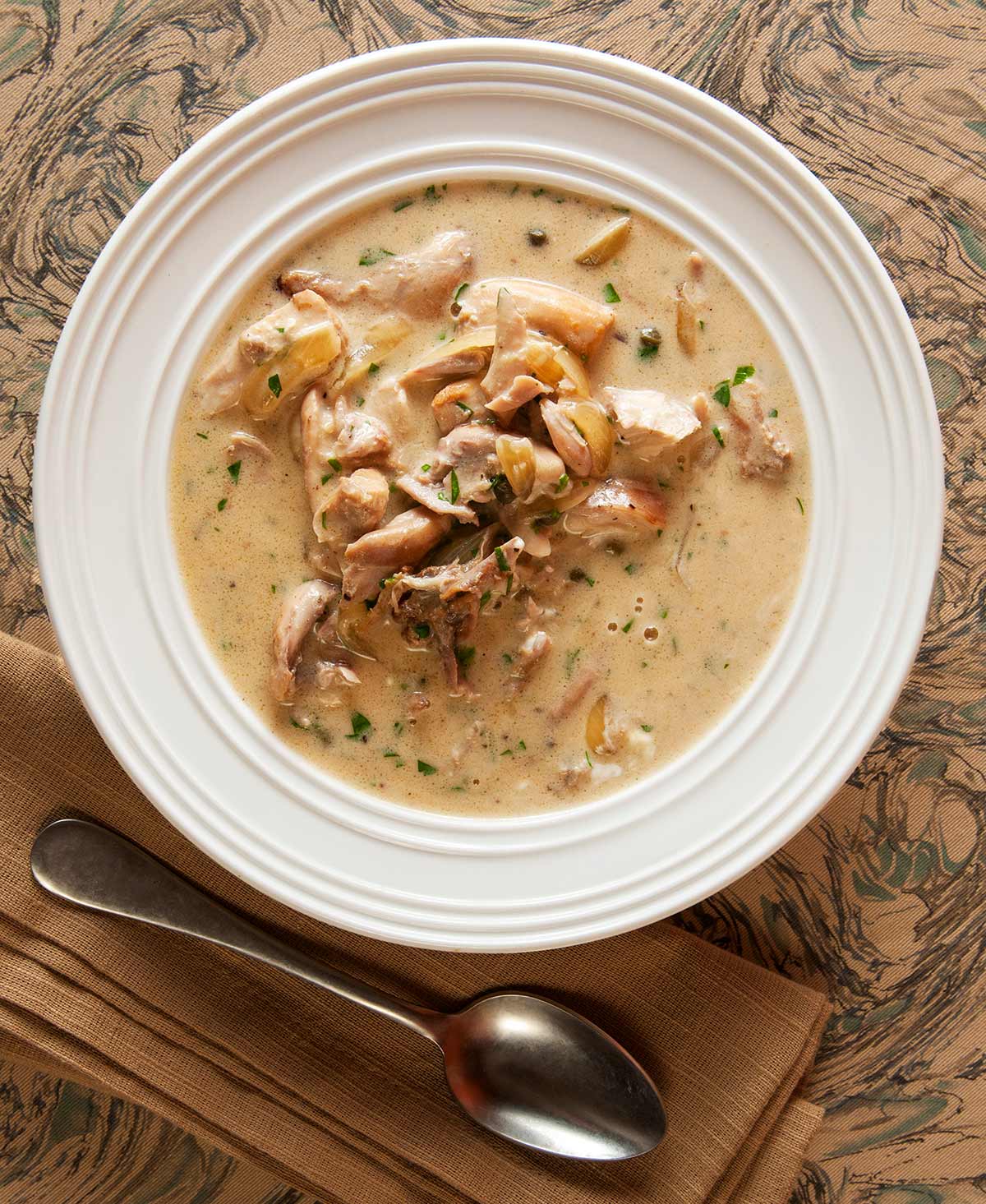
German Rabbit Stew
Ingredients
- 2 cottontail rabbits
or 1 domestic rabbit, cut into serving pieces
- Salt
- 2 tablespoons unsalted butter
- 2 tablespoons flour
- 1 to 2 cups chicken stock
- 1 onion
sliced root to tip
- Zest of a lemon
white pith removed, cut into wide strips
- 2 to 3 bay leaves
- 1/4 cup lemon juice
- 2 tablespoons capers
- 1/2 cup sour cream
- White wine to taste
at least 2 tablespoons
- Black pepper
- Parsley for garnish
Directions
German Rabbit Stew
Similar Recipes

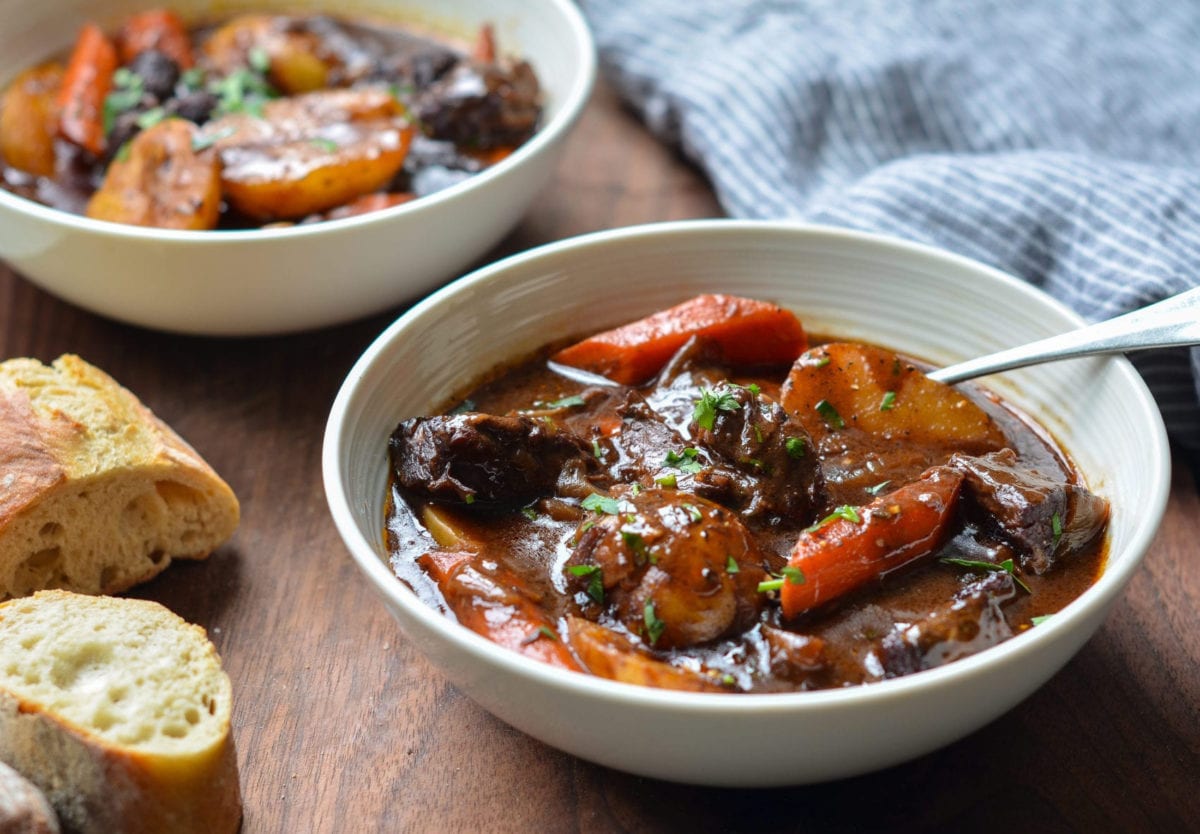
:max_bytes(150000):strip_icc()/Hamburger_Stew_063-65a8f8f17fb84a7c9599b6f359608206.jpg)


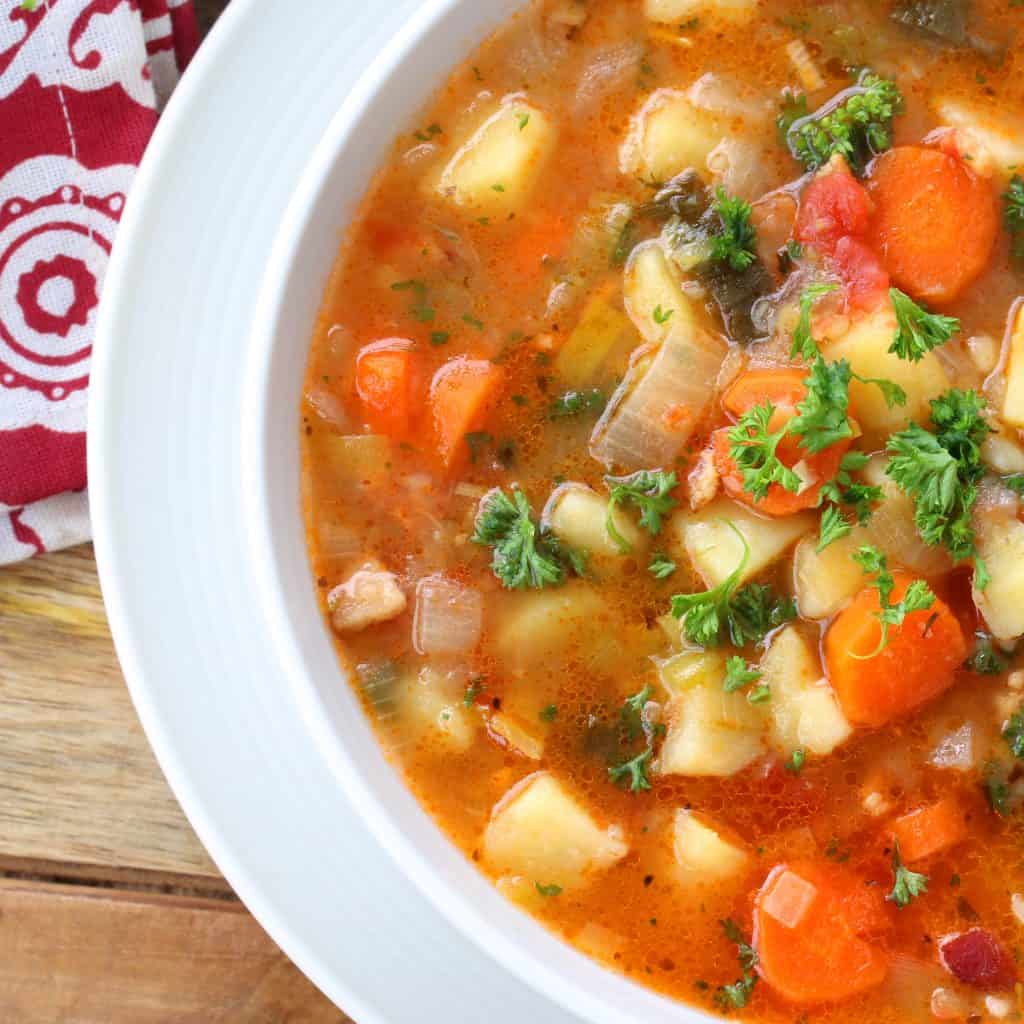
:max_bytes(150000):strip_icc()/8781-german-chicken-VAT-Beauty-4x3-b9f30ad7ec434f07964c7bcae4fd9b24.jpg)

Ratings & Reviews
Based on 39 ratings
Rating Breakdown
About this Recipe
Craving a hearty, deeply flavorful stew that transports you to a cozy German kitchen? This German Rabbit Stew delivers rustic charm and sophisticated taste, perfect for a comforting meal.
What makes this German Rabbit Stew truly special is its unique two-step preparation. You build a rich, savory base first, then 'mount' it with bright sour cream, aromatic white wine, and briny capers just before serving. This technique ensures vibrant flavors and a creamy, nuanced finish that elevates the dish beyond a simple stew.
Prepare for a truly comforting and elegant experience. The rabbit cooks down until it's wonderfully tender, enveloped in a creamy, savory sauce. You'll taste the bright tang of lemon, the subtle warmth of bay leaves, and the delightful briny pop of capers, all balanced by the rich sour cream and a hint of white wine. It's a robust yet refined dish that feels both satisfying and surprisingly fresh.
This versatile German-inspired stew offers plenty of room for customization. While rabbit is traditional, you can easily substitute it with chicken thighs for a readily available option, or try pheasant for a richer, gamey flavor. For another traditional take, consider veal as an alternative. If you're out of fresh lemon, a little extra lemon juice can brighten the flavors.
This German Rabbit Stew is an ideal centerpiece for a cozy family dinner or an impressive dish for entertaining guests. Serve it alongside crusty bread to sop up every drop of the luscious sauce, or with simple boiled potatoes or spaetzle for a complete, satisfying meal.